The Dodonaea genus, commonly called Hop Bushes, are a valuable habitat plant in the garden for insects and small birds and a good size for urban gardens. Whilst their form is more subtle than many other showy native plants, they provide hardy reliable complementary backdrop planting that contributes to diverse habitat niches, and attracts insects and birds other than honeyeaters.
I find the shrubs are very popular with the King Parrots in my garden – they spend a lot of time in the bushes foraging for the fruits and seeds and seem to appreciate the shrub cover.
The Dodonaea genus was named for prominent 16th Century Belgian Botanist R. Dodoens, who was instrumental in the formation of the field of modern botany.
According to prominent biologist Tim Low, the genus is found throughout the world. Its spread is evidently a botanic mystery as it predates international exploration by millions of years and can be genetically traced from Queensland. Tim Low also advises that they were named for their role in place of real hops for brewing beer. The bitter-tasting capsules were heavily harvested in the 19th century, producing a beverage said to be of ‘excellent quality’.
Dodonaea triquetra: Hop Bush
This is a medium shrub to 4 metres with longer leaves and open foliage in a layered format. The flowers are in long strands before giving way to purple seed capsules. It is well suited to drier conditions. Maintain shrub form and size by light pruning after seeds have dispersed. This also refreshes leaf growth, as the leaves can get ragged from insect and caterpillar damage (also good food for wildlife!). The flowers are also quite striking as a volume filler in a vase of cut flowers.
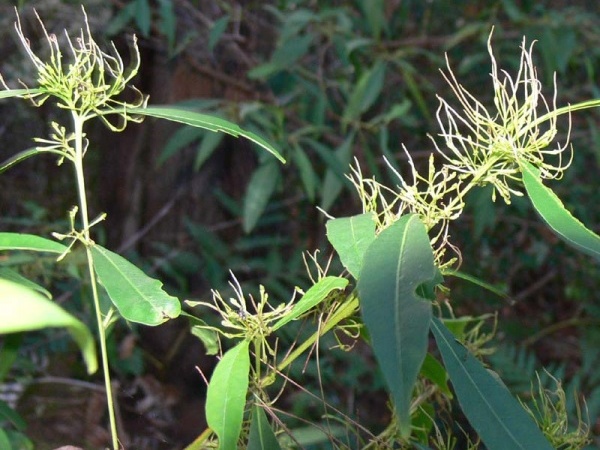
Photo from Noosa’s Native Plants
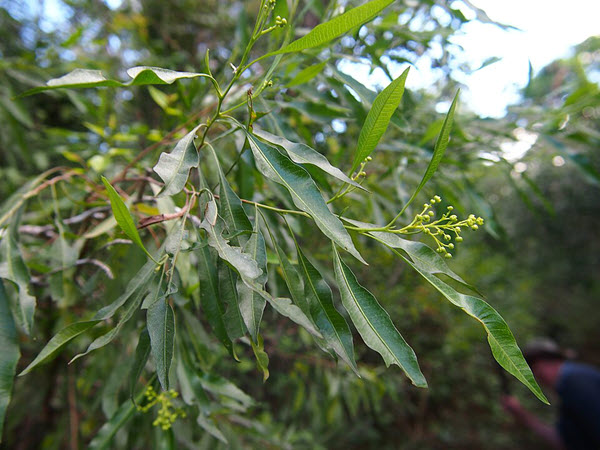

Dodonaea viscosa sub viscosa: Sticky Hop Bush
This is a medium shrub to 4 metres with long leaves but a tighter form than Dodonaea triquetra mentioned above. It can tolerate a mixture of soil conditions, is well suited to the extremes of wet and dry we get in gardens in Noosa, as well as growing in sun through to light shade. “Viscosa” comes from viscous meaning sticky, and the leaves are sticky if crushed. In my garden it grows well under mature Spotted Gums in filtered light: a testament to its hardiness and adaptability, especially having to compete for moisture and nutrients from the gum trees. Whilst flowers are discreet, it can have relatively showy winged fruits / seed capsules varying in colour from cream to red. It also benefits from pruning following seed formation to contain the shape and form.
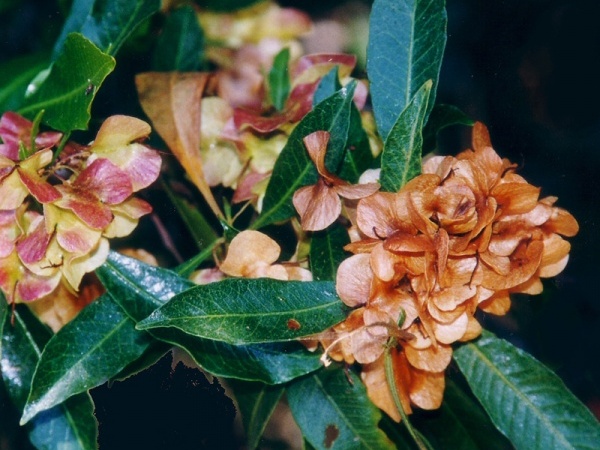
Photo from Noosa’s Native Plants
Dodonaea viscosa subsp cuneata: Wedge-Leaf Hop Bush
This species is similar to Dodonaea viscosa sub viscosa mentioned above but has dainty small wedge shaped leaves and has a more compact and spreading form to 3 metres. Cuneata comes from the Latin word cuneate meaning tapering or wedge shaped.
This is an exceptionally good screening shrub, especially if planted in informal drifts or groupings to provide a thick multi layered barrier. It tolerates the same variable conditions as Dodonea viscosa sub viscosa mentioned above and is very hardy. In my observation this is the one the smaller birds prefer due to the density of foliage and I often find tightly woven nests in the thickets. It also has showy pink red fruits / seed capsules following discrete flowering. This shrub responds very well to pruning to keep a bushy and compact shape and is well suited to urban gardens and a valuable “go to” plant for urban wildlife gardens in Noosa.
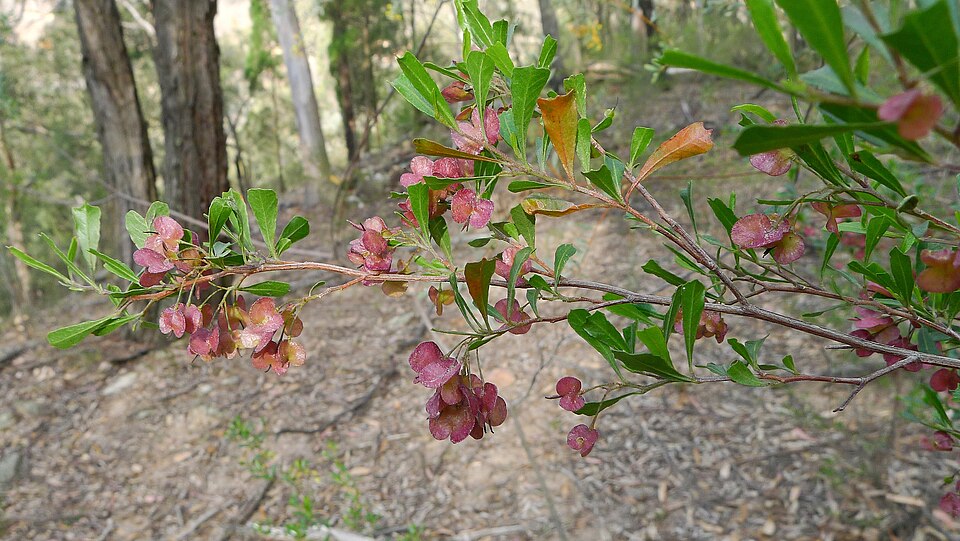
John Tann from Sydney, Australia, Wedge-leaf Hop Bush branch (16011313827), CC BY 2.0
.jpg)