Belonging to the Proteaceae family, the Banksia genera, named after Joseph Banks, has over 170 species.
They range from small to medium sized shrubs to hardy trees and, although they can be slow and tricky to grow, will thrive in the right conditions. They usually prefer a well drained sandy soil and a sunny position.
Banksias are a bird, insect and butterfly attracting species. Mammals such as flying foxes, possums and gliders also feed on the flowers. They make stunning feature trees and can also provide joy indoors as a floral arrangement.
The most common banksias in the Noosa Shire are:
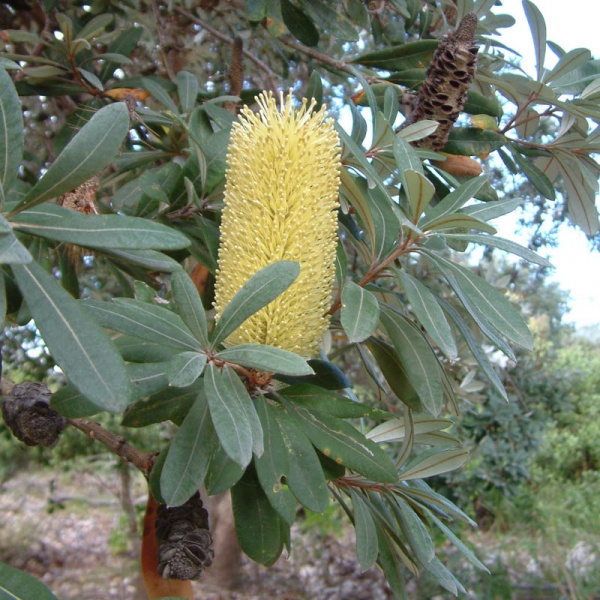
Banksia integrifolia – Coast Banksia
This species occurs in a wide range of habitats from coastal dunes to montane forest and can be the easiest of the Banksias to grow. It can grow in coastal areas up to 25 metres. The leaves have a silvery underside and it has pale yellow flowers in late summer to winter.
I have a very healthy Banksia integrifolia in my garden, an offshoot from the neighbour’s garden. It responds well to pruning. Banksias can be sensitive to their roots being disturbed and I have lost a couple of transplanted Banksias in the past.
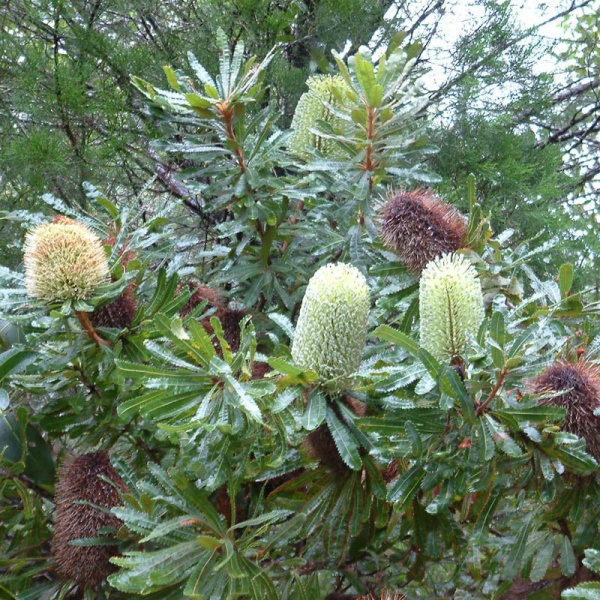
Banksia aemula – Wallum Banksia
This banksia is an attractive plant suited to sandy heath locations. It can grow to 8 metres in the right conditions, although it rarely exceeds 3 metres. It is bushy in habit and is tolerant of poorly drained soils.
I have a Banksia aemula in my front garden which has responded well to pruning by bushing out and flowering often.
Other Banksias in the Shire include:
Banksia robur – Swamp Banksia
This is a very appealing specimen and my favourite for appearance. It usually grows in wet heath and shrubland. The flowers are green to rusty brown broad cylindrical spikes. They provide shade and shelter for butterflies, nectar for them to feed on and a place to lay their eggs.
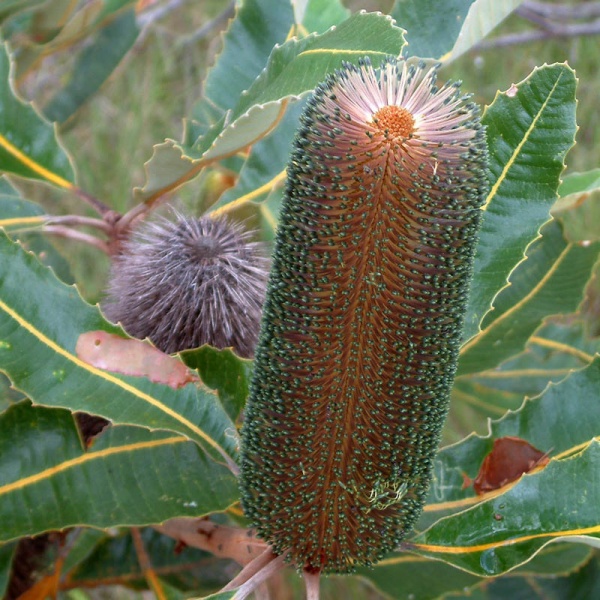
Banksia serrata – Red honeysuckle / Saw Banksia
Known to some as ‘Old Man Banksia’, this species is very similar to Banksia aemula. It is a popular landscaping plant because of its serrated leaves and large greenish yellow flowers which open from summer to winter. It can grow from 2 to 12 metres and is adaptable to most soils although it requires good drainage.
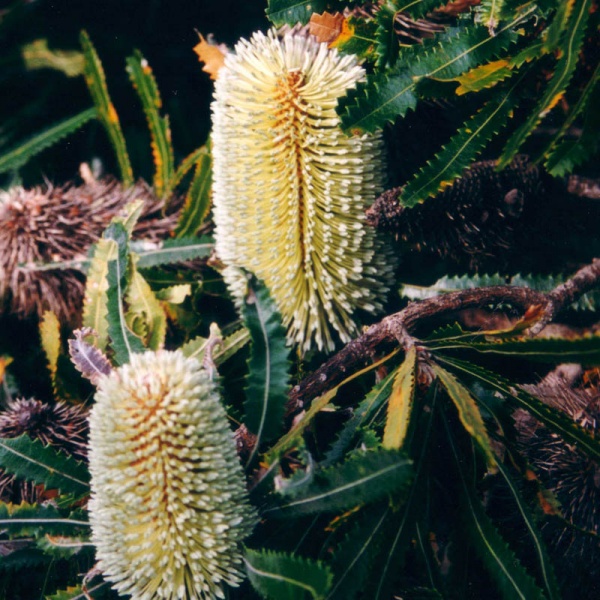
Banksia oblongifolia – Dwarf Banksia
This species prefers moist open heathland but also grows in the understory of open forests. The flowers can be blue-grey to greenish yellow and it is a host plant for some butterfly species. Its smallish size and multi-stemmed habit make it well suited for small gardens.
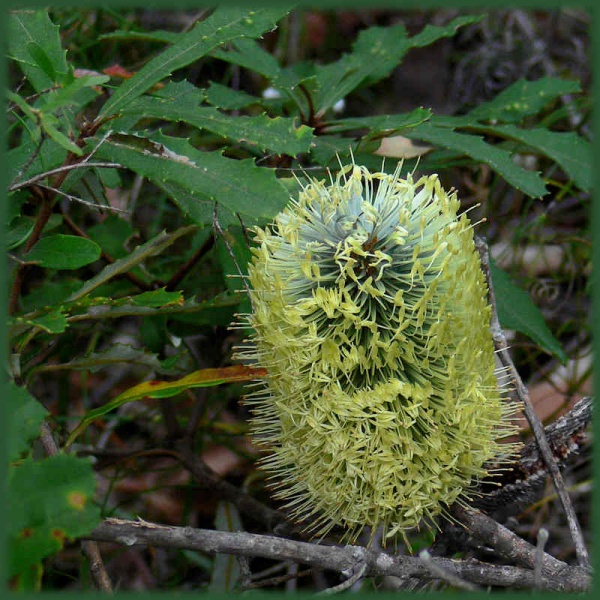
Banksia spinulosa – Candlestick Banksia
This species is also found in Dry Eucalypt Forests and generally grows to about 2 metres. The dense habit of this species makes it a useful screen plant and it will grow in most soils except those with poor drainage. The flowers range from yellow to deep red and open in autumn and winter.
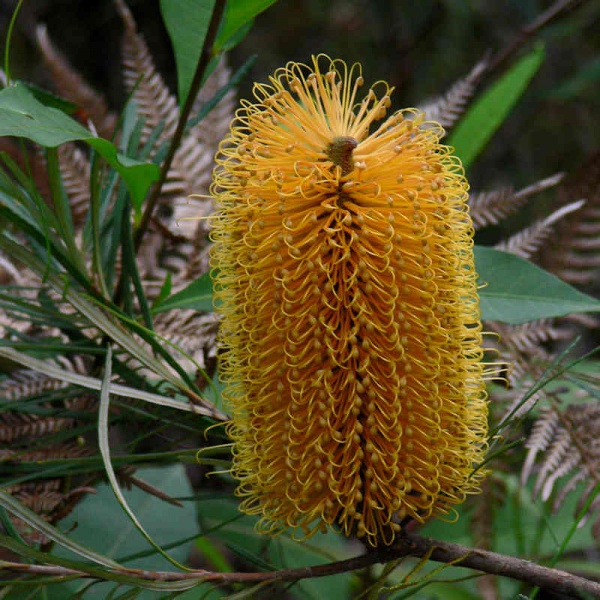
Banksias have to be one of my favourite native plants. I have much to learn about native plants, but have discovered a bit more while researching this article.
Urban Wildlife Gardens would welcome any comments, stories or photos you may have about your own experiences with Banksias.
Stay warm … a wonderful time of the year in the Noosa Shire.
Kay Southam