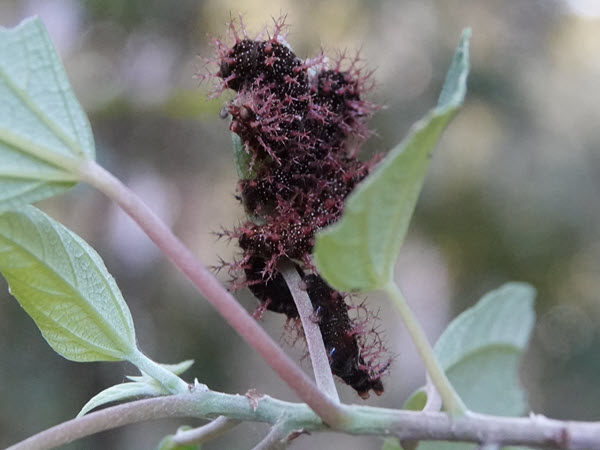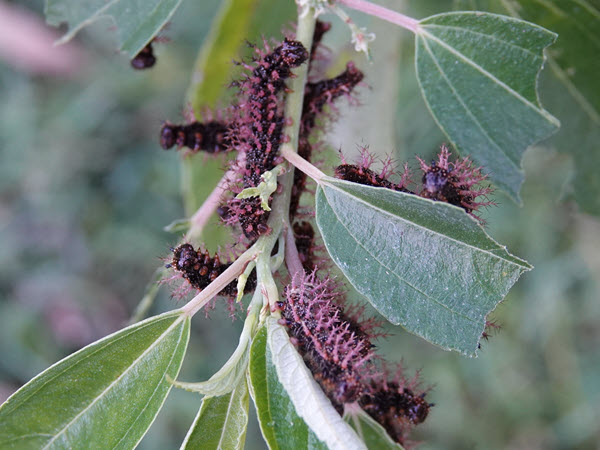
It’s nice to stumble on the wonders of nature, which is what I did one day while walking around my garden. I noticed several caterpillars in my young native mulberry tree, Pipturus argenteus, and, on further inspection, many more. I often see caterpillars during the summer months, but this was mid-May so was surprised to see so many at that time of year.
My first thought was that they were going to devour my poor tree, and I wondered if I should do something about it. Before jumping to conclusions, I decided to investigate first and I’m so glad I did. These caterpillars were the larva of the beautiful Jezebel Nymph butterfly, Mynes geoffroyi, which rely on the native mulberry tree to lay their eggs.
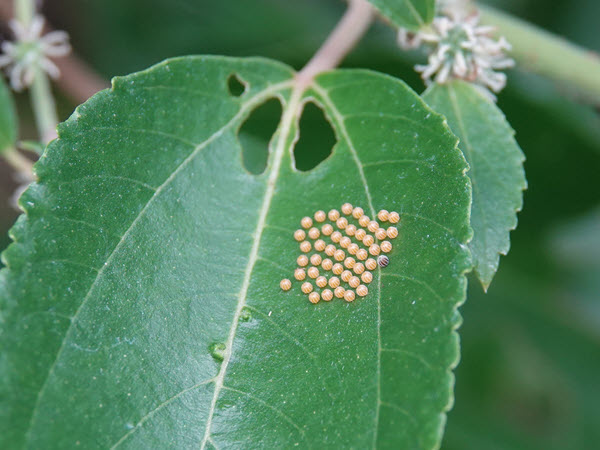
I read that eggs are laid in clusters of several dozen and I remembered taking photos some time ago of eggs laid on a much larger native mulberry tree in my garden. I found it very satisfying to be able to finally identify the eggs.
I also read that the larva hatch at around the same time, usually stay together and feed in groups and are also quite gregarious. You can see evidence of this behaviour in the attached photos.
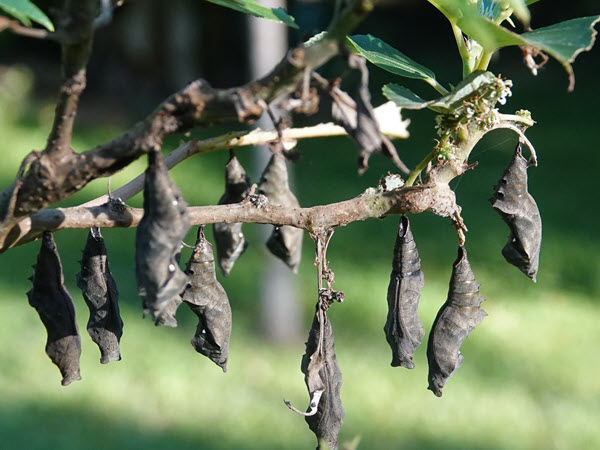
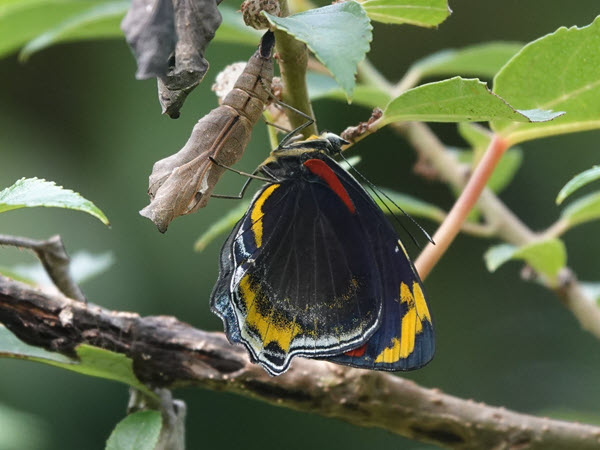
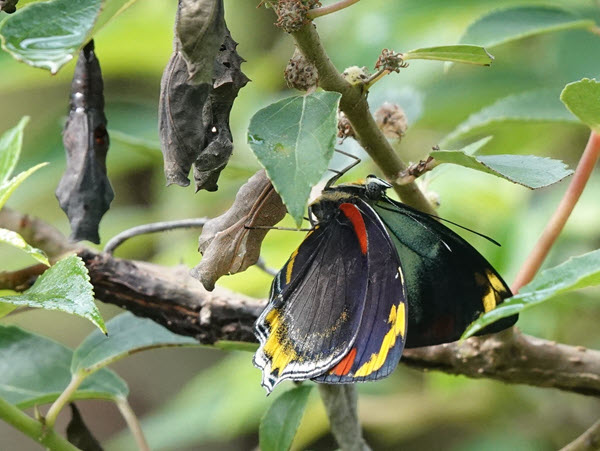
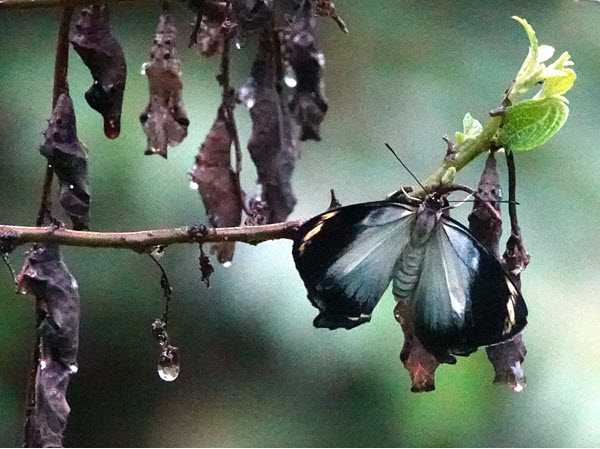
One day I saw what looked like dead leaves on the plant but, on closer inspection, realised they were chrysalis, with many hanging on the same branch.
I was hoping I’d be lucky enough to witness the emergence of a butterfly from its chrysalis, a mesmerizing and delicate process. This process reveals the beauty and resilience of nature and although this was not to be, I was lucky enough to photograph three butterflies at the stage where they were allowing their wings time to dry and expand, a process vital for their ability to fly. Once the butterflies begin to fly they are opportunistic and feed on a variety of plants.
My Pipturus argenteus is recovering well with lots of new growth and I look forward to following the cycle of the Jezebel Nymph Butterfly next season.
Keron Hilton