Dr Adrian Gallagher is a recently retired Avian Veterinarian who has always had a strong interest in birds and nature. After graduating from the University of Queensland with honours and a Bachelor of Veterinary science in 1984, he worked in several general practices on Brisbane’s Northside at a time when avian medicine and surgery was in its infancy. He continued to grow his avian knowledge base, completing his membership in Avian Health with the Australian and New Zealand College of Veterinary Scientists in 1994.
He established Australia’s first Avian only practice, Brisbane Bird Vet, in 2006. This grew to a three man practice and, although the primary patient base was companion birds, the practice was dedicated to the treatment of wildlife ‘pro bono’ and saw a heavy wildlife case load.
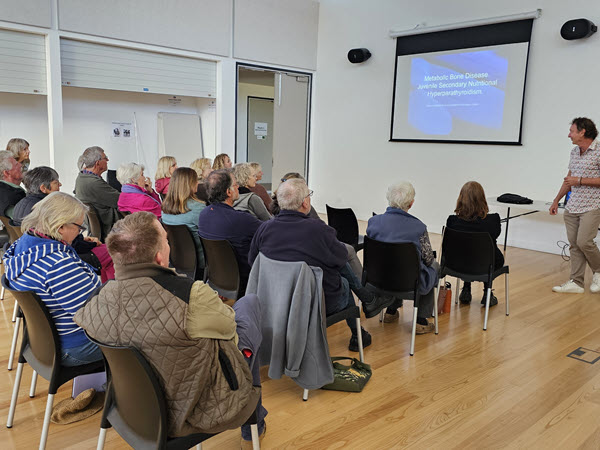
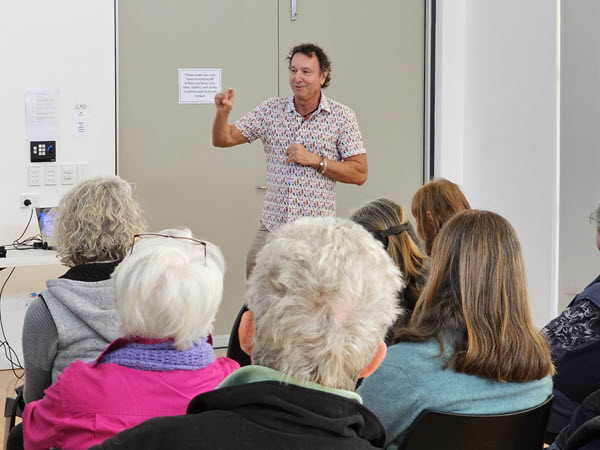
Adrian started his presentation by discussing juvenile metabolic bone disease. He explained that it results from an improper parental diet. This disease is very common in aviculture where birds are dependent on the diet offered to them by keepers. It also occurs in urban wild birds which have an unnaturally small home range and are fed inappropriate foods like bread, mince, or table scraps by humans. These foods are often deficient in calcium and high in phosphorus and fat. They also lack the essential nutrients needed for healthy bone development and the adult female birds then produce nutritionally deficient eggs and embryos. The hatchlings, which have a rapid growth rate, are unable to utilize dietary calcium and develop osteopaenia (low bone mineral density) and osteomalacia (soft bones).
Adrian described the many clinical signs of juvenile metabolic bone disease including: bone fractures and breaks, splayed legs, feet facing in the wrong direction, curved spine and misaligned wings, and beak and cranial deformities. The photos Adrian showed of birds with these symptoms were sad and confronting. These skeletal abnormalities result in inability or difficulties in lifting head, perching, walking and flying. The mother birds, which use so much calcium when breeding, can also develop maternal and reproductive disease, resulting in weakness, fractures and egg binding.
Captive and companion birds which develop metabolic bone disease can be given nutrient supplements and offered salvage procedures by a vet. These involve bandages, splints or casts to stabilize fractures and promote healing, or surgical procedures including pinning, plating and external fixatures.
These procedures are not beneficial for wild birds as they would still not be able to survive on their own. Many young birds with the disease are often unseen in nest hollows, and any that are taken to wildlife carers or vets generally often have to be euthanized.
Adrian also discussed some other implications of wild bird feeding. In their natural environment birds feed over a wide area on a broad range of foods, including fruits, nuts, vegetation, insects, pollen and seeds, which provide a balanced diet. When carnivorous birds feed naturally they eat all their prey including the organs and bones and get full nutrition.
If fed artificially at feeding stations birds get all the food they need in a short period of time rather than having to fly up to 100 km to forage. They become sedentary and develop ‘human like’ health problems such as high cholesterol and harmful behaviour such as feather plucking.
Artificial feeding also encourages increased numbers of birds in one place. This leads to increased competition for food and nesting sites and results in physiological stress and unnatural behavior such as increased aggression. There are also increased opportunities for transmission of disease especially if food stations are not cleaned regularly.
Adrian acknowledged that some people will always want to feed wild birds so he said they need to do so responsibly to ensure the birds stay healthy. This includes feeding them the right food such as nutritionally balanced pellets, mealworms or a nutritionally balanced retail bird mix, rather than dry seed, bread, meat and other human food. He also suggested feeding only small amounts that are readily consumed, feeding at different times of the day and skipping feeding days, so that no set pattern is developed and large numbers are not encouraged.
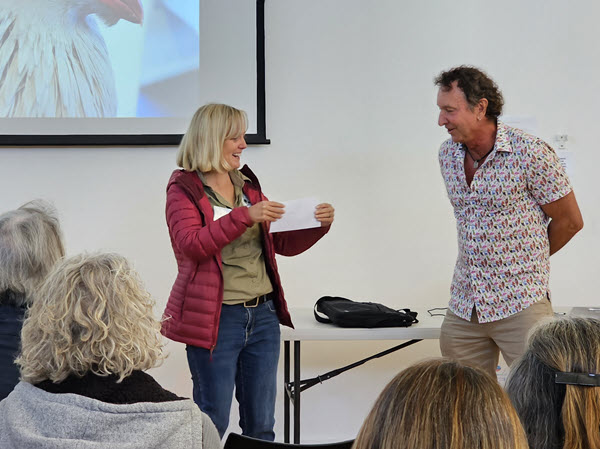
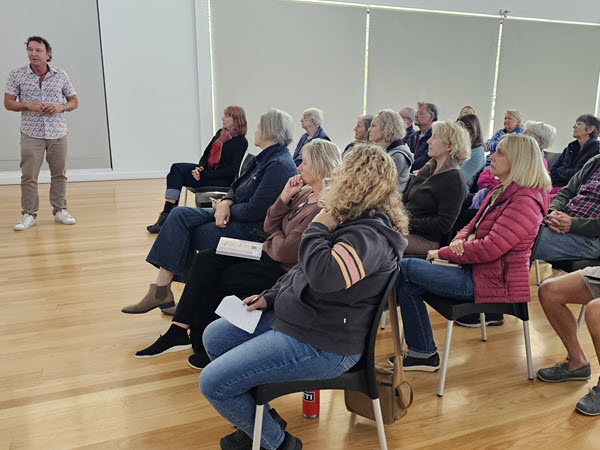
UWG would like to thank Adrian for his informative and important presentation. The attendees had many questions for Adrian after the presentation and during morning tea. He agreed that the best way to attract and enjoy wild birds is to provide them with a variety of natural food sources by planting a range of local native plant species in our urban wildlife gardens. See the links below for more information and, if you are disturbed by what you’ve learnt about metabolic bone disease and its causes, tactfully spread the word.
https://birdsqueensland.org.au/education/birds-in-gardens/
https://birdlife.org.au/a-guide-to-feeding-wild-birds-in-australia/
Vanessa Presling