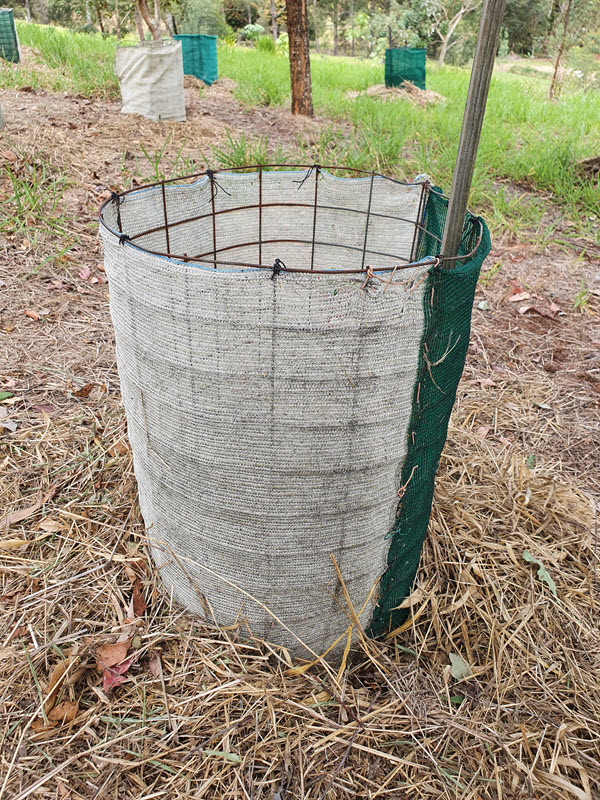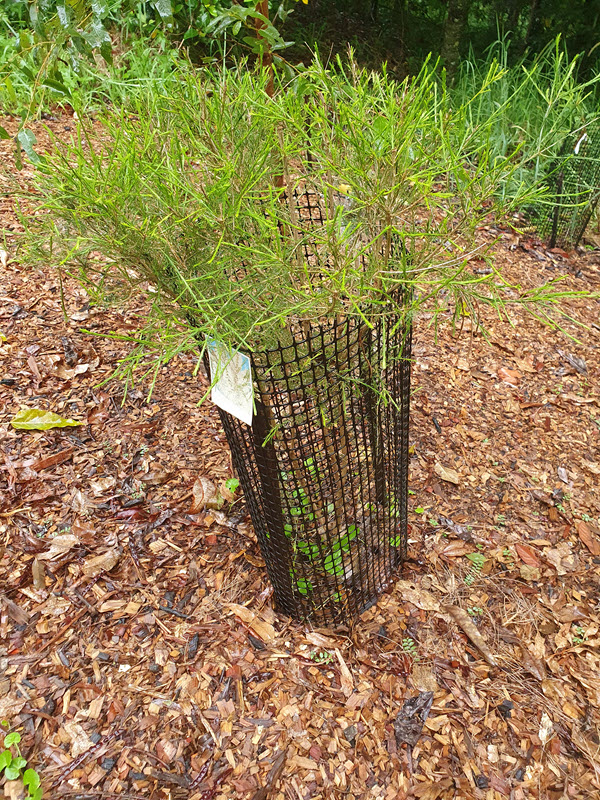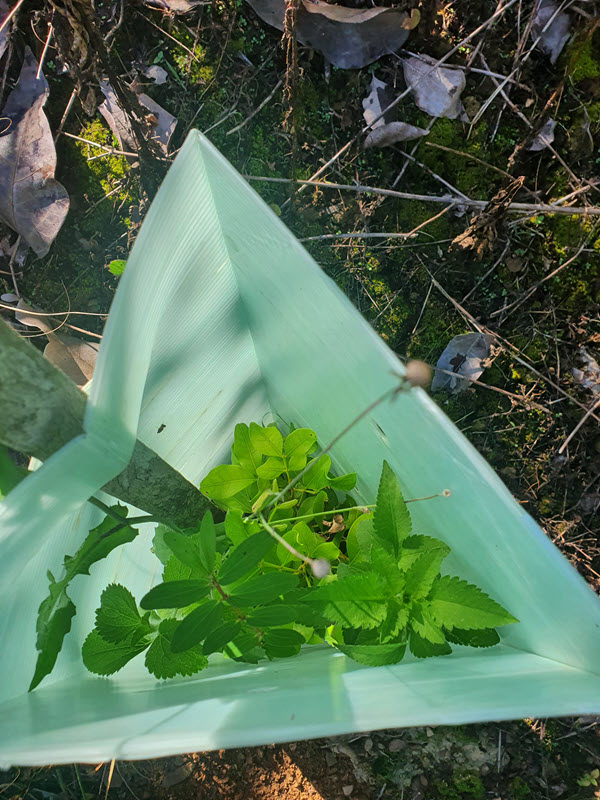
Spring is almost here so it is time to get planting. Putting plants into the ground now will allow them time to establish before the summer heat kicks in. When planting in a fenced garden, plant guards aren’t so necessary. They would help to keep pets and balls from damaging the plants, but the main use for guards is to protect from kangaroos and wallabies.
Macropods love to eat the new growth of most plants but particularly like to nibble on young trees. Using tree guards will greatly increase the chance of plant survival. Saplings that do survive being predated on can have stunted growth and grow lopsided.
So which tree guards to use? The most common type is the green plastic ones seen in the photos. These are strong and last a long time. The problem with this type is the microclimate inside the guard. They don’t let air pass through, and the moisture trapped inside creates an unnaturally damp environment. Plants can rot and algae or moss thrive inside them. Due to the solid colour it’s hard to see what is growing and often weeds grow and out compete the tube stock. If the green ones are already on offer, they are better than nothing. Keep checking inside them and pull them off the ground a few centimetres so there is some air flow.
The best guards to use are made from wire. Chicken wire can be used but thicker wire will be more durable. Plastic mesh is also good for making a guard, it just won’t last as long as wire. Mesh or wire makes the best guards because they allow the plants to grow in the natural light and moisture levels that plastic ones alter. Making wire or mesh guards is time consuming but they will last for years and can be used multiple times.
It’s important to remove guards as soon as the plants have grown up past the guard. When the plants get a bit older, they don’t seem to be as tasty to the kangaroos and wallabies. Guards that have stayed on too long are difficult to remove and can impact on plant growth.
Michelle Newall