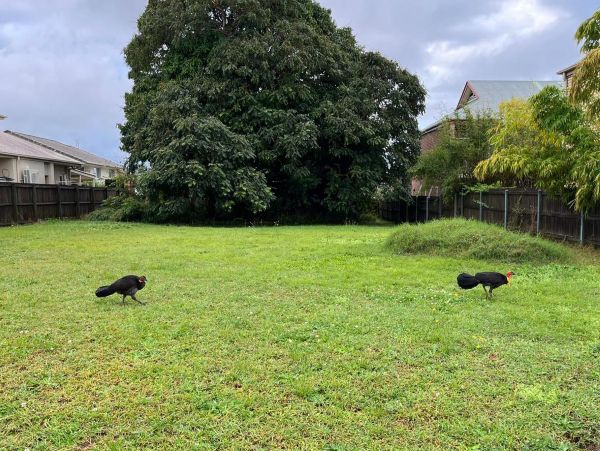
Australian Brush Turkeys (Alectura lathami) belong to the family Megapodiidae, or mound-building birds, with their population extending from Cape York down the eastern coastline of Australia into far-eastern Victoria.
Often referred to as bush or scrub turkeys, this mischievous ground-dwelling bird can wreak havoc in the suburban garden with their tendency to scratch through mulch, soil and leaf litter looking for food. They can leave a trail of destruction in their path, pulling out seedlings, tearing up garden beds and making a general mess of your suburban garden. Although these modern-day dinosaurs (theropods) can be a nuisance in your home garden, they play an important role in the ecosystem by breaking down leaf litter and predating on bugs and grubs, and are an essential part of Australia’s native wildlife.
With many native species struggling against the growing threat of loss of habitat, brush turkeys seem to thrive in suburban areas and have adapted to living side by side with humans. They are known to stalk park picnics, raid bins and use their opportunistic nature to swiftly snag a free feed when your guard is dropped. This, at times, gives them a pesky label, but what do we really know about these cheeky creatures?
A descendent of bipodal dinosaurs, including Velociraptor and Tyrannosaurus rex, these birds have feathers, clawed feet, hollow bones and a beak with no teeth. They are capable of short flight, often up into trees to roost or over the fence if they’re being chased out of your home garden.
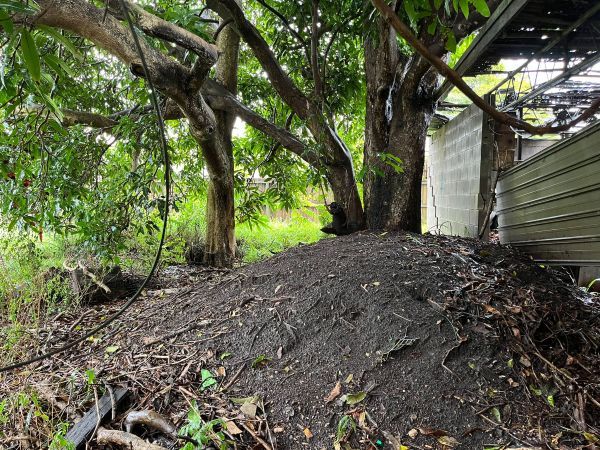
Males build nests or mounds and are often seen and heard vigorously digging away. Heat generated from rotting vegetation is used to incubate eggs rather than their own body temperature. They regulate the heat of a mound at 33 degrees by adding and removing layers as required, to maintain the perfect temperature.
Breeding season extends from spring to summer, with several females laying eggs in one male’s mound which can contain up to 50 eggs. The species can be quite vocal during breeding season! Males make a low ominous ‘oom-oom-oom’ call around the mound to deter rival males, while females make soft clucking or croaking noises especially when close to a mound.
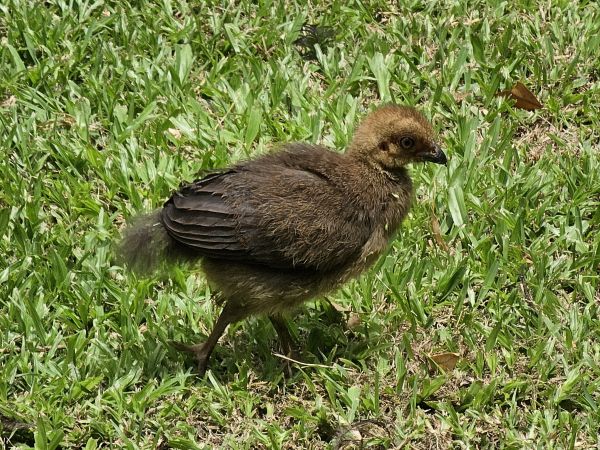
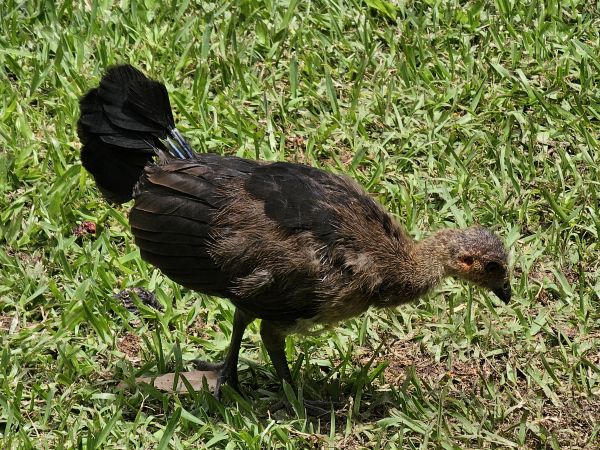
Brush turkey chicks are tough little things and one of the closest comparisons to what baby dinosaurs might have looked like. They are independent from birth. Once they claw their way out of the nest (sometimes taking 2-3 days), the chicks are well equipped as they can fly within hours of hatching and have strong legs and camouflaged brown feathers.
Although these strongly independent and instinctual creatures seem a tough catch for predators, survival rates are low. The chicks are on their own to hunt for food and avoid predation from animals such as the Goanna (Varanus varius) and Dingo (Canis dingo), both of which also raid nests for eggs. Snakes, birds of prey and cats also target the agile chicks. Those that survive the juvenile stage can go on to live an average life of 10 – 12 years. They have few predators once they reach adulthood, with their size, strong claws and ability to fly high into trees making them a formidable foe.
It is easy to view these large birds as an enemy to the suburban gardener, but their strong ecological role makes them a friend to their surrounding ecosystem. Whether it’s through nutrient recycling and soil aeration, seed dispersal, or their eggs and chicks providing a food source to other species, they play an essential function in a healthy ecosystem. We are lucky to have them in the numbers we do and they are a strong reminder of life that came before us.
Samuel Wockner