I always look forward each year to the Sunshine Coast Wildflower Festival. There are so many interesting walks, it’s hard to choose which to do.
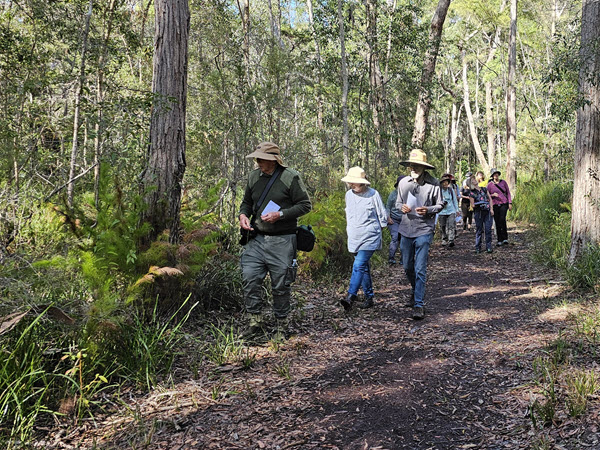
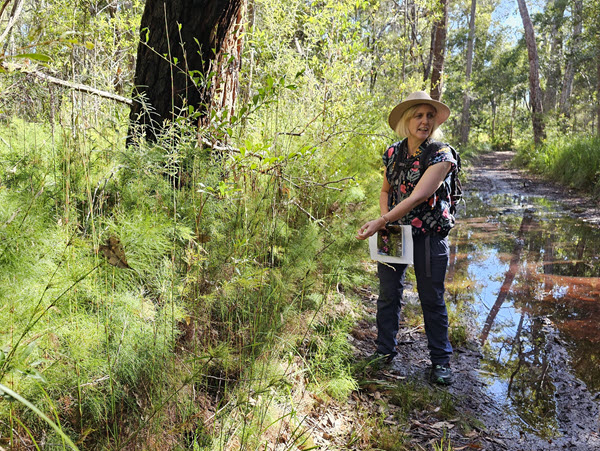
This walk was organized by Noosa and District Landcare and took us through a section of Tewantin National Park. I was surprised that the walk was on the edge of a suburban and industrial area, only a ten minute drive from where I live. There were so many beautiful native plants and wildflowers to see in just a small area.
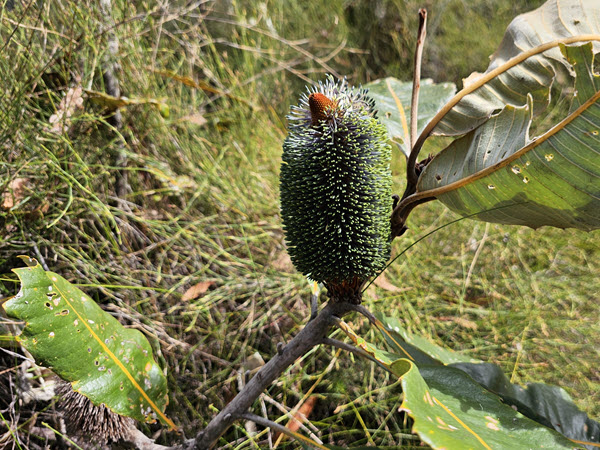
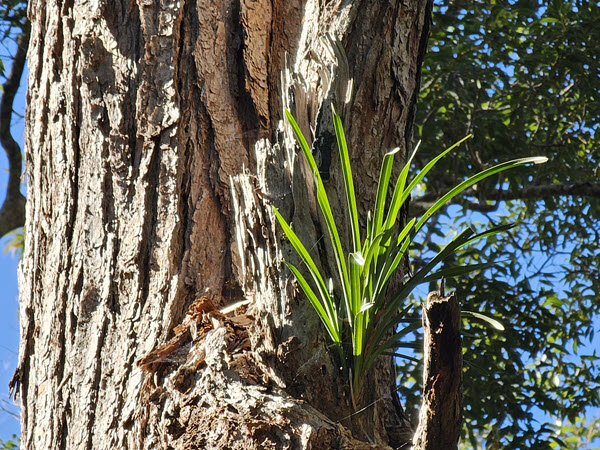
Our group was guided by Sarah Lawson and James Anderson, Project Officer from Noosa and District Landcare. They explained that the area was closed heathland on seasonally waterlogged soils. It is a coastal lowland ecosystem of high conservation value and contains species like Banksia robur (Swamp Banksia), Xanthorrhoea fulva (grass tree), and Hakea actites (Mulloway Needle Bush or Wallum Hakea). The low-nutrient conditions of wet heath swamps are also ideal for carnivorous plants, such as Drosera (sundews).
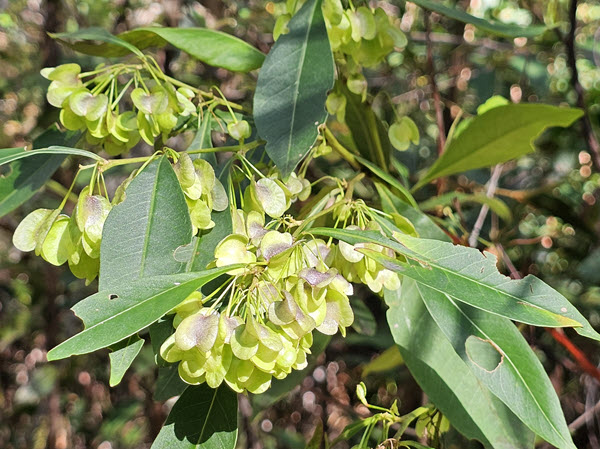
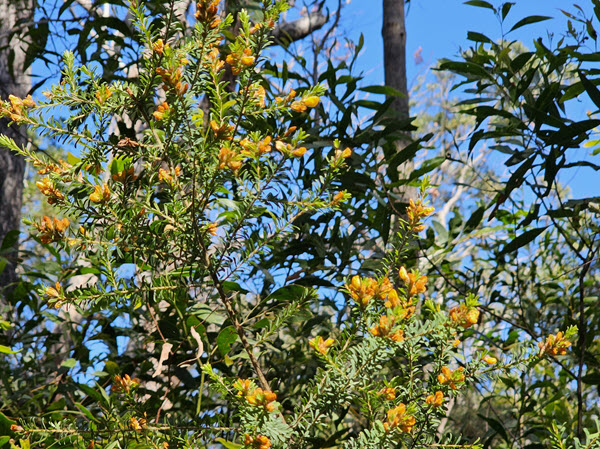
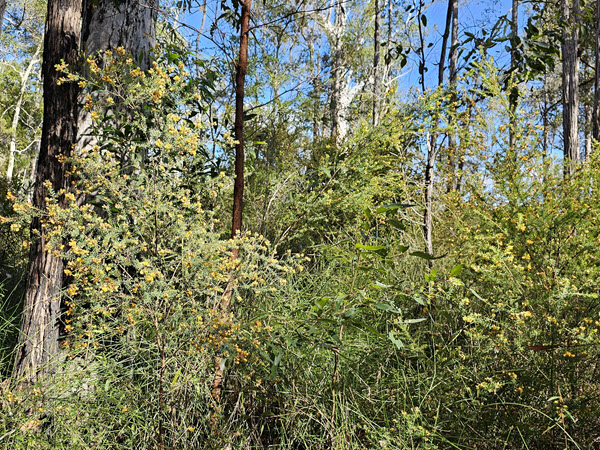
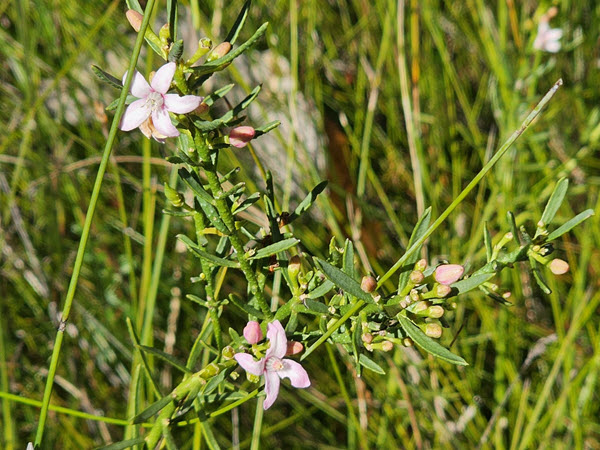
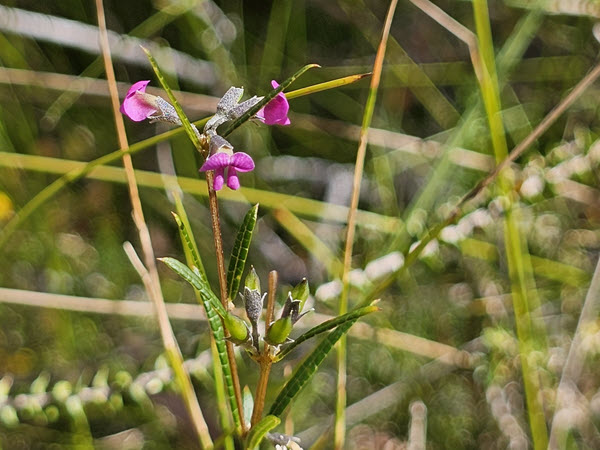
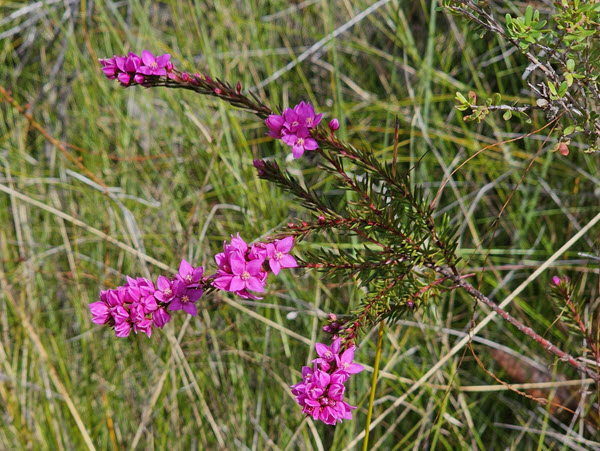
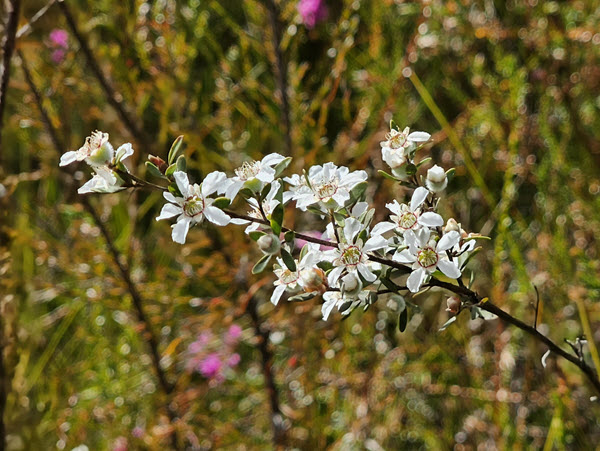
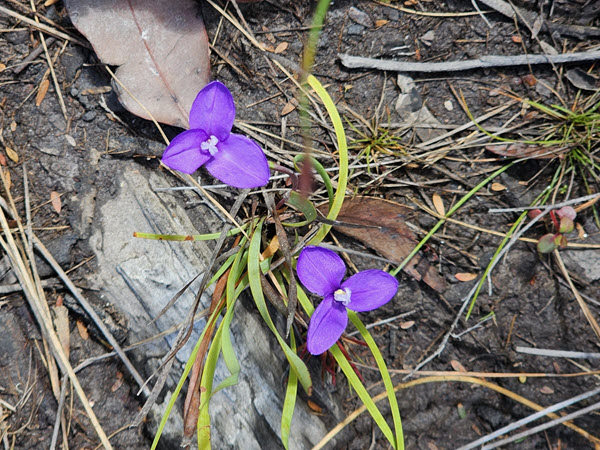
These heathlands, found in south-east Queensland, are particularly vulnerable to habitat loss and are increasingly important for biodiversity conservation. This part of Tewantin National Park is an area of very high plant diversity. We saw a wide variety of species flowering, from the stunning colours of Pultenaea paleacea (Chaffy Bush-pea), the delicate flowers of Boronia falcifolia (Wallum Boronia) to the always beautiful Banksia spinulosa (Hairpin Banksia) flowers. See the link Tewantin NP Species List of species in flower in August / September.
The walks I did this year heightened my appreciation for this beautiful area in which we are privileged to live and made me appreciative of the efforts of many people over the years to conserve these special places for us to visit.
Thanks Sarah and James for the friendly and interesting morning.
Vanessa Presling