There are many multi-purpose native plants suited to the Noosa hinterland, attracting native animals and providing bush tucker. There is a great sense of connectedness, peace and overall well being when we connect with plants and animals in nature.
Living in Lake MacDonald, I wanted to have a balanced and harmonious garden, with local native plants that thrived in their natural environment while also providing food and shelter for native species. Some native plants also provide food I can eat.
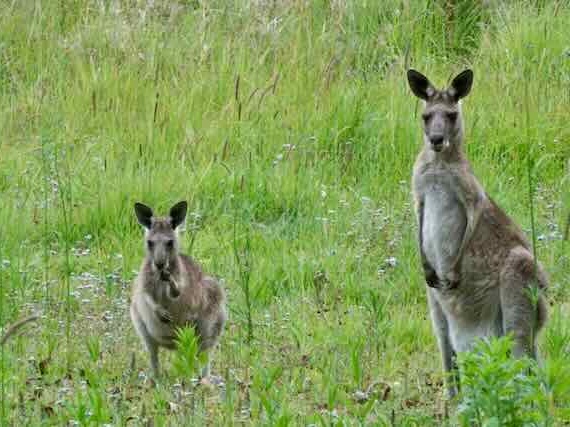
It is sometimes challenging when living with native animals, and harmony and peace can be disrupted. I can plant new saplings only to wake the next morning and find my newly planted tube stock are above ground with roots in the air. Bugs find their way into the house and march flies bite me through my clothes. However, the rewards of exploring and finding new insects, watching butterflies emerge and seeing wallabies at dawn, keeps me enjoying life and loving where I live.
Below are a few of my favourite native plants and some of the native animals I have seen in the garden.
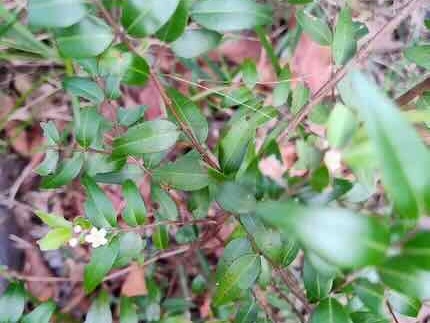
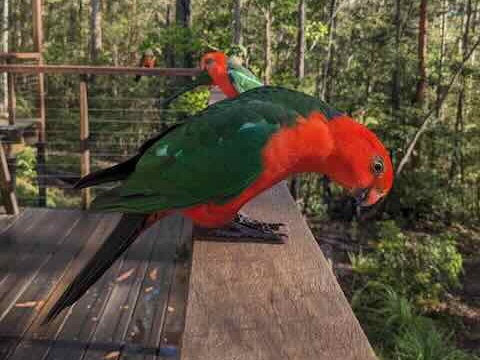
Austromyrtus dulcis, (Midyim – small shrub to 1 metre), attracts kangaroos, small marsupials, butterflies, bees, birds such as the King Parrot, Brown Cuckoo-dove and Wompoo Fruit dove, and provides bush tucker.
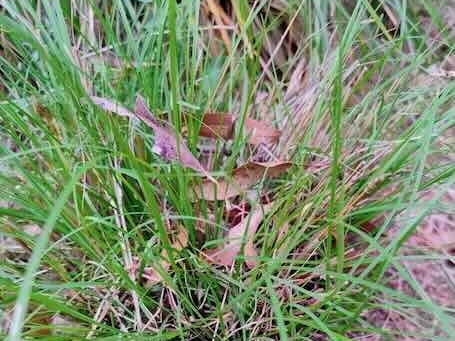
Themeda triandra, (Kangaroo Grass – tufted grass to 1 metre), attracts birds that enjoy seed including doves, pigeons and finches along with butterflies such as Heteronympha merope (Common Brown Butterfly). Grey Kangaroos feed on the leaves and it also provides bush tucker.
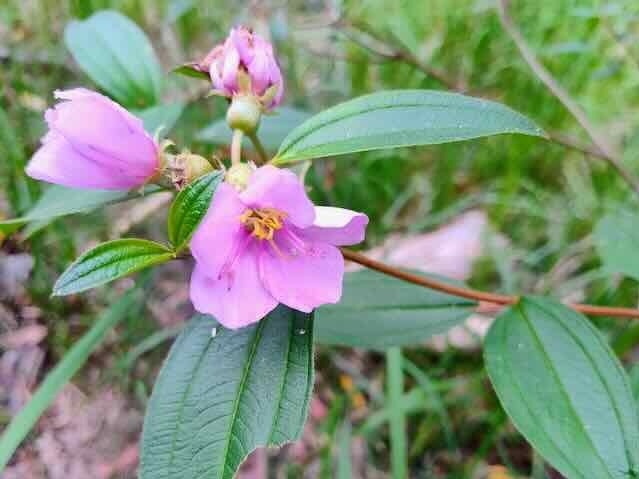
Melastoma malabathricum, (Blue Tongue / Native Lasiandra – small bushy shrub to 2 metres), has large pink – mauve flowers throughout the year and edible blue – black fruit. It attracts birds, bees and butterflies such as Hypochrysops miskini (Miskin Jewel Butterfly) and provides bush tucker.
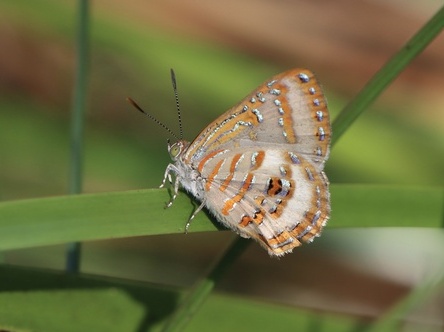 Miskin Jewel Butterfly by Braden McDonald, iNaturalist Photo 244013499, some rights reserved (CC BY-NC)
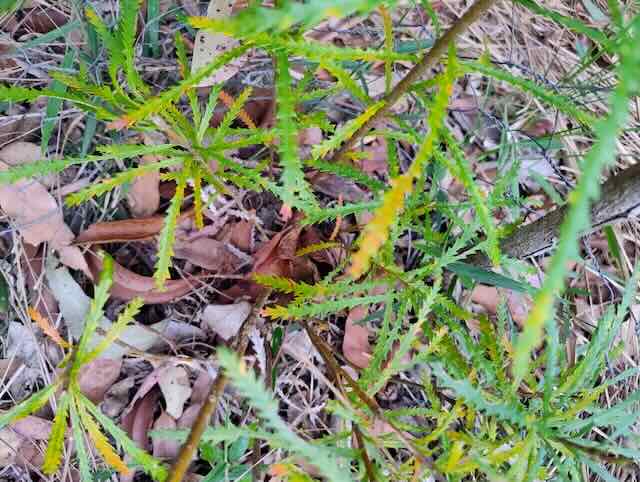
Banksia spinulosa var. collina, (Hairpin Banksia – small dense shrub to 2.5metres), attracts many native species including Sugar Gliders, Honeyeaters, such as the White-naped Honeyeater, Yellow-tailed Black Cockatoos and also provides bush tucker.
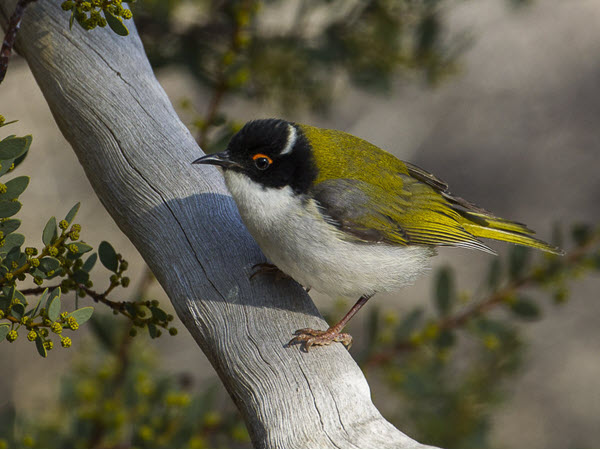 Francesco Veronesi from Italy, White-naped Honeyeater – Little Desert NP – Victoria S4E4614-2 (21789940973), CC BY-SA 2.0
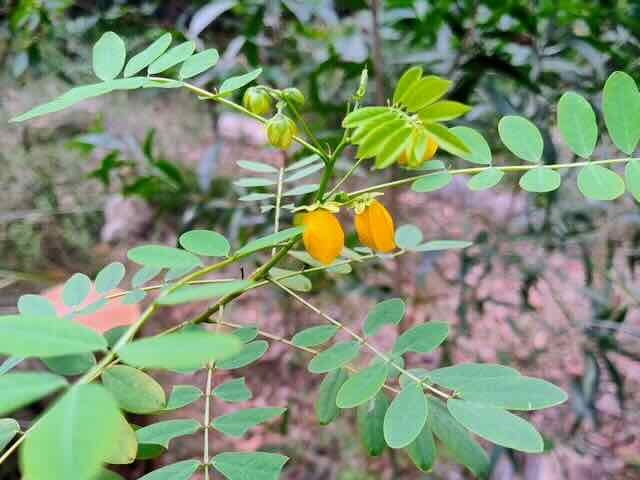
Senna acclinis, (Rainforest Senna / Brush Senna – medium shrub to 3 metres), is a host plant for Large and Small Grass-Yellow (Eurema spp.) and Yellow Migrant (Catopsilia gorgophone) butterflies. This species has become rare because of habitat clearing and confusion with Easter Cassia, an invasive exotic plant.
Commersonia Bartramia, (Brown Kurrajong – small pioneer rainforest tree to 9 metres), attracts native birds, bees, butterflies and small marsupials.
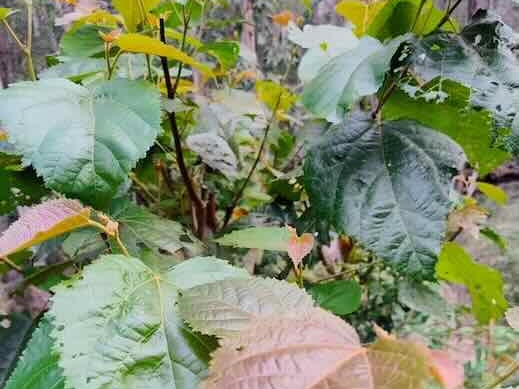
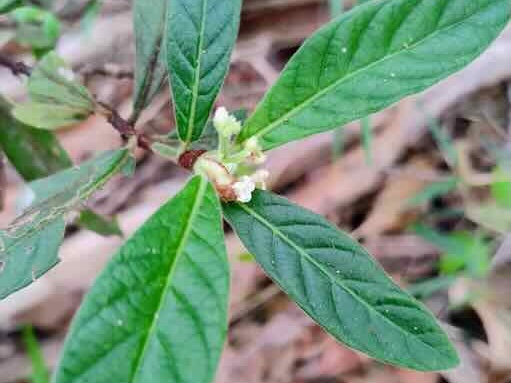
Psychotria loniceroides, (Hairy Psychotria – rainforest shrub to 3 metres), attracts birds especially the Green Catbird.
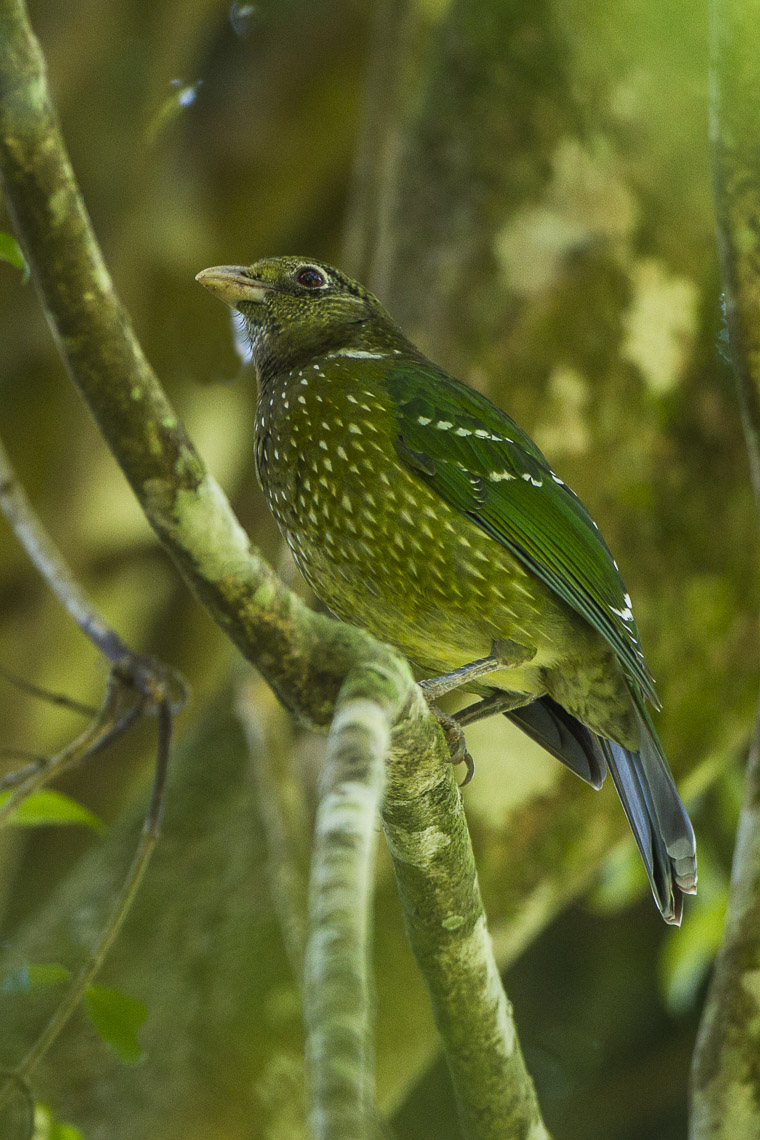 Francesco Veronesi from Italy, Green Catbird – Lamington NP – Queensland S4E6944 (22198819728), CC BY-SA 2.0
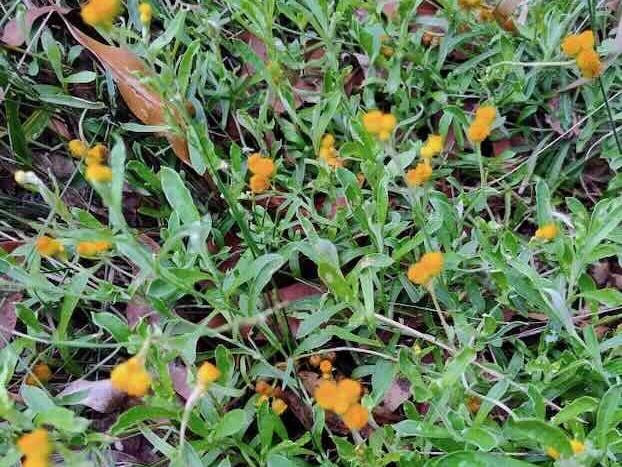
Chrysocephalum apiculatum, (Yellow Buttons – clumping. low spreading ground cover to 25 cm), attracts native butterflies and bees.
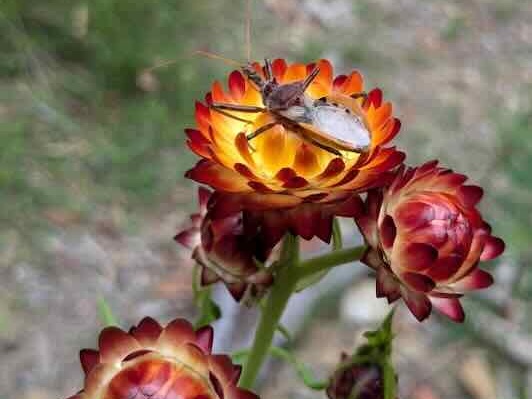
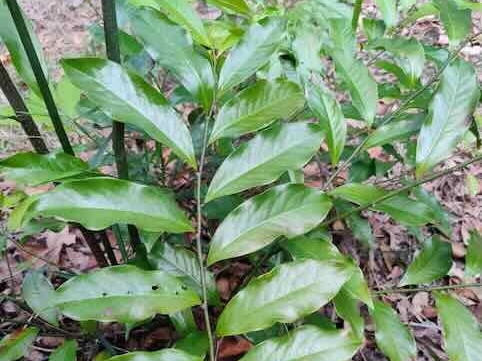
Eupomatia laurina, (Bolwarra / Native Guava a medium shrub or small rainforest tree 2 to 5 metres), attracts small marsupials, birds (King Parrot, Brown Cuckoo-dove, Wonga pigeon, Blue-faced Honey Eater, Crimson Rosella) and bees and is host to the Eastern Dusk-flat and Common Red Eye butterfly. The round fruits provide bush tucker from May to July and are sweet to eat with a similar taste to guava.
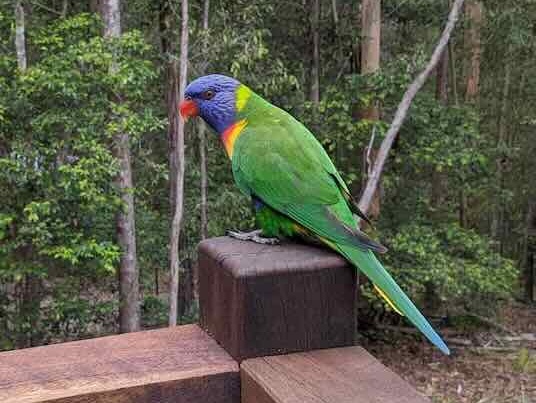
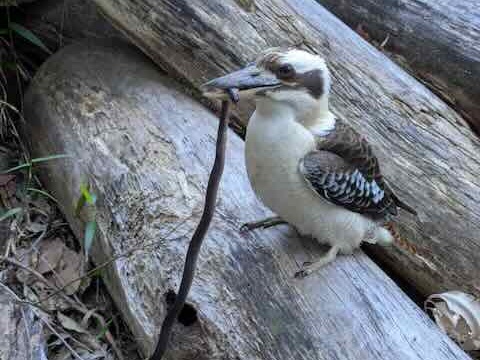
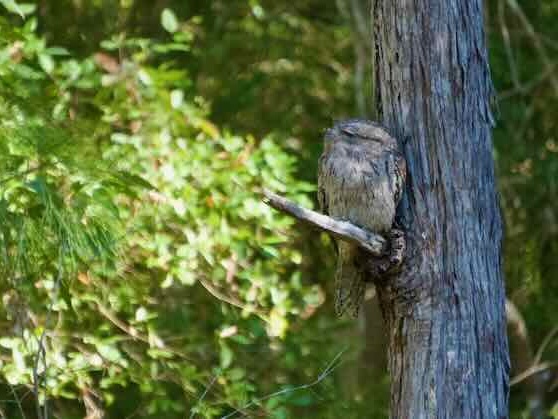
Local native plants also provide wildlife food suited to their biology. There is no need to supplementary feed native animals and native plants keep them wild, causing less trouble with aggressive behaviour and ensuring their diet is healthy. Having native plants in the garden ensures that I also get close to the locals. All the bird photos are regular resident birds that come into the garden and close enough to the deck to be photographed, without needing to hand feed them.
All photos are taken by Leonie Stephens unless noted.
Leonie Stephens