There are many locally native plants suited to urban gardens that provide wonderful foliage aromas, many contain botanical and culinary properties as well as provide valuable habitat for wildlife. Here’s a few of my favourites:
“Smell of the Bush” ( or Green Kamala) – Mallotus claoxyloides
An evocative name that lives up to the hype, with discreet flowers providing pervasive but ephemeral wafting smell of the rainforest that permeates the whole garden. It is a small tree / large shrub with leathery green leaves but can be readily pruned to provide a medium sized dense screen and thicket from suckers. Best suited to clay soils with reasonable moisture in part shade to full sun, though best to avoid summer western sun. Ideal to plant near entry to your house as the odour welcomes you home to your urban forest retreat.
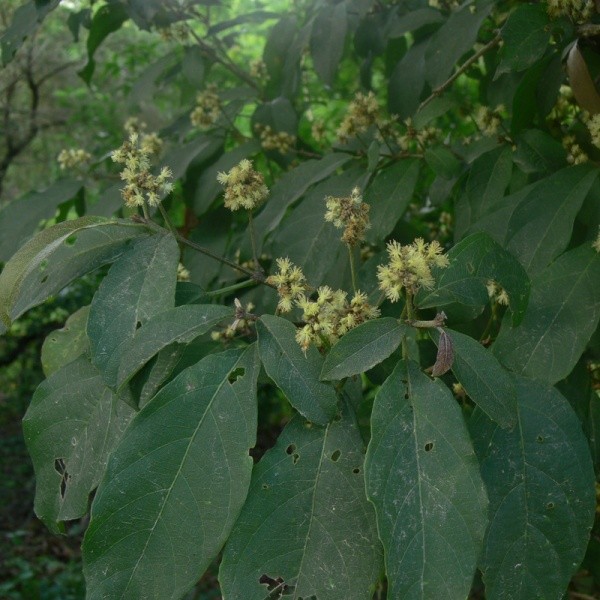
Smell of the Bush (or Green Kamala): Image from www.noosanativeplants.com.au
Lemon Scented Myrtle – Backhousia citriodora
The must have aromatheraphy plant of our region with beautiful sharp lemon fragrance from the crushed foliage. Large shrub to small tree but can be readily pruned to desired shape and size. Adaptable to clay or sandy soils but needs reliable moisture, in part shade to full sun. Oils from this plant is commonly used as a botanical in many commercial products. As a bonus it also has abundant cream flowers. Gather cut foliage in a vase and use as a centrepiece for the outdoor entertaining and crush to release the aroma and also deter insects. Use the leaves to flavour custards and creams for desserts, and use instead of bay leaves and curry leaves in savoury recipes. Use crushed leaves to flavour soda water. Devein and chop the leaves as a ready replacement for gremolata – the herb accompaniment to the classic italian dish of Osso Bucco.
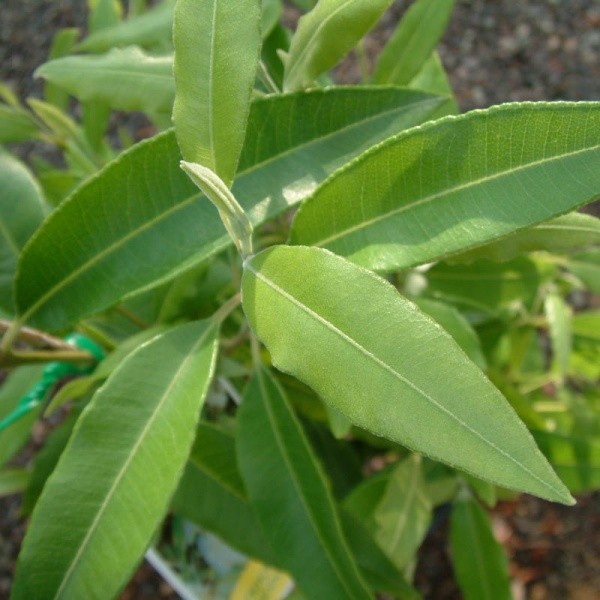
Lemon Scented Myrtle – Backhousia citriodora: Image from www.noosanativeplants.com.au
Keys Boronia – Boronia keysii
The official floral emblem for Noosa – the foliage has beautiful aroma when crushed common to many boronias, as well as delicate mauve flowers. A bunch of cut flowers and foliage is an uplifting gift to any person! It is a small to medium soft shrub found only in coastal plains north of the Noosa River with sandy soils and high water table, with filtered light. Can be challenging to grow in the urban garden and a great horticulturist accomplishment if you can successfully establish this evocative plant. It wont grow in clay soils but I have had some success a using it as a pot plant in a specialist native plant potting mix with morning sun, but still need to replant every 2 seasons.
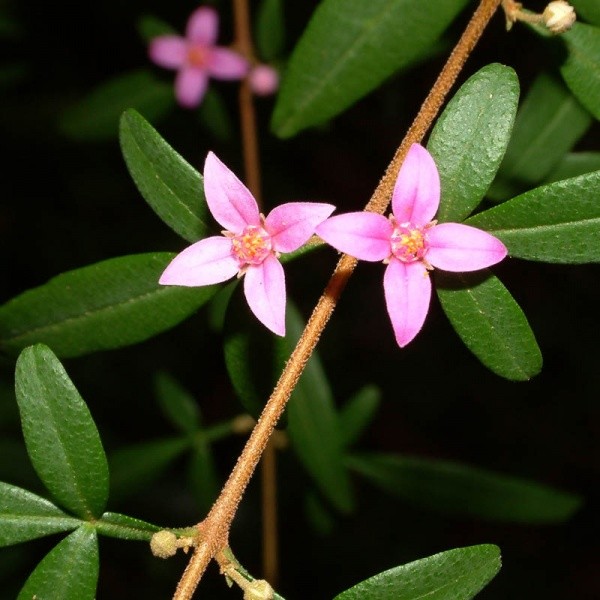
Keys Boronia – Boronia keysii: Image from www.noosanativeplants.com.au
Sandfly Bush – Zieria smithii
A terrible name for an attractive, aromatic and useful small shrub with soft open foliage and discreet white flowers. Crushed foliage releases evocative fragrance that is said to deter sandflies. Lovely to brush the crushed foliage on your skin when outdoors – like having a perfumed shower – particularly if you have been doing some sweaty weeding! Ideally suited as an understory plant in part shade – suited to wide variety of soil types with reliable moisture.
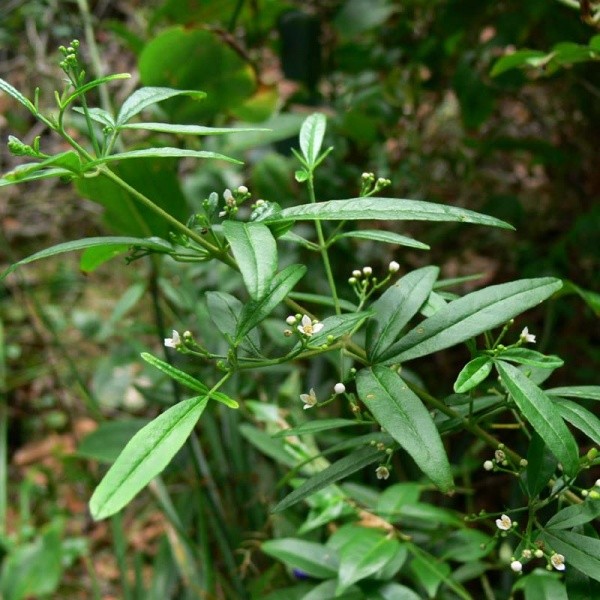
Sandfly Bush – Zieria smithii: Image from www.noosanativesplants.com.au
Queensland Wax Flower – Erioseira queenslandica
Medium shrub with striking rich perfumed aroma from the foliage with attractive pink flowers. A medium shrub suited to sandy soils in full sun, but needs reliable moisture. I have it growing in a clay loam on a mounded bank and its holding its own. A bunch of cut flowers and foliage is also an uplifting gift to any person! This plant is also a known food source for the Ground Parrot found in Noosa coastal sand dunes.
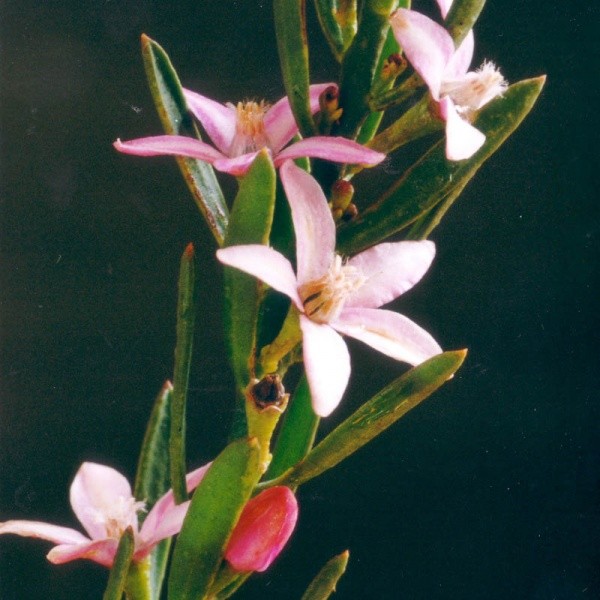
Queensland Wax Flower – Erioseira queenslandica: Image www.noosanativeplants.com.au
Cinnamon Myrtle – Backhousia myrtifolia
Large shrub to small tree but can be readily pruned to desired shape and size. Adaptable to clay or sandy soils but needs reliable moisture, in part shade to full sun. Attractive drooping foliage of dark small green leaves tightly spaced and also has abundant cream flowers. Crushed leaves have an earthy cinnamon aroma and flavour, and I use the leaves tied as a bouquet garni to replace cinnamon in cooking, as well as flavouring and dunking in hot chocolate.
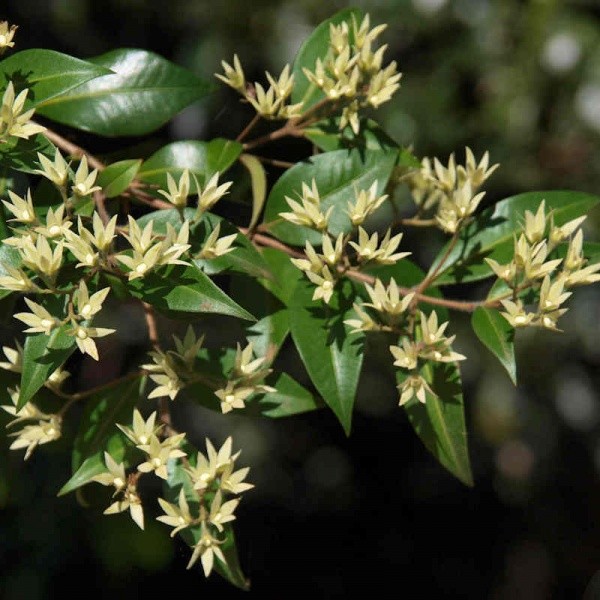
Cinnamon Myrtle – Backhousia myrtifolia : Image from www.noosanativeplants.com.au
River Mint – Mentha australis
A low growing spreading herb with edible scented foliage with strong mint aroma when crushed, as well as delicate white flowers. Suited to sun or shade, but needs consistent moisture. It can run through beds but is easy to control and prune, and makes a great native lawn or between stepping stones – walking releases the mint fragrance. Use in any recipe that calls for garden mint, though I certainly like fresh sprigs in a gin and tonic, or sprigs with flowers used as decoration on a cake with icing!
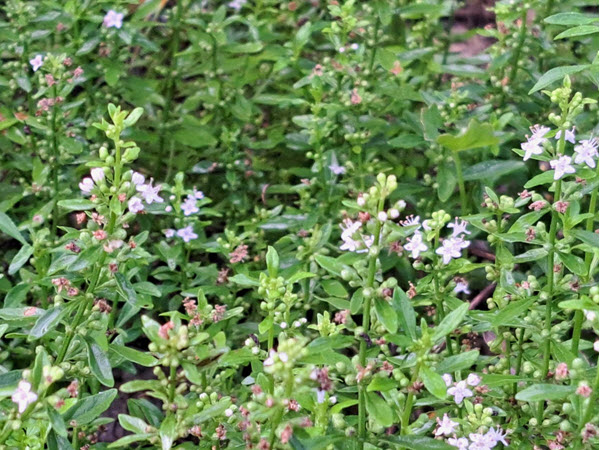
River Mint – Mentha australis: Image by Shaun Walsh
Barbed Wire Grass – Cymbopogon refractus
Hardy attractive grass suited to drier conditions though it will perform best with some protection and moisture in well drained soils. Has beautiful seed heads. The Cymbopogon genus includes lemon grass, and the barbed wire grass has a similar scent, particularly the lower stems when cut. Check the plant when you buy it as this characteristic is variable. Use in place of lemon grass in culinary and therapy applications.
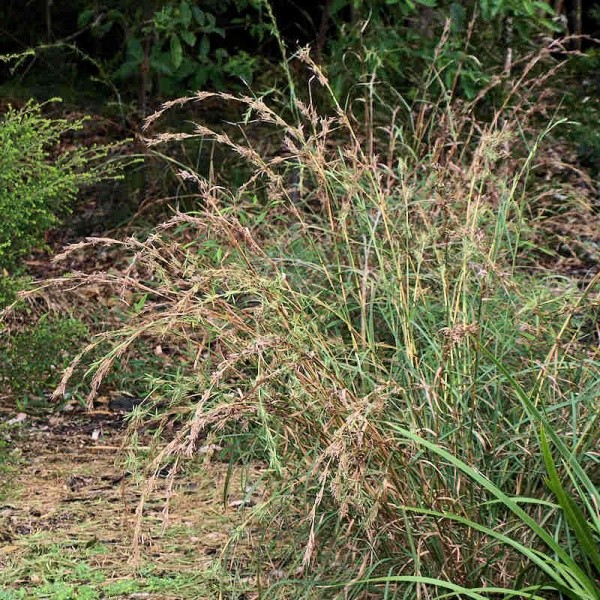
Barbed Wire Grass – Cymbopogon refractus: Image from www.noosanativeplants.com.au
Lemon Scented Tea-Tree – Leptospermum petersonii
A medium shrub with weeping bright green foliage and strong citronella fragrance when crushed, as well as attractive pink toned stems and branches. Adaptable to clay or sandy soils but needs reliable moisture, in part shade to full sun. Can be readily pruned to shape. Oils from this plant is commonly used as a botanical in many commercial products. Gather cut foliage in a vase and use as a centrepiece for the outdoor entertaining area and crush to release the aroma and it also deters insects.
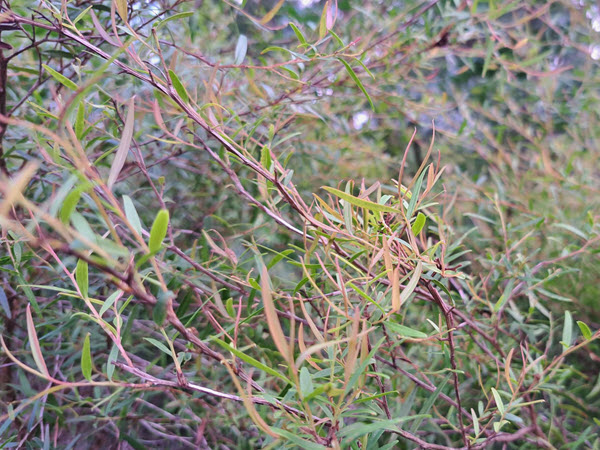
Lemon Scented Tea-Tree – Leptospermum petersonii: Image by Shaun Walsh
Shaun Walsh