Some plants need to be sold with a health warning. This month we look at Fire sticks, an attractive but toxic garden plant.
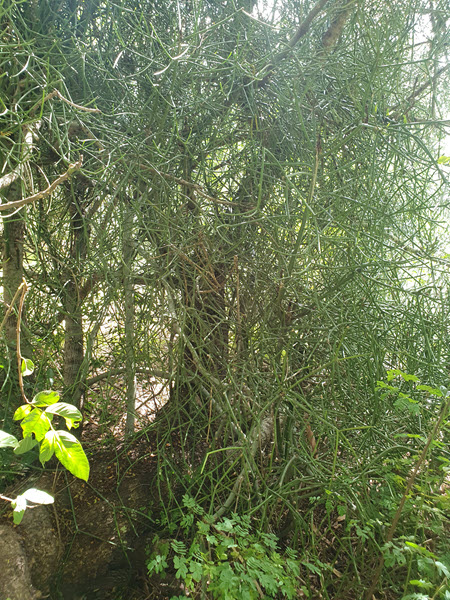
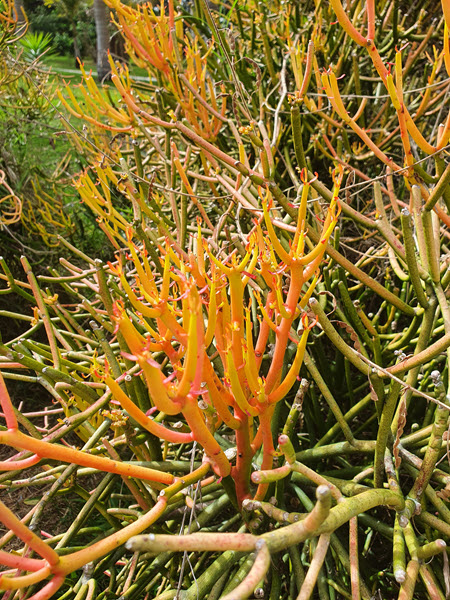
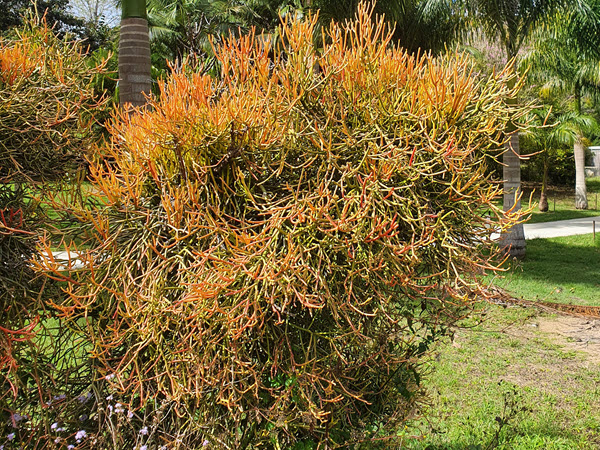
Recently I have noticed the desert plant Euphorbia tirucalli becoming more popular in gardens on the Sunshine coast. It’s not hard to see why, with the orange tips and cactus type foliage, its very attractive and brightens up any sized garden.
This plant from Madagascar does not pose a big weed threat. I haven’t seen it growing in bushland but would easily take hold if dumped into the bush. The concern is the toxicity of the sap. All Euphorbias have a toxic sap. It can cause extreme eye and skin irritations in some people and should be handled with gloves and eye protection. Pets and children should not come into contact with this plant. The smaller parts of the plant easily snap off and instantly start dripping the white sap. This species is said to grow to 2.4m, but I’ve seen other very similar plants grow to 4m. Once they get to this height, they are hard to deal with as every piece needs to be disposed of carefully.
Regarding wildlife habitat, I have seen small honey eaters feeding on the flowers that sit at the end of the branches. Planting Bottlebrushes instead of Fire sticks would provide food for more fauna and still be a nectar source for the Honey eaters.
If it’s the flash of colour that’s desired in the garden, the pink flush of new growth on Lilly pillys can deliver this and be a much better choice for gardens in our area. Hakeas have an unusual form and can be a good native replacement for Euphorbia tirucalli.
Michelle Newell
-
- Euphorbia tirucalli 1
-
- Euphorbia tirucalli 2
-
- Euphoribia tirucalli 3
-
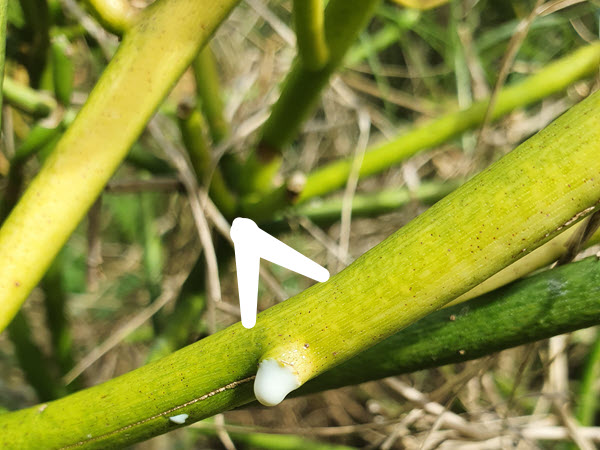
- Euphoria tirucalli 4