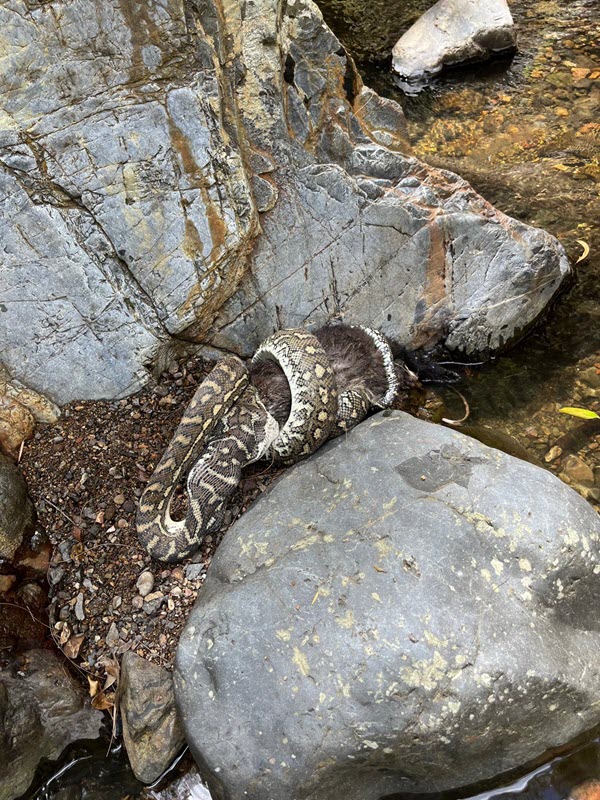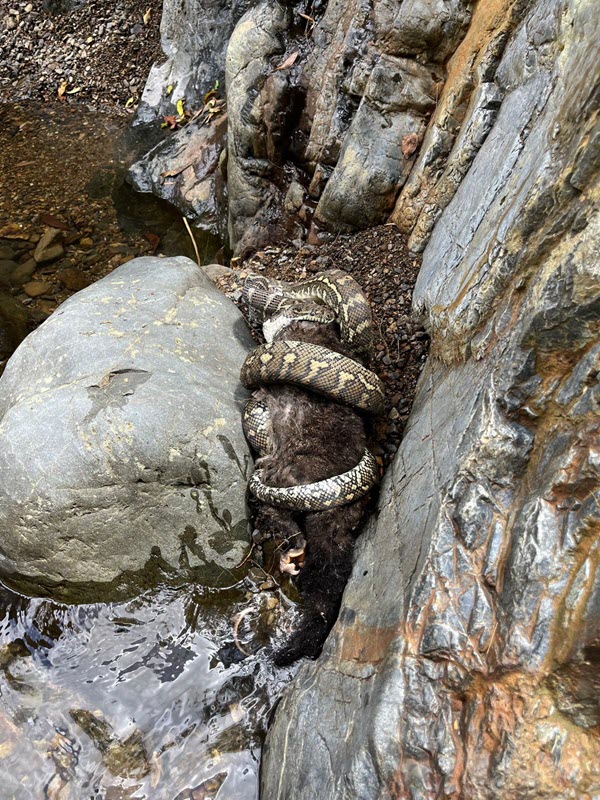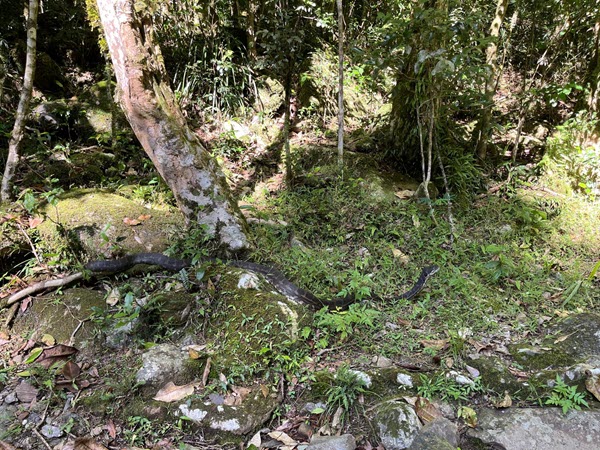
The coastal carpet python (Morelia spilota mcdowelli) is one of Australia’s largest and most recognisable non-venomous snakes. Reaching average lengths of 2–3 metres, with exceptional individuals exceeding 3.5 metres, this impressive reptile occurs throughout coastal and sub-coastal regions of eastern Australia, from south-east Queensland to eastern New South Wales. Its distinctive olive, brown and black patterning, overlaid with cream or golden markings, provides excellent camouflage amongst leaf litter, tree bark and rocky outcrops.
Highly adaptable, coastal carpet pythons inhabit rainforests, open forests, woodlands, mangroves and rocky escarpments, but they have also become well established in suburban environments. Roof cavities, sheds, retaining walls and dense gardens provide ideal shelter, while urban areas support abundant populations of rats, mice and possums, creating an ideal hunting environment. As one of the dominant reptilian predators in these ecosystems, the species plays an important ecological role by naturally regulating populations of rodents, birds and small mammals. A single adult python may consume dozens of rodents each year, reducing agricultural pests and limiting the need for chemical pest control. Despite their formidable appearance, they are generally shy, avoid human interaction and are protected under Australian wildlife legislation.
Unlike venomous snakes, coastal carpet pythons rely on stealth, patience and strength rather than toxins to capture prey. Primarily nocturnal, they use specialised heat-sensitive pits along their lips to detect the body heat of warm-blooded animals, allowing them to hunt with remarkable accuracy even in complete darkness. Once prey is seized with sharp, backward-facing teeth, the python rapidly coils around its victim. Rather than crushing bones, constriction restricts blood circulation, causing the prey to quickly lose consciousness before being swallowed whole.
Their flexible skull and elastic ligaments enable them to consume prey much larger than their head, while a highly efficient digestive system allows adults to survive for weeks or even months after a substantial meal. Juveniles feed mainly on skinks, frogs and small birds before progressing to rats, possums, flying foxes, rabbits and occasionally small wallabies as adults. Although renowned for their climbing ability, and often seen hunting birds and possums high in the canopy, they are also capable swimmers and readily move through rivers, wetlands and mangroves.
Breeding occurs during late autumn and winter, when males search for receptive females and may engage in ritualised wrestling contests. Females lay between 10 and 50 leathery eggs within sheltered locations such as hollow logs, tree hollows or rock crevices. Unlike most reptiles, they display remarkable parental care by coiling around their eggs throughout incubation and generating warmth through rhythmic muscle contractions, a process known as shivering thermogenesis. After approximately 55–70 days, hatchlings emerge measuring around 35–45 centimetres in length and immediately begin hunting independently. Coastal carpet pythons typically live for 15–20 years in the wild and may exceed 25 years in captivity.
The coastal carpet python is an intelligent, highly specialised predator that provides significant ecological benefits while asking very little in return. Rather than fearing these snakes, we should recognise them as valuable allies that help maintain healthy ecosystems by naturally controlling pest species. If encountered, the best approach is to remain calm and allow the snake to move away. Should one enter a home or create a safety concern, a licensed snake catcher should be contacted. By protecting habitat, improving public understanding and learning to coexist with native wildlife, we can ensure the coastal carpet python continues to thrive as one of Australia’s most remarkable and beneficial reptiles.
Samuel Wockner