Firstly, a group of Fairy Wrens were circulating the garden, moving around the house trilling, flitting around going in and out of shrubs and trees.
Secondly, I noticed that the trilling and flitting was coming from one location in the garden.
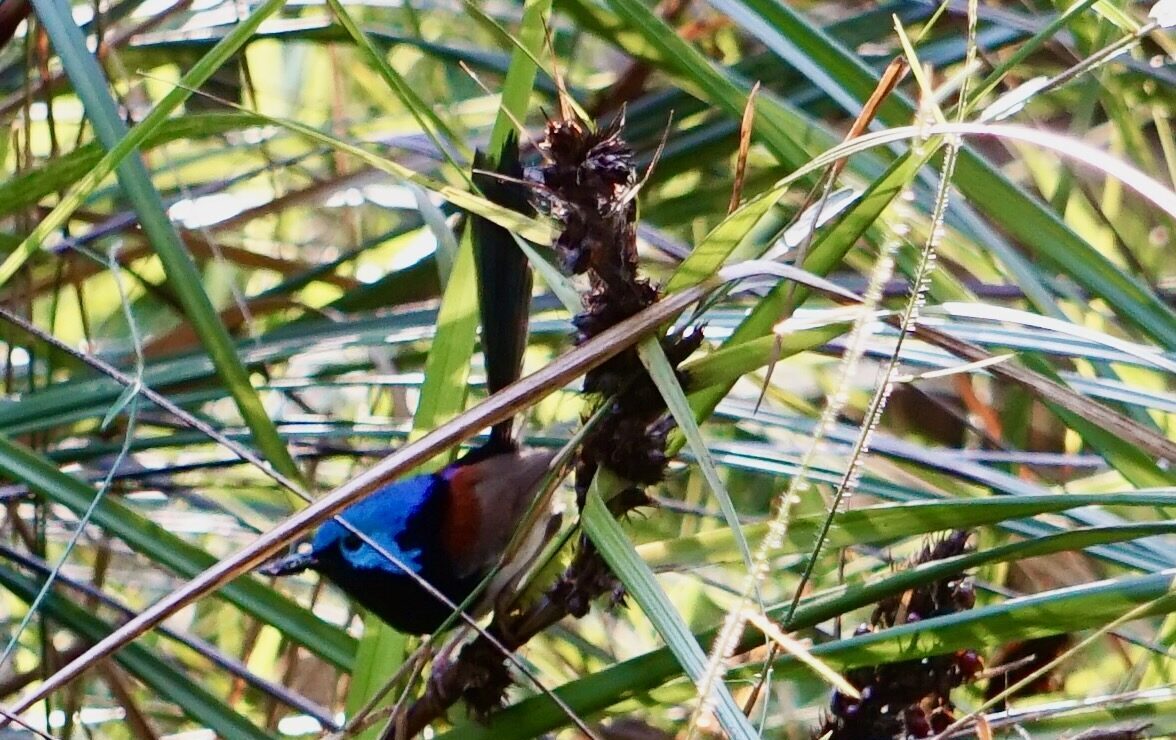
There was the male and female going in and out of the Saw Sedge (Gahnia aspera).
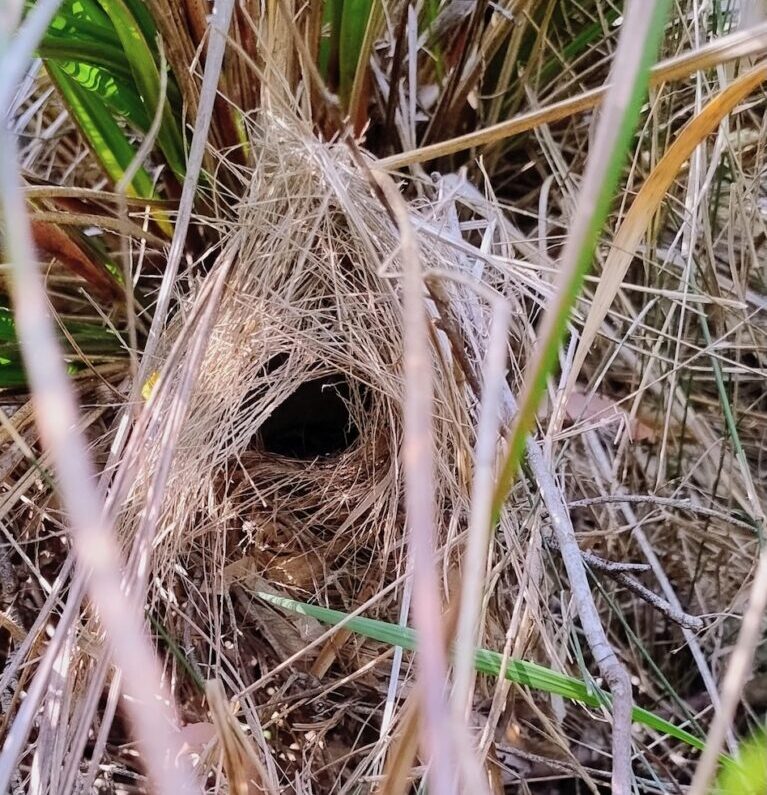
On closer inspection I noticed a beautifully constructed nest.
The last few weeks I have spent time with these amazing birds. Hiding in my nature hide, trying to blend in. Once or twice the male would climb up the nearest tree close to me. I knew he was protecting the nest, and he knew I was there.
All day from morning to dusk these tiny birds have been going in and out of the nest to feed their young.
Over time I got to know the particular sounds. The sounds of the adults as they came close to the nest and the quicker, squeakier trill of the baby birds inside the nest. The trill noises became more urgent when either parent approached the nest.
It’s non stop for this busy pair of birds, they would leave the nest and hunt for insects for around 2 to 5 minutes. Mostly, one parent would enter the nest, retreat then the other parent would go into the nest. Sometimes both would be on the Saw sedge going into the nest.
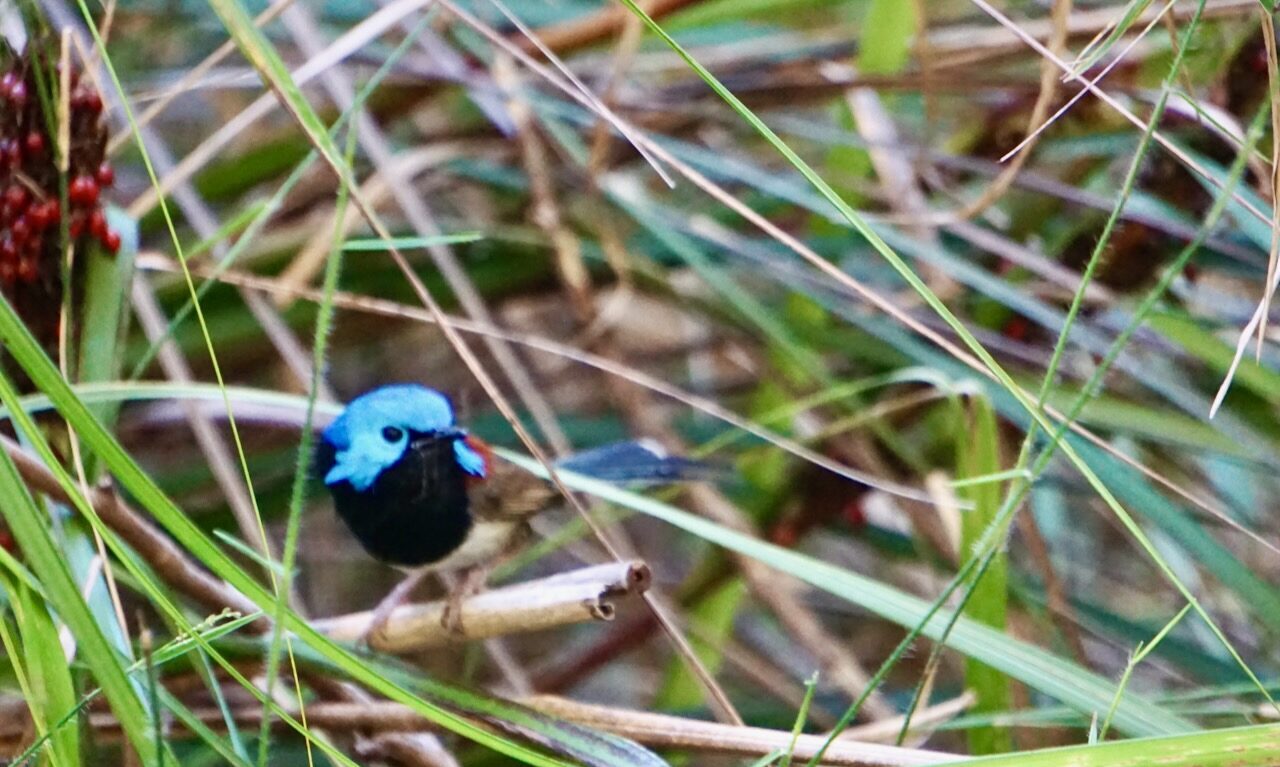
I looked up the Fairy wrens, the book by “The Slater field guide to Australian Birds” identifying them as the Variegated Wren. The book states about nesting “ 3-4 spotted blocked white eggs, dome of grass in tussock, shrub or dead fallen branches, shrubs”.
Not wanting to intrude and potentially disrupt the nesting, feeding and raising of chicks. I did not see either the eggs or chicks. The nest is so well constructed, that it is easy for the baby wrens to hide inside the nest. After about three weeks I saw the chicks taking their first flights, the chicks were close to the size of the adult however, their tails were short.
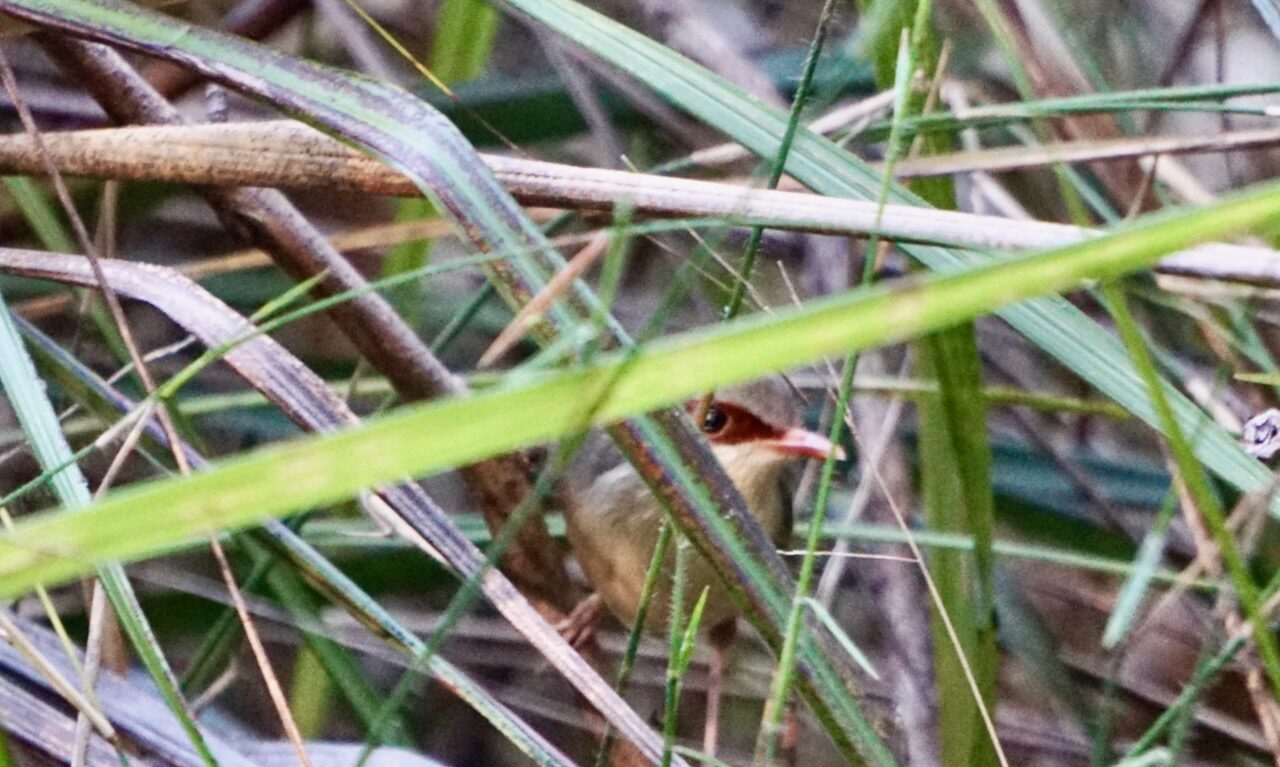
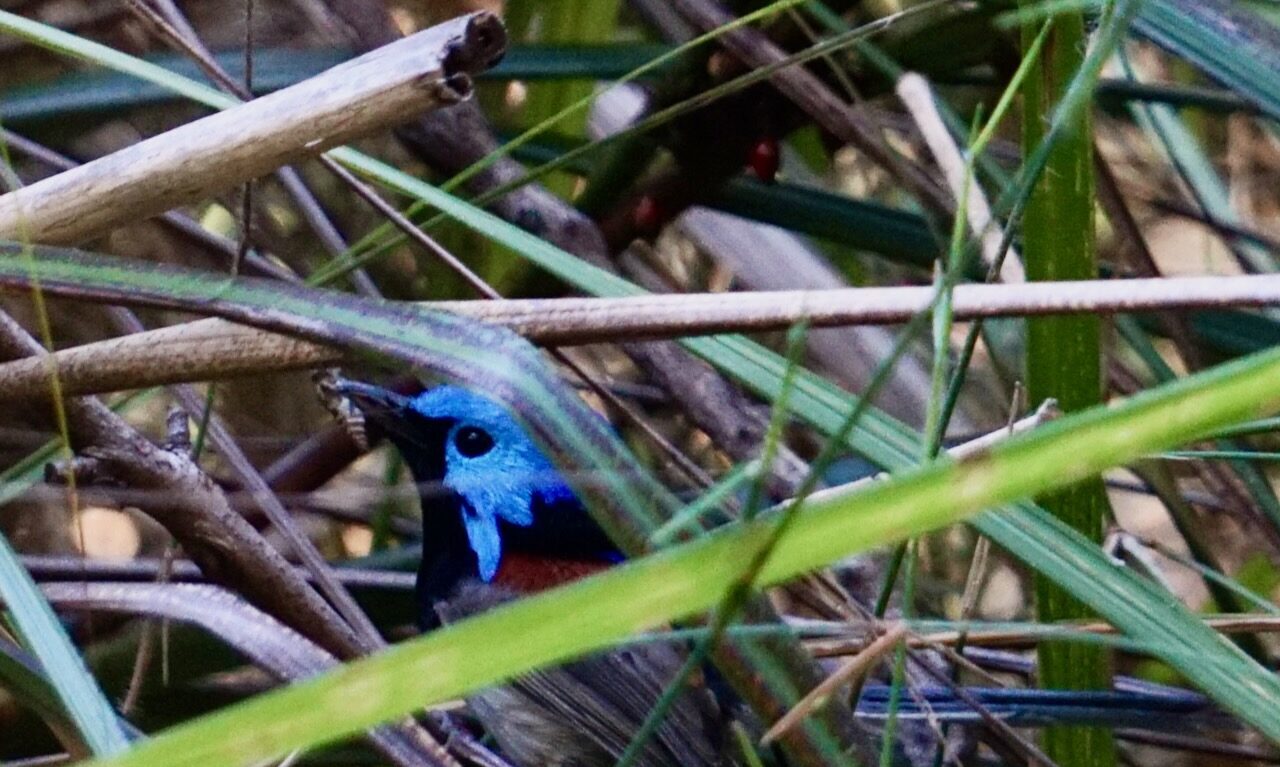
The photos are of the nest and parents. Being such small, quick birds, photos of them are difficult to capture. The female in particular is difficult to see, as she is well camouflaged.
Experiencing a spring event of Fairy wrens, has been magic. I have a deep love and respect for nature by witnessing and observing an event in the life of a Fairy wren family.
Leonie Stephens