The weather forecast is for a hot and dry spring, and whilst having many days of light rain, our winter rainfall was well below average. Here are some tips to maintain your native garden and provide optimal habitat for wildlife:
For the plants:
- delay new planting in open areas unless you are prepared to lavish lots of water – it’s just tough going for new plants. If planting use a variety of plants. Some will survive the dry, some won’t.
- focus your watering on those sensitive plants. For instance, I am ensuring my Richmond Birdwing Butterfly vines ( Pararistolochia praevenosa) are getting well-watered at the moment as they are extremely sensitive to dry conditions in their first years of establishment.
- minimise pruning – the foliage provides valuable shade on the ground to reduce moisture loss and also provides shelter for wildlife from the heat. Trees and shrubs won’t bounce back as quickly in dry conditions – it’s best to prune after heavy rain.
- mulch – but only lightly – to help shade soil and prevent more moisture loss. Heavy mulch is best applied when the soil is moist, and we have lost that window – if heavy mulch is applied now, it will stop light rainfall from penetrating to the soil and being accessible to the roots.
- Consider using wetting agents to remove hydrophobic (water repellent) tendencies of our local soils – particularly our sandy areas. This is worth an article in itself, but if you notice the water running off the surface of the soil it is hydrophobic. Adding organic material helps, but in modified urban garden soils use of a wetting agent is often the best bet.
- if you have a lawn, keep the lawn long and use high mowing cut even if it looks shabby – the long blades of grass shade the soil and reduce moisture loss, and encourage grass seeds for wildlife foraging.
- it’s a great time to get weeds under control whether through digging, smothering or appropriate use of herbicide. Removing the weeds reduces competition for valuable moisture from your surrounding plants. Also, if spraying, don’t apply herbicide to very stressed weeds or in the middle of hot days when the somata have closed as it won’t be effective.
For the wildlife:
- leave the dead flowers and seeds on the grasses, shrubs and trees as they provide valuable foraging for wildlife – embrace the seasonality!
- place shallow ponds and bowls of water around the garden for birds and wildlife to drink from. If the water bowl is elevated or surrounded by thick grasses and roughly laid tree branches, you will avoid cane toads accessing the water (lesson from recent workshop – thanks Sean Morrow!).
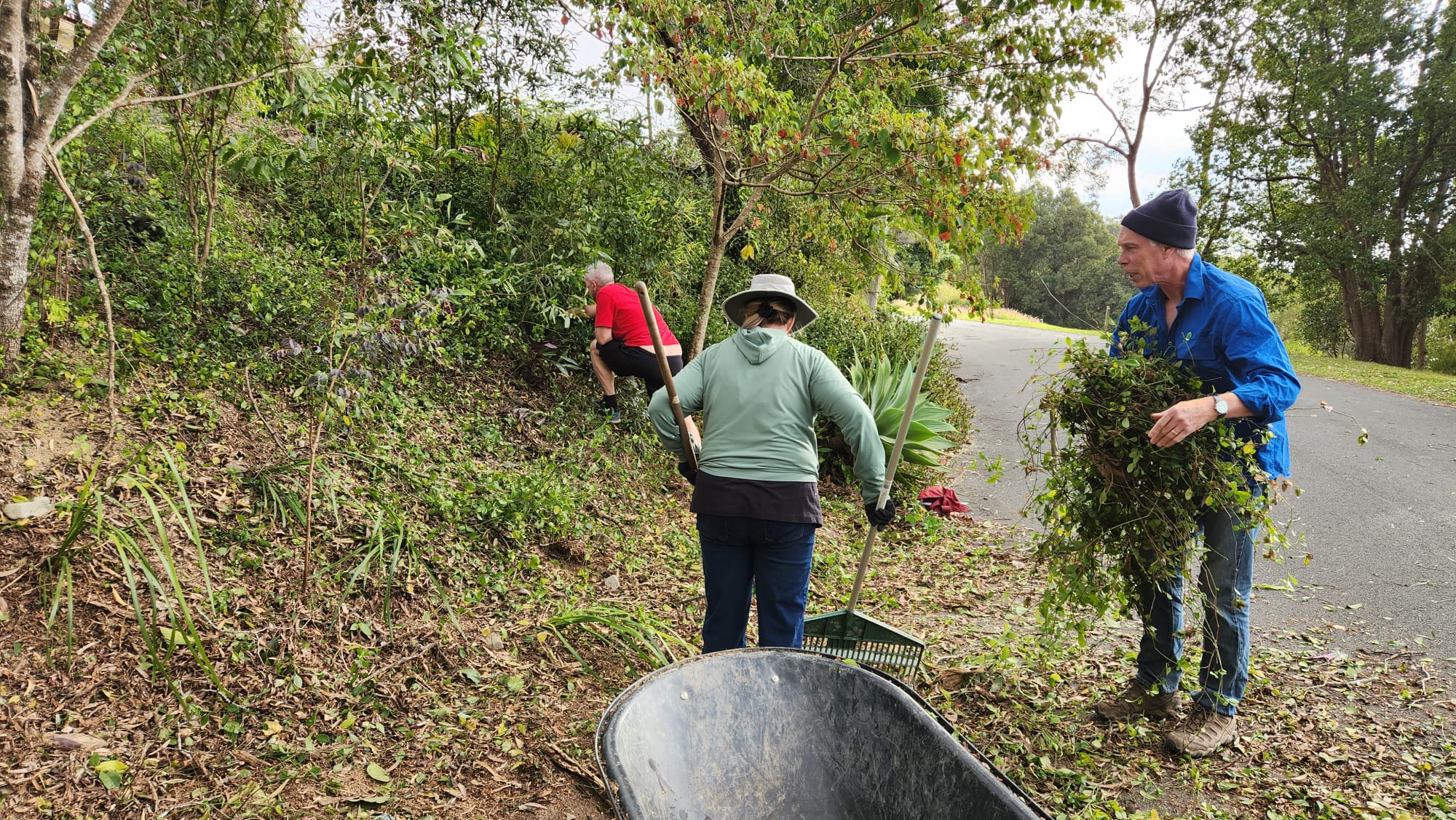 Photo: tackling coral creeper weed on our street with the neighbours and removing competition to existing lomandra plants. Coral creeper pulls out easily in the dry.
Shaun Walsh