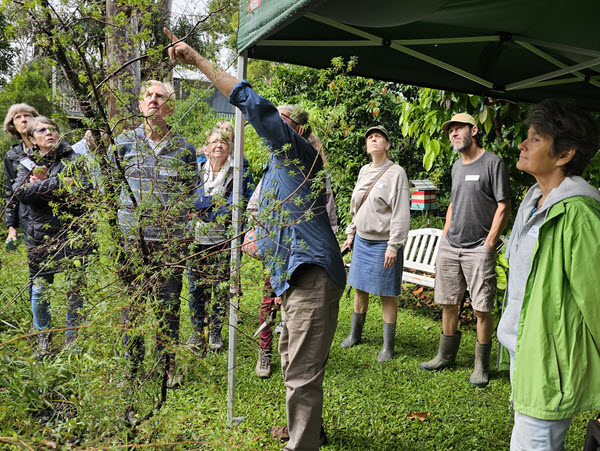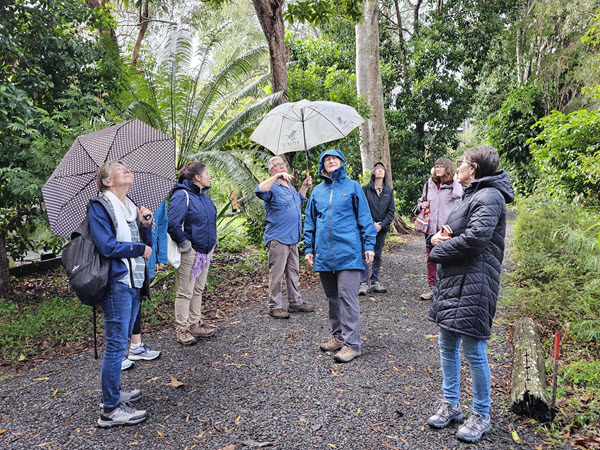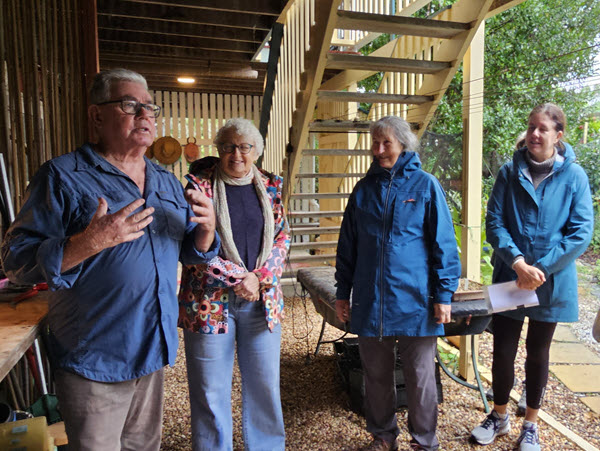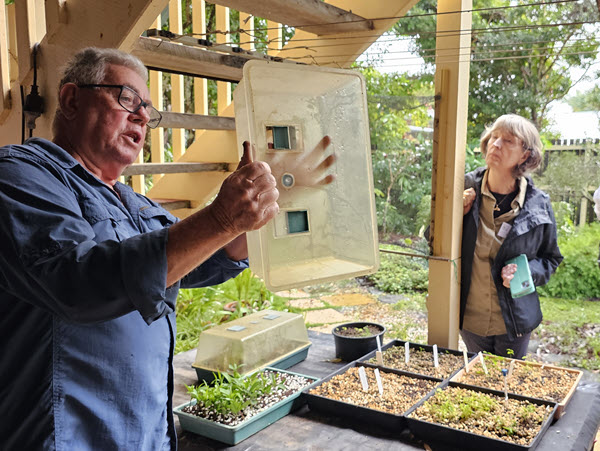
Despite the inclement weather, we had a good turnout for this month’s workshop with Robert Price.
Robert defined cultivation as the act of trying to develop or improve something. He suggested that in our urban gardens we need to find a balance between having a garden that is aesthetically pleasing, incorporates utility areas and also provides habitat for our local wildlife.
Robert spoke about his own property and how he has cultivated different areas within his garden. When deciding what to plant and ‘cultivate’ he stressed the importance of considering the local conditions such as soil fertility, moisture, drainage and light. He encouraged us to work with the existing soil type in the garden and choose suitable plants rather than importing soil to ‘improve’ growing conditions. Another suggestion was to group plants according to their vegetation type in nature. The plants then look like they belong together and can also thrive in the particular conditions found in certain parts of the garden.
A ‘rainforest area’ has been cultivated on the southern side of Robert’s property, with suitable smaller trees of 3 to 4 metres in height for his urban block. He was then able to plant understory species, and provide a good layer of organic mulch and slow release fertiliser as needed, to mimic natural conditions. After some initial watering, once the plants are established ongoing rainfall is sufficient.
Robert said it was possible to grow other species under Eucalypts but indicated you may need to enrich the soil with composted cow manure and low phosphorous fertiliser.
Dry heath plants prefer well-drained, less fertile soil, and a position in full sun or light shade open to the north. Mounded gardens work well and Robert imported some local sand to make mounds on top of the existing sand so he could attempt to cultivate dry heath plants which require better drainage.
If people want to cultivate a wet sclerophyll area in the garden, Robert suggested spreading up to 100 mm of compost on the soil, mulching well with loose, chunky organic material which allows water to penetrate, and adding a complete, slow-release fertilizer.
Wet heath, which grows on infertile sandy soil with a high water table, is the most difficult vegetation type to cultivate and many of the wet heath species have specialized requirements like the presence of specific mycorrhizal fungi.
A low spot in the garden that doesn’t dry out, would be ideal for wetland species such as Melaleucas, most Callistemons and Banksia robur.
Robert recommended planting species of varying heights and spread in each section of the garden. This includes a mid layer 2 to 5 metres high, with small shrubs and groundcovers below. This dense planting of a wide variety of species provides biodiversity for good wildlife habitat.
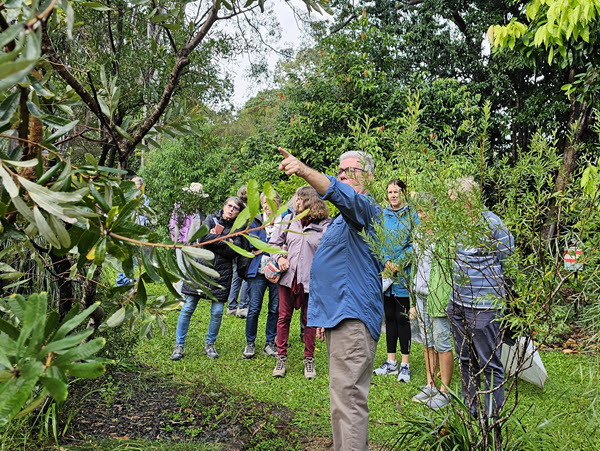
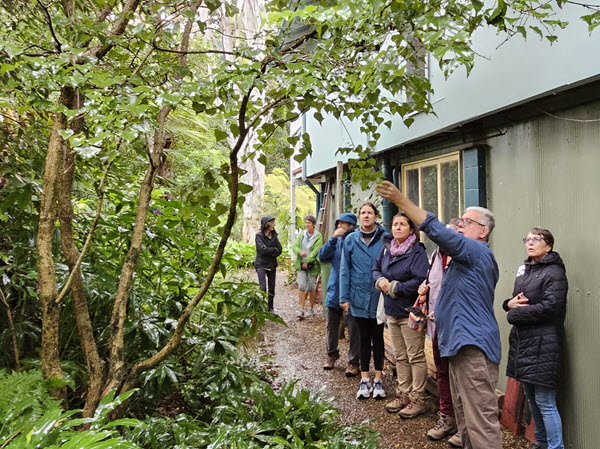
After Robert’s presentation, we were lucky to have a break in the rain so we could do a tour of his garden. It was a delight to walk around his urban block and at every turn see such interesting and varied native plantings.
Robert suggested a good approach is to stick with the original vegetation type for your area because they will already be adapted to the conditions. As he experienced, if you try to introduce other non local native species they may not thrive. Trees which required excellent drainage and those that preferred volcanic soil did not survive on his block.
His property had existing peaty, alluvial sand and original remnant trees such as blue gums, paperbarks, cheese trees, tuckeroos, bloodwoods, Moreton Bay ash and hickory wattles. These provided a good base to work with and Robert gradually replaced the grassed areas beneath the trees with understory plants.
Robert has coppiced some of the rainforest trees to produce multiple trunks and keep the foliage where it is easily seen. He also prunes species such as Grevilleas, Callistemons and Leptospermums after flowering as this encourages vegetative regrowth and extends their lives. He avoids tree lopping unless absolutely necessary and suggested that thinning out a tree canopy by removing whole branches is a better option.
There are over 400 individual species of native plants from a wide range of genera and families in Robert’s garden. These provide numerous birds, insects, reptiles and mammals with habitat and food, and limits the need to use insecticides and fungicides.
Robert has included a few favourite exotics in the garden and explained how he is very careful to control these plants to ensure they don’t spread. He does this by pruning after flowering to prevent seeds setting.
UWG would like to thank Robert for his informative presentation and interesting garden tour. He also kindly shared his notes from a previous workshop on Propagation which you can find at this link.
Vanessa Presling