Today I visited an urban residence where I had tea on the verandah overlooking a small front garden. To one side was a fence with espaliered shrubs. The other side catered for two vehicles.
But it was the mass planted triangle in the front that seemed to me to encapsulate the principles of the urban wildlife garden.
This triangular bed ran from the side boundary along the front fence line to the front gate and driveway. The short side ran down the side fence almost to the house. The longest side skirted a very small lawn. The view from the house was like looking into the bush, complemented by orchids in pots on the verandah.
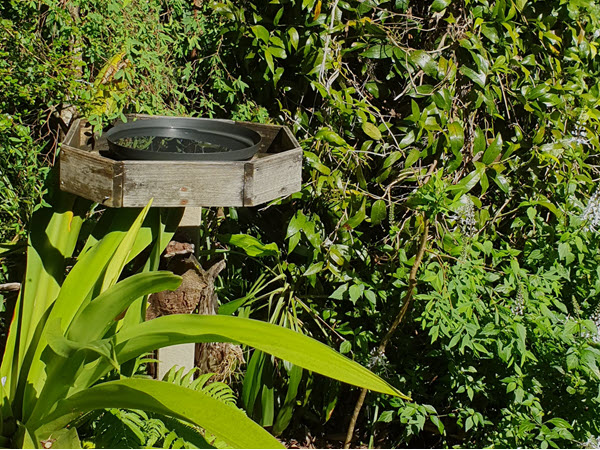
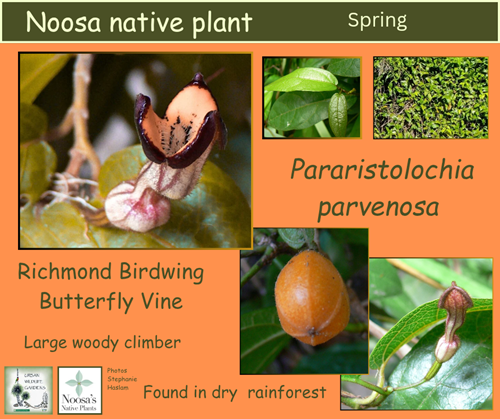
Taking pride of place in the front was an old dead tree trunk. It was festooned with a large Richmond Birdwing Butterfly vine that attracts the almost extinct butterfly to feed and breed. Beneath it was a birdbath on a pedestal with rocks and branches to accommodate bees and different sized birds. And on the ground was another watering place for the lizards and frogs.
The planting favoured the environmental conditions of the site and ranged from architectural crinums, ferns and sedges, violets along the front near the house, to small trees that gave privacy from the street. I’ve no doubt they housed birds and other wildlife.
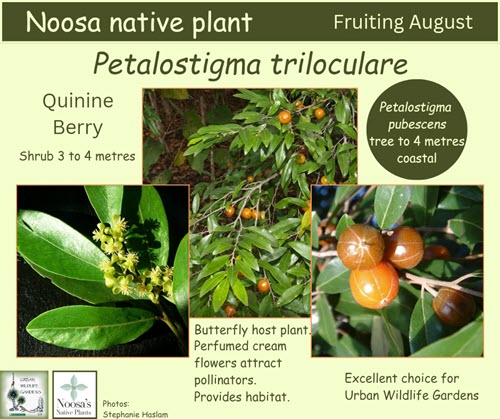
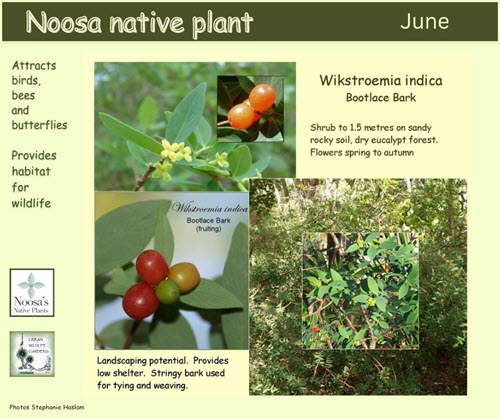
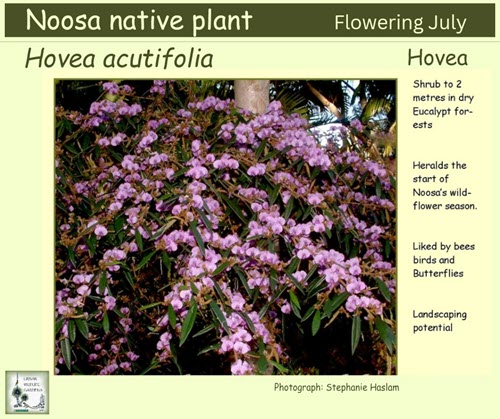
Plants included Bootlace Bark (Wikstroemea indica), a pretty small tree/shrub with pale lime foliage. Small yellow flowers and red berries are often on this plant at the same time. The Hoveas with their greeny purple foliage, were not yet flowering, but will soon provide a mauve burst of colour. Another small tree was Petalostigma pubescens with orange fruit for the birds. And there were banksias and she-oaks.
The Noosa Urban Wildlife Gardens program is aimed particularly at small gardens such as this. Residents are encouraged to choose native plants particularly suited to their own ecosystem which can vary enormously in Noosa Shire, from the mountains to the river and seacoast and the pockets in between. In this way, they will help recreate and protect Noosa’s natural environment.
Stephanie Haslam