According to Microsoft CoPilot Artificial Intelligence there are some neat distinctions between Casuarina and Allocasuarina, but they’re closely related. Both belong to the Casuarinaceae family and are often lumped together under the common name ‘she-oaks.’ But botanically, Allocasuarina is considered a separate genus from Casuarina, and here’s why:
Geographic range: Allocasuarina is endemic to Australia, while Casuarina species are found in Australia and across Southeast Asia and the Pacific.
Fruit color: One of the easiest ways to tell them apart is by their fruit. Allocasuarina has samaras (the winged seeds) that are brown or black, while Casuarina’s are typically grey or silver.
Species count: Allocasuarina has more species, around 59, and they range from shrubs to tall trees. Casuarina has fewer species, with only six native to Australia.
Naming origin: The prefix ‘Allo-‘ means ‘other’, so Allocasuarina literally means ‘other Casuarina’ – a nod to their similarities but also their botanical differences.
I also like how the wind ‘whooshes’ though the needles creating a spiritual sense in the garden. The needles form a dense matt on the ground, deterring weeds – a real friend as a backdrop species in the garden.
Some locally native she-oaks that are suitable in our urban wildlife gardens are listed below.
Allocasuarina emuina – Mt Emu Oak
This endangered species, found on rocky outcrops only from Mt Emu at Peregian Beach through to Caloundra, is an informal spreading shrub to 3 metres. It has quite showy red flowers (flowering now!) and is well suited to domestic gardens in full sun with good drainage. A good example is found at the front gates at Coolum Community Native Nursery and it responds well to a good prune to keep a contained shape and size for the garden.

Red flowers of the Mt Emu Oak (image from Noosa Native Plants)
Allocasuarina littoralis – Black She Oak
This is a small to medium tree to 6 metres with striking black bark and contrasting grey needle foliage, combined with rusty brown flower spikes of the male flowers. It has widespread suitability in Noosa, in full sun with good drainage across many soil types. This is a key feed species for the Glossy Black Cockatoo, one of the rarest cockatoos in Australia and found around Noosa. These beautiful birds mate for life and can eat 580 seed cones a day from she-oaks. I like to plant them in copses or groves with trunks quite close together. This limits the overall size of the trees due to competition and creates a canopy with greater density, and hopefully greater number of seed cones for the cockatoos. It can also be pruned to contain its size and form a thicket or informal hedgerow. Other wildlife species attracted to these she-oaks include spittlebugs and longicorn beetles, and Red Headed Finches and Peaceful Doves are attracted to the seeds.
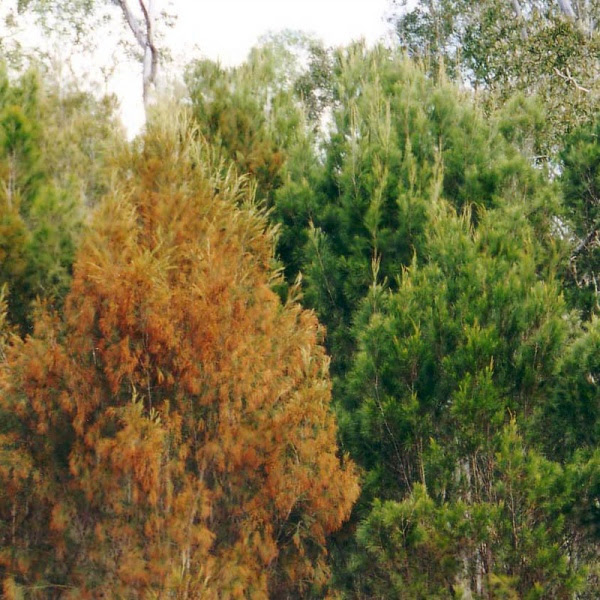
Foliage of the Black She Oak, including the rusty red male flowers (image from Noosa Native Plants)
Allocasuarina torulosa – Forest She Oak
This is a large tree to 20 metres, in more fertile soils of the hinterland and mountains, and probably a bit large for the urban garden. It has a lovely oak like trunk and beautiful weeping foliage. This species is also a key feed species for the Glossy Black Cockatoo.

Oak trunk of the Forest She Oak (image from Noosa Native Plants)
Casuarina equisetifolia – Beach She Oak or Horsetail She Oak
This is a common tree to 8 metres along the beach front, though less so in exposed locations. Remarkably, it survives in pure sand and salt laden winds so it is one of the few shade trees suited to exposed coastal gardens. It has lovely draping foliage like a horsetail! I also like to plant these in copses or groves with trunks quite close together so that it limits the trees overall size and creates a dense canopy. They are valuable feed trees for Yellow Tailed Black Cockatoos, Spittle Beetles, Longicorn Beetles and the Mangrove Antblue Butterflies.
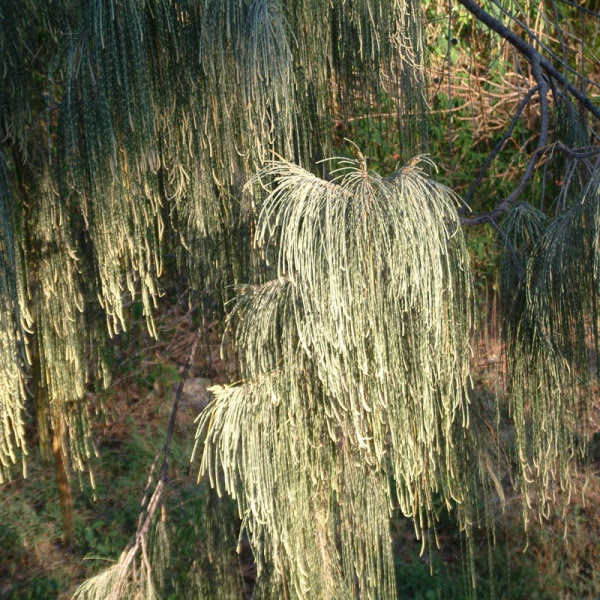
Horsetail like foliage of the Coastal She Oak (image from Noosa Native Plants)
Casuarina glauca – Swamp She Oak
This species is a common tree along river estuaries, lakes and nearby wetlands. It also grows to 8 metres in height, though it has a sparse canopy. It can survive occasional inundation, including brackish waters with some salt content, so it is a valuable plant if you have swampy soils. Again, I recommend planting them in copses or groves with trunks quite close together to limit size and create a thick canopy. These are also valuable feed trees for Yellow Tailed Black Cockatoos, Spittle Beetles, Longicorn Beetles and the Mangrove Antblue Butterfly.
Casuarina glauca ‘Cousin It’ is a prostrate and beautifully ground hugging form of this species. Flowers are insignificant but the foliage more than makes up for it as it drapes over garden beds and rockeries. It is a triumph in cultivation of native plants and is well suited to smaller gardens, with an almost oriental character.

Water logged habitat of the Swamp She Oak on Lake Cootharaba (image from Noosa Native Plants)
Casuarina cunninghamia – River She Oak
This large tree to 20 metres is found along hinterland freshwater rivers and creeks and is probably a bit large for the urban garden. It has a very stately form with an oak like trunk and beautiful weeping dense foliage. This tree is also a valuable feed tree for Yellow Tailed Black Cockatoos.
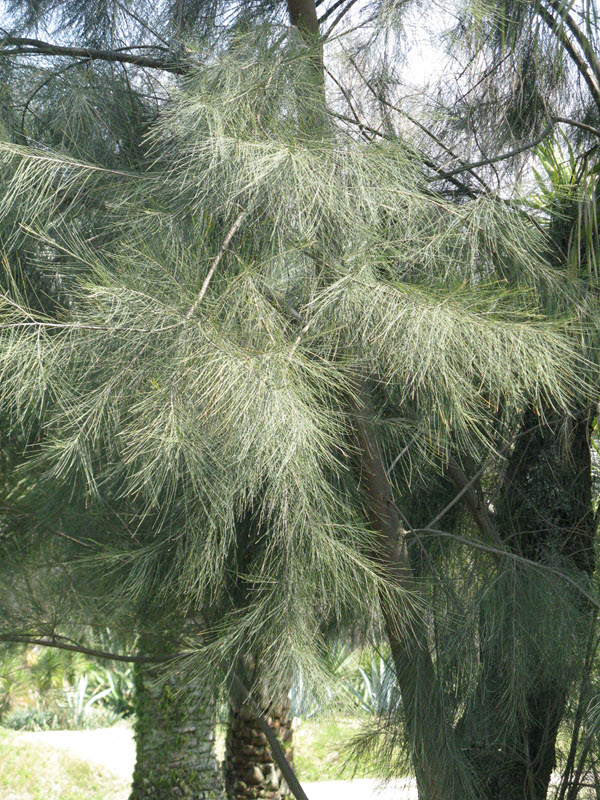

Shaun Walsh