Acacias, more commonly called Wattles, are the food pantry for native fauna in Australia.
The flowers provide nectar for Honeyeaters, and often flower at a time in autumn and winter when other flora is not in flower. The seeds are attractive to Rosellas, Cockatoos and Red Winged Parrots. Spiny leaf Stick Insects feed on the foliage and the sap exudes are critical feeding for Sugar Gliders and Squirrel Gliders. Last but not least, acacias are host plants for butterflies and moths, including the Imperial Haristreak, Tailed Emperor and Large Grass Yellow Butterfly.
Acacias are found across Noosa in well drained soils and many grow as either a shrub or a small tree and are suited to a backyard. Although sometimes dismissed due to the reputation of being short lived, regular pruning of wattles after seeding will encourage bushy long life. Plant for succession well in advance so younger saplings replace aging stock as they die.
According to ‘Microsoft Copilot AI’, the word ‘Acacia’ comes from the ancient Greek ‘akakia’, which referred to thorny trees like Acacia nilotica found in Africa. Ironically, most Australian acacias don’t have thorns, yet they inherited the name through scientific classification.
In 1753, Swedish botanist Carl Linnaeus introduced the genus ‘Acacia’ using his binomial naming system. Over time, the genus grew to include over 1,400 species across Africa, Australia, Asia, and the Americas. Around the early 2000s, botanists realized the genus was too broad and needed splitting. At the 2011 International Botanical Congress in Melbourne, a controversial decision was made: the name ‘Acacia’ would be retained exclusively for the Australian species (about 900 of them), while African and American species were reclassified into ‘Vachellia’ and ‘Senegalia’.
In Australia, Acacia pycnantha, the golden wattle, is the national floral emblem. The name ‘wattle’ comes from early settler construction techniques using woven twigs, often from acacias. So, acacias are called acacias because of a mix of historical naming, botanical restructuring, and a bit of international drama.
The following species are suited to urban gardens to help to provide a food pantry for native wildlife.
Acacia baueri (Tiny Wattle)
A very small shrub to less than 30cm in dry sandy soils. Its dainty shape and flowers are good as a foreground plant in the garden. There is room for this wattle in any garden!
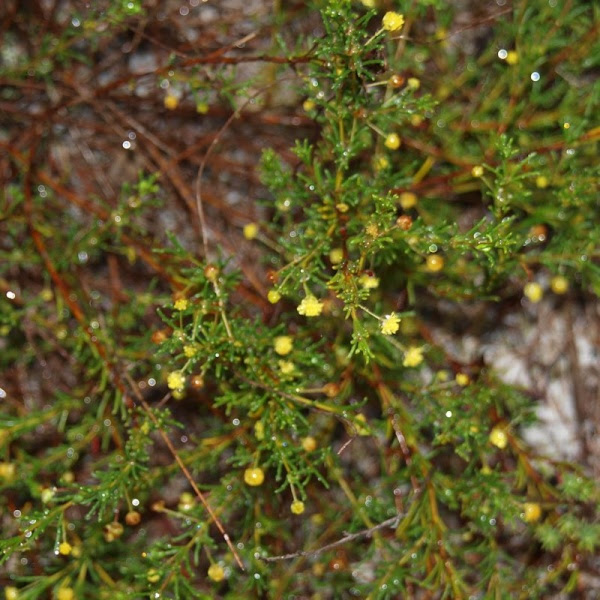 Image from www.noosasnativeeplants.com.au
Acacia complanata (Flat Stemmed Wattle)
A tall open shrub that grows to 4 metres in drier well drained soils. The stems are flattened and winged and produce fluffy yellow flowers. Visually best as a backdrop in a deep garden bed.
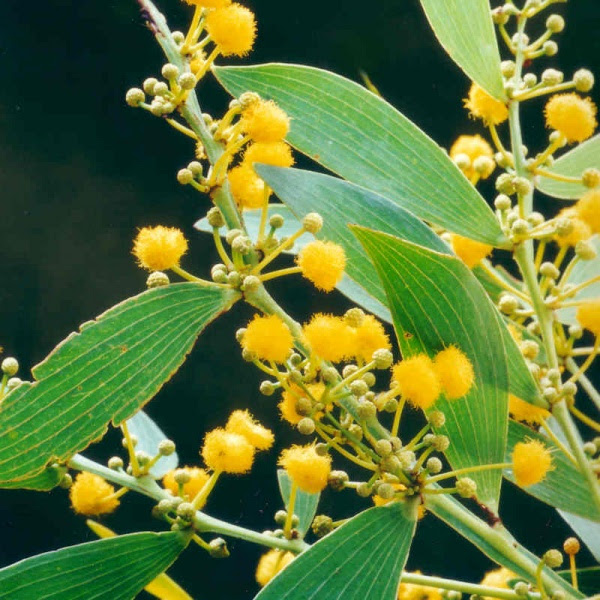 Image from www.noosasnativeeplants.com.au
Acacia hubbardiana (Pricky Moses)
Shrub to 2 metres with short spiky leaves on open draping framework of stems with fluffy cream flowers. Well suited to a native cottage or informal garden. Prefers dry well drained soils.
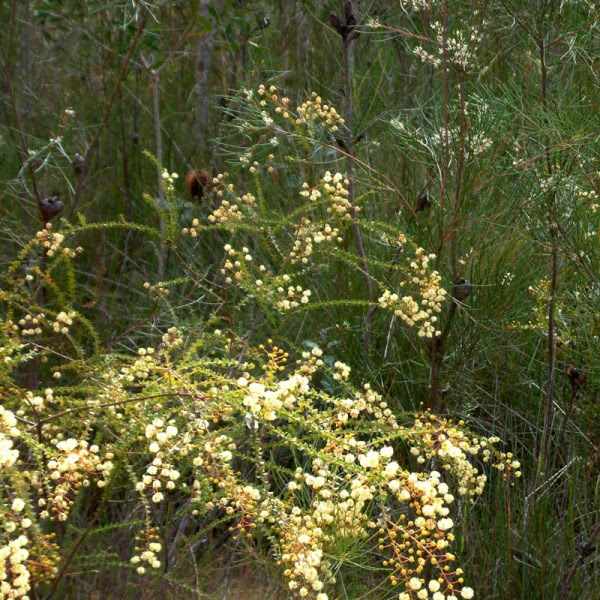 Image from www.noosasnativeeplants.com.au
Acacia juncifolia (Rush Leafed Wattle)
Shrub to 2 metres in well drained stony soils – found on local mountains. Striking needle like foliage with orange flowers along stems. A showy feature specimen for the urban garden and possibly good in pots with a well drained medium and in full sun.
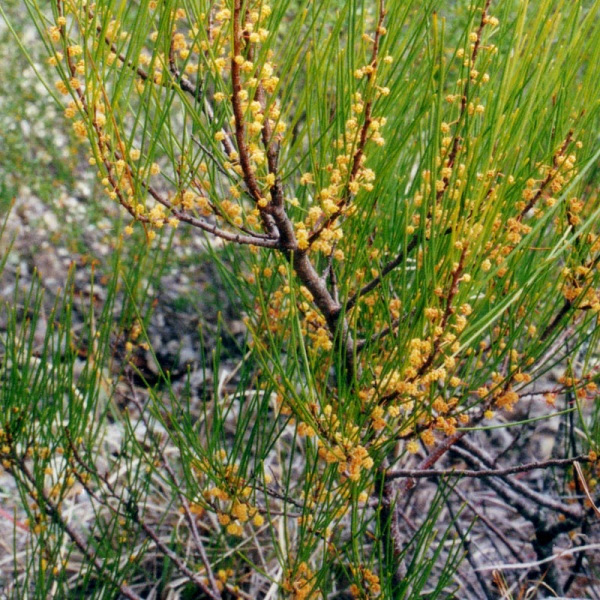 Image from www.noosasnativeeplants.com.au
Acacia leiocalyx (Lamb Tails Wattle)
Small tree to 6 metres in drier well drained soils. Prominent spikes of cream flowers covering tree in late winter to early spring. Plant in copses to achieve solid continuous crown as dramatic small shade tree.
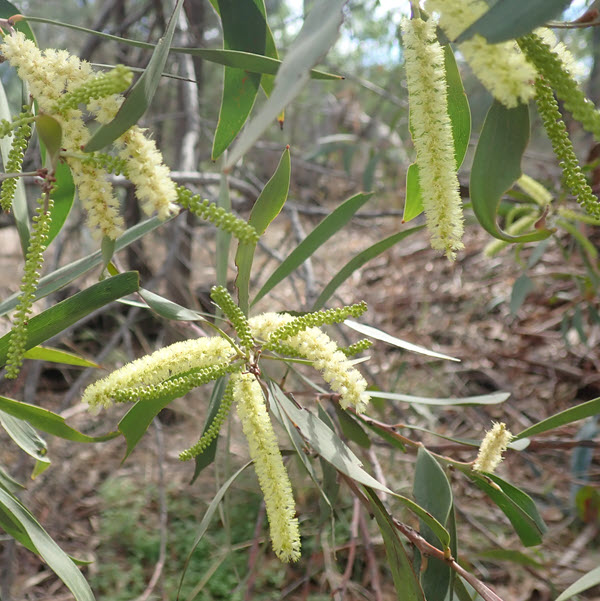 Image from www.noosasnativeeplants.com.au
Acacia longissima (Narrow Leaved Acacia)
Shrub to 3 metres suited to drier well drained soils. Angular branches and narrow leaves provide a very spiky architectural presentation. Less prominent cream flowers.
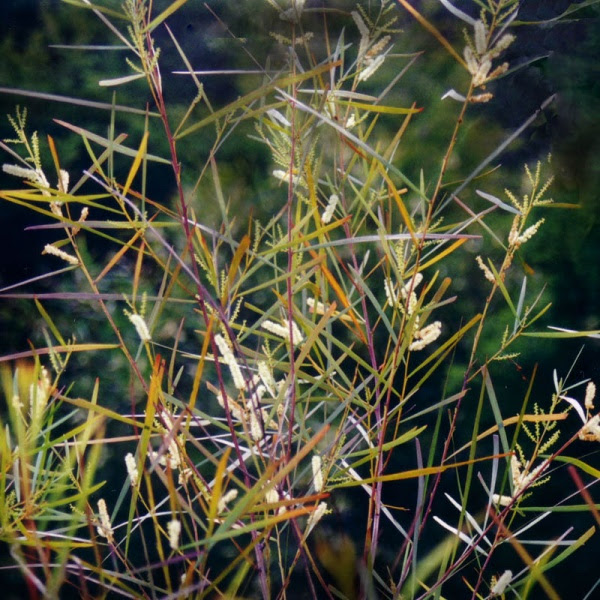 Image from www.noosasnativeeplants.com.au
Acacia myrtifolia (Myrtle Wattle)
Shrub to 3 metres in well drained stony soils – found on local mountains. Striking flat leaf with red stems. A showy feature specimen for the urban garden and possibly good in pots with a well drained medium and in full sun.
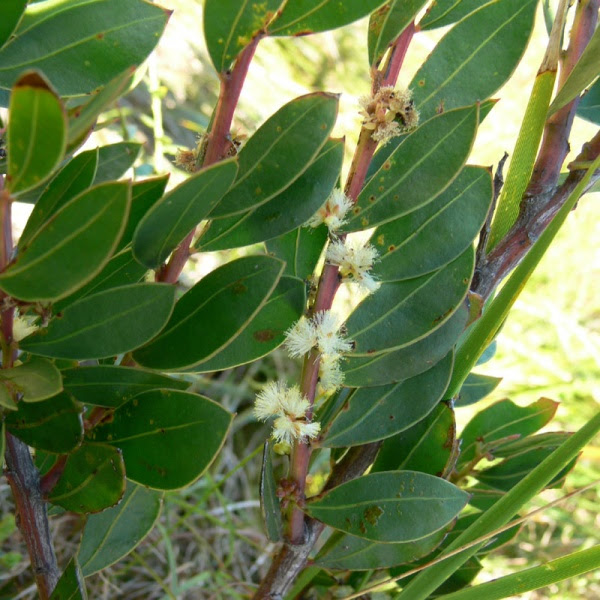 Image from www.noosasnativeeplants.com.au
Acacia penninervis (Mountain Hickory)
Small tree or tall shrub to 8 metres in well drained areas. Lovely draping foliage with prominent sprays of cream flowers. Has a lovely shape and habit for a backyard feature tree.
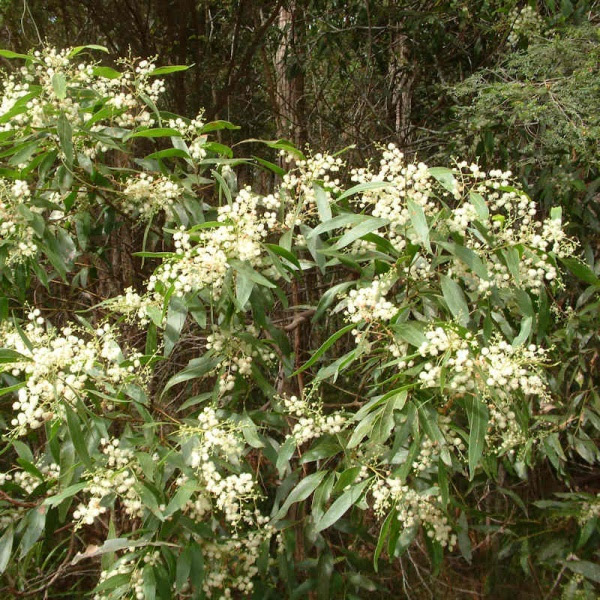 Image from www.noosasnativeeplants.com.au
Acacia oshanesii (Irish Wattle)
Small tree or tall shrub to 7 metres in wetter soils, often found on margins of rainforests. Open structure with layered limbs and feathery foliage. Flowers have a faint sweet perfume. Good as a background specimen in deep garden beds rather than a feature due to its habit.
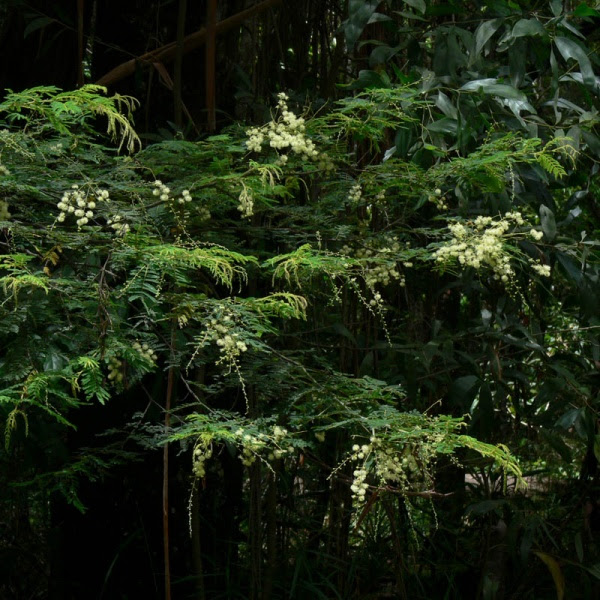 Image from www.noosasnativeeplants.com.au
Acacia suaveolens (Sweet Wattle)
Shrub to 2.5 metres in dry sandy soils. Long foliage with a discreet cream flowers but striking seed pod. The ‘sweet’ comes from the sweet tasting gum exuding from the stems that is appealing to wildlife.
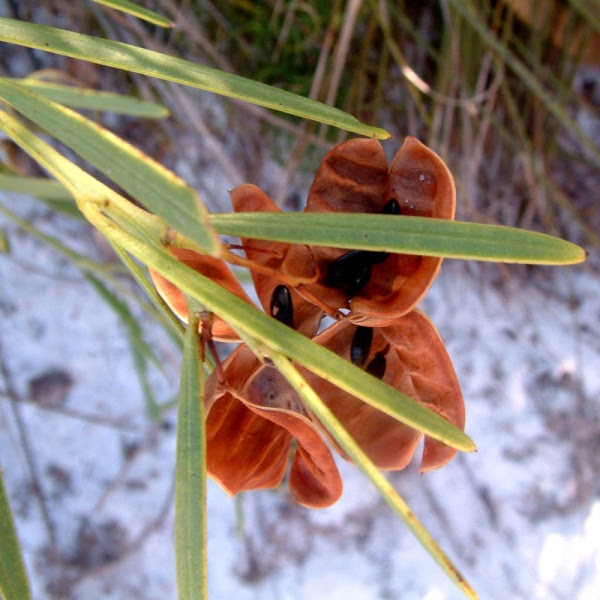 Image from www.noosasnativeeplants.com.au
Shaun Walsh