The Plumed Whistling Duck (Dendrocygninae eytoni), Grass Whistling-Duck or Eyton’s Tree Duck belongs to the genus ‘Dendrocygna’, deriving from the Greek word ‘dendron’ meaning tree and ‘cygna’ meaning swan which equates to tree swan or tree-dwelling swan. This name refers to their unusual behaviour of perching and occasionally nesting in trees and possessing a long swan-like neck, rare amongst ducks. The species name ‘eytoni’ was chosen in honour of Thomas Campbell Eyton (1809 – 1880) an English naturalist and contemporary of Charles Darwin.
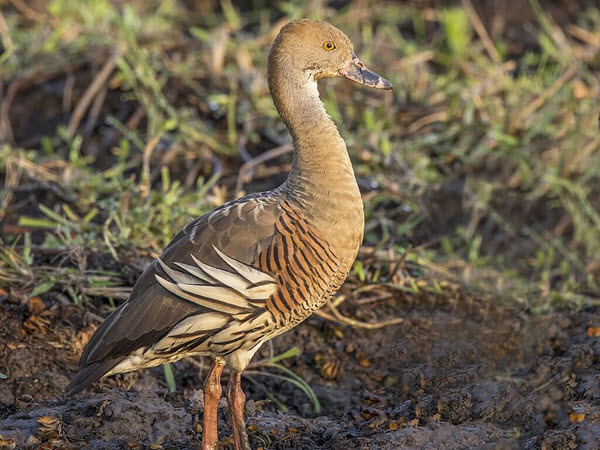
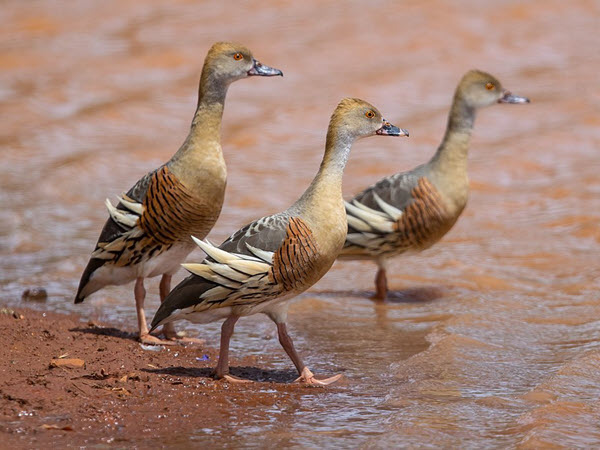
The Whistling Duck stands out amongst other ducks due to a few key ID features. It has an elegant appearance compromising of a slender neck, upright posture and long pink legs, boasting a light brown body with a fine black barring on the chest and long cream or golden plumes curving down the sides from the shoulders. With intelligent-looking yellow-orange eyes and grey bill with pinkish tones, these medium sized ducks (up to 60cm long) are impressive birdwatching specimens, although they can be elusive given their tendency to flee if feeling threatened.
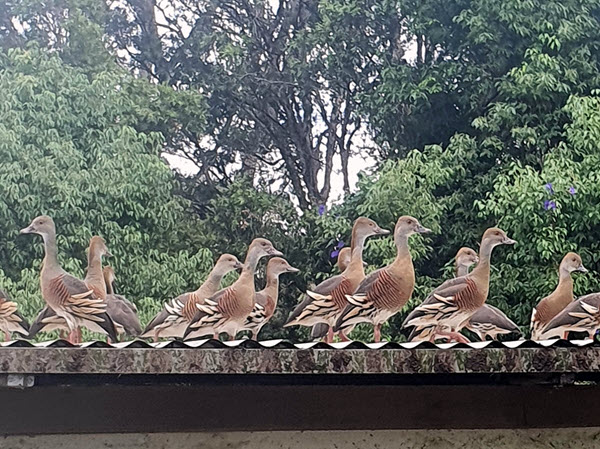
Dendrocygninae eytoni is a highly sociable duck, spending most of their time in flocks ranging from a few dozen up to hundreds or thousands in areas with an abundance of food and water. During breeding season their nature can become more hostile. They often move into smaller flocks or pairs and become territorial in the presence of good nesting and feeding habitat or if protecting eggs or their young. Pairs form lifelong bonds and have been recorded using the same nesting areas each year around November – April depending on the rainfall in the area.
The Whistling Duck is not a common visitor in urban spaces but can be found across northern and eastern Australia from the Kimberley through to Cape York and down the east coast to northern New South Wales, occasionally heading inland after rain. Their preferred habitat consists of grassy floodplains, open paddocks and savannah, resting near the water during the day and feeding on land at night. They adapt well to human interference and are often spotted in agricultural areas grazing like geese.
The lifespan of the Whistling Duck is from 10 – 15 years. After spending 30 days in incubation, with the parents sharing the duties of minding the nest and foraging for the 10 – 12 eggs, the hatchlings are quite independent in walking and feeding themselves soon after hatching. Ducklings feed on aquatic plants, small seeds and insects. They stay together as a family group sometimes joining with other families to form a ‘creche’ for added protection. Flight feathers begin forming around the 5 – 6 week mark with the young ducks capable of flight two weeks later. Young Whistling Ducks resemble adults but lack the full-length golden flank plumes which will develop before their first birthday in preparation for breeding season.
The beauty of these ducks is not limited to their appearance, but is also suggested by their name, as they make a clear, musical whistle when flying or communicating. Their whistle can help them stay connected in large flocks, especially during dusk or dawn flights, and is also used when warning off rival flocks or individuals. The monogamous bonds formed by pairs may last their lifetime. They are almost always seen side by side, feeding and flying together even outside the breeding season, making this species just a little bit more special.
Samuel Wockner