Noosa is renowned for its woodlands of Melaleuca quinquenervia (Paper Barks / Tea Tree) along its rivers, lakes and in wetlands. Also the north queensland species Melaleuca leucadendra is common on our streetscapes, particularly in the fine leaf form that evokes weeping willows. But these trees can be too large for the suburban garden – what species of Melaleuca are better suited to gardens and can attract the same array of wildlife?
Microsoft Co-Pilot advises that the word Melaleuca combines the Greek words of melas (black) and leukos (white). This reflects the appearance of many species, where fire leaves black scars on their pale, papery bark.
Information in the article below about wildlife characteristics are largely sourced from the excellent reference volume ‘Plant Local to Attract Local’ by Ann Moran and Mike Fox , ISBN 978-0-646-70976-5.
Melaleuca linariifolia (Snow in Summer ) is a small tree to 10 metres, but with pruning can be maintained to as a medium shrub to 2 metres. It has soft grey foliage and abundant cream coloured flowers that are so thick they replicate snow over the foliage. It enjoys a light prune after flowering to maintain bushiness. It performs in many soil types provided it has reliable moisture. There are some very good examples pruned as a dense screening shrub in the garden beds near to the car park entry to Cooroy Railway Station. There is also a cultivar called ‘Claret Tops’, also pruned to a shrub, that is cultivated due to its flushes of fed new foliage growth. Its dense foliage provides excellent protection for many smaller birds and its flowers are attractive to Lorikeets, Friarbirds, Thornbills, Wattlebirds and many types of Honeyeaters, as well as Washing Beetles, and various butterflies and moths – a real haven for wildlife in the garden!
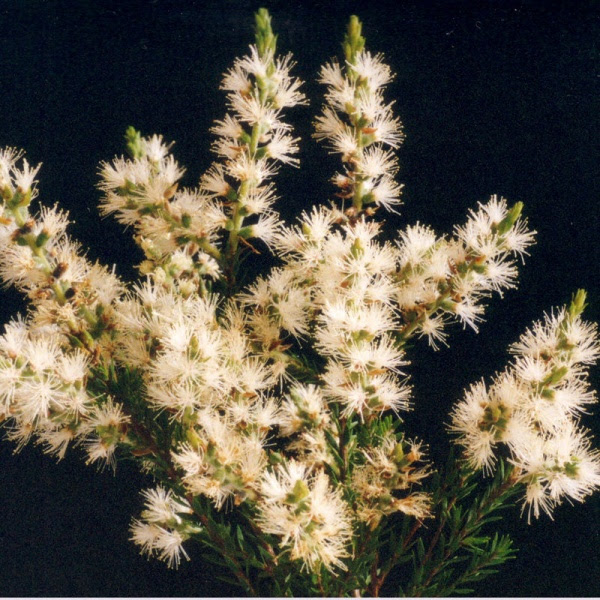 image from https://noosasnativeplants.com.au/
Melaleuca nodosa (Prickly Leafed Paperbark) is a small tree to 7 metres, which with pruning can be maintained as a medium shrub to 2 metres. It has thickets of needle like foliage and abundant cream coloured flowers – the foliage evokes the character of the exotic cypress and is a feature in itself. It performs in many soil types provided it has reliable moisture. It enjoys a light prune after flowering to maintain bushiness. Its spiky foliage provides excellent protection for many smaller birds and its flowers are attractive to Lorikeets, Friarbirds, Thornbills and many types of Honeyeaters, as well as Blue Banded Bees and Stingless Native Bees.
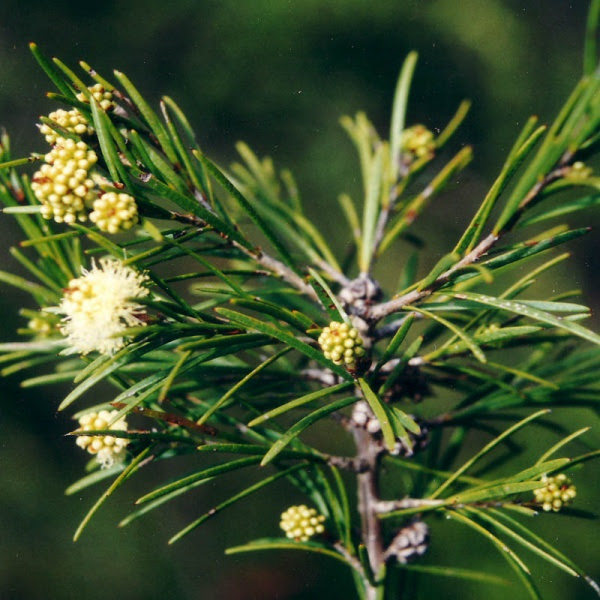 image from https://noosasnativeplants.com.au/
Melaleuca pachyphylla (Wallum Bottlebrush) Formerly in the Callistemon genus, this bottlebrush in now proudly a Melaleuca! It is a small shrub around 1 to 1.5 metres tall. It has relatively sparse foliage compared to others in the genus with a more prominent upright leaf with large red or green flowers in the classic bottlebrush shape. It is from the wet heath and requires a mixture of good drainage and reliable moisture. I have had no luck growing this melaleuca in clay soils. It enjoys a light prune after flowering to maintain bushiness. Its flowers are attractive to insectivorous birds, as well as Blue Banded Bees and Stingless Native Bees and the Ghost Moth and Emperor Moth.
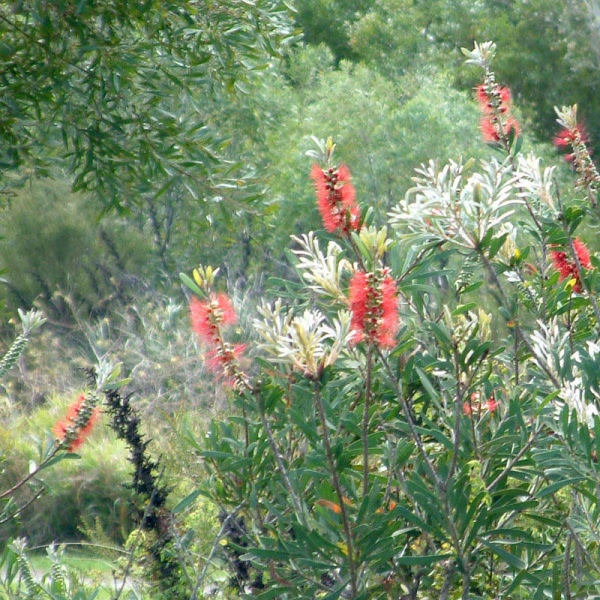 image from https://noosasnativeplants.com.au/
Melaleuca thymifolia (Thyme Leafed Honey Myrtle) is a small shrub around 1 metre tall. It has thickets of fine grey foliage and striking abundant lavender coloured flowers. It performs well in many soil types provided it has reliable moisture. It enjoys a light prune after flowering to maintain bushiness. Its flowers are attractive to honeyeaters, as well as Blue Banded Bees and Stingless Native Bees
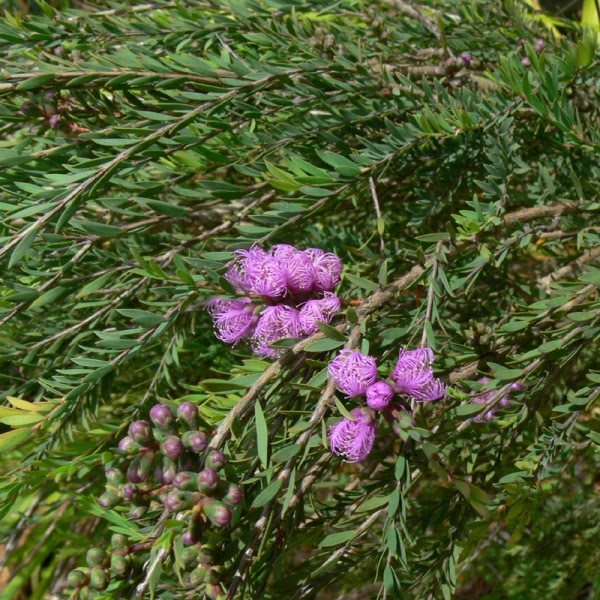 Image from https://noosasnativeplants.com.au/
Melaleuca viminalis (Weeping Bottlebrush)
Formerly in the Callistemon genus, this bottlebrush is now also proudly a Melaleuca! It is a large shrub or small tree up to 6 metres tall, perfect as a small tree for the back yard, but with pruning can be maintained to as a medium shrub to 3 metres. It has weeping green foliage and abundant red flowers in the classic bottlebrush shape. It needs regular light pruning to maintain bushiness. It performs in many soil types provided it has reliable moisture. Its dense foliage provides excellent protection for many smaller birds and its flowers are attractive to Flying Foxes, Lorikeets, Friarbirds, Thornbills, Wattlebirds and many types of honeyeaters, as well as and various butterflies and moths and seeds are attractive to finches – also a real haven for wildlife in the garden!
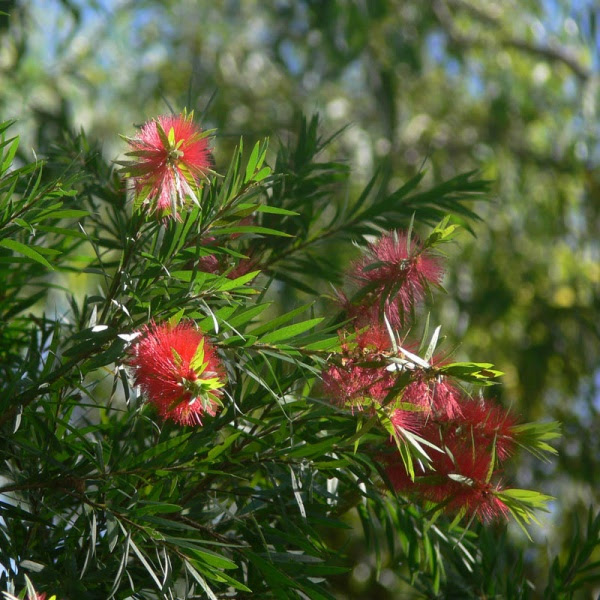 Image from https://noosasnativeplants.com.au/
Shaun Walsh