Everybody knows the familiar European Honeybee, introduced into our lives through childhood books and cartoons with their distinctive black and yellow pattern, buzzing bee-sound and delicious nectar known as honey which has become a global commodity. For most people, that is the first thing that comes to mind when you speak of bees, pollination, honey and beekeeping. Often forgotten are our endemic friends and their role in the ecosystem.
Australia is home to over 1700 bee species, one of the highest diversities of native bees in the world. There are five main bee families: Colletidae (Plasterer Bees), Halictidae (Sweat Bees), Apidae (includes Stingless Bees), Megachilidae (Leafcutter & Resin Bees) and Stenotritidae (Ground Nesting Bees). We can attract these helpful friends to our garden through diverse planting of plant species, creating bee hotels or providing nesting habitats such as tree hollows, dead limbs or old timber features.
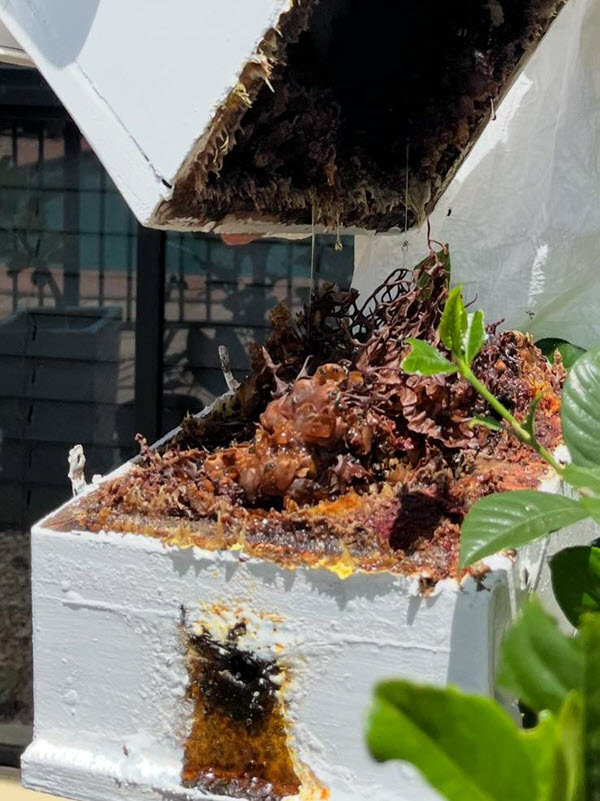
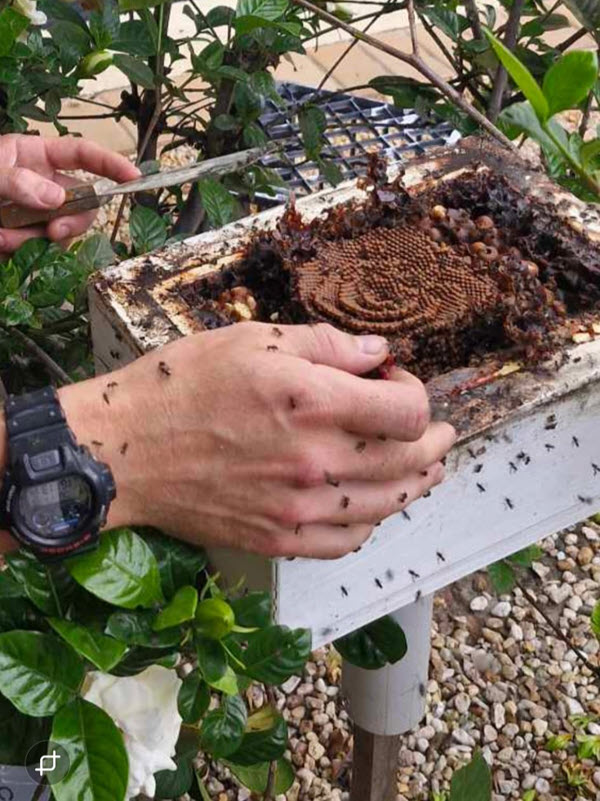
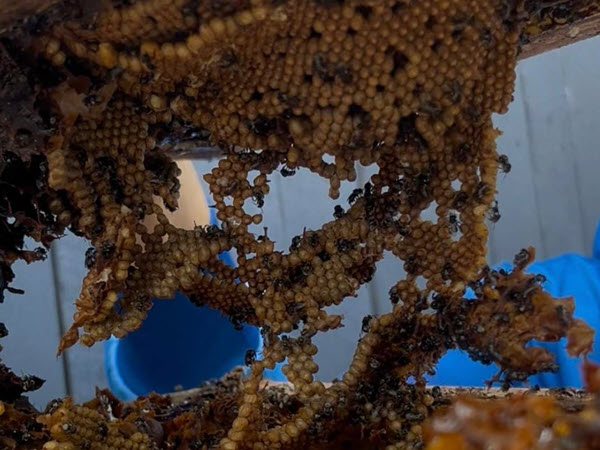
The most common species of native stingless bee in our region is Tetragonula carbonaria, often called the ‘Sugarbag Bee’ or ‘Bush Bee’. Stingless bees are Australia’s only eusocial native bees, meaning they have complex colony structures like honeybees with a singular productive Queen Bee, thousands of Worker Bees responsible for foraging, brood care, nest construction, resin collection and guarding the entrance, and Drones whose primary role is mating. They are best identified in the bush or your home garden through their sticky entrance tube, brown to gold in colour, often trumpet-shaped and used as a way of defending against predators and the elements and traffic control for the busy hive functions. Tetragonulais is famous for its incredible spiral brood comb structure and it is almost hypnotic to watch the busy bees going about their business in such elegance. Unlike honeybees, stingless bees store honey and pollen in little pots they construct using cerumen, a wax and resin mix. Their natural nest sites include tree hollows, fallen logs, hollow limbs and occasionally rock cavities. Urban nests commonly used are retaining walls, house walls and meter boxes.
The Sugarbag Bee forages within a few hundred metres of the hive and are small-flower specialists able to pollinate flowers inaccessible to the larger European Honeybee and other native species. In the sub-tropics these bees will work year-round and are a vital pollinator in Australian bushland and our urban gardens. Their ecological importance is paramount across all landscapes within our region, with some hives living for decades. The key challenges facing this species of bee includes habitat loss, insecticides and pesticides, competition with Apis mellifera (European honeybee) and wildfire intensity. These crafty bees have an intelligent way of reproducing through colony fission with workers gradually moving resources to a daughter nest nearby in a slow, deliberate process. A new queen will occupy the daughter nest after mating with a drone from another colony.
With the ongoing fragmentation of Australian bushland and the increasing threats posed to the European honeybee, I choose to keep Tetragonula carbonaria for home pollination, to support a native species and for their unique, but delicious tangy honey. Although these bees produce significantly less honey than honeybees, they are hard-working pollinators, multiply quickly and won’t give you a sting if you happen to upset one!
Samuel Wockner