Our workshop this month was a productive morning as Sean Morrow, from One Earth Landscaping, coordinated the construction of a frog habitat pond at Noosa Women’s Shed with willing helpers from the Women’s Shed and UWG.
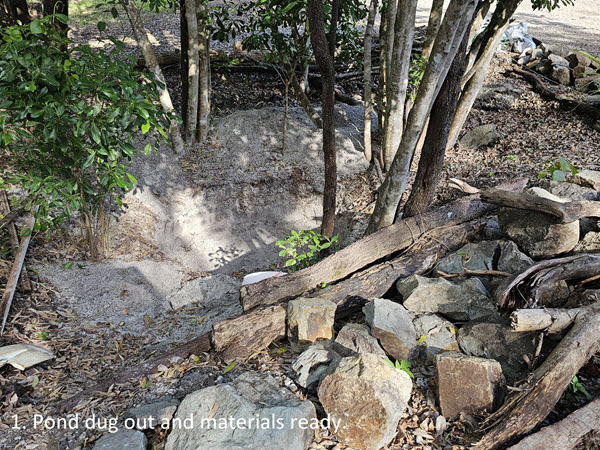
Our Program Coordinator, Michelle, and the Women’s Shed members had already completed the preparation for the pond by digging the hole and assembling all the materials needed. The site of the pond had been chosen carefully as it was surrounded by existing trees and received some sun and some shade during the day.
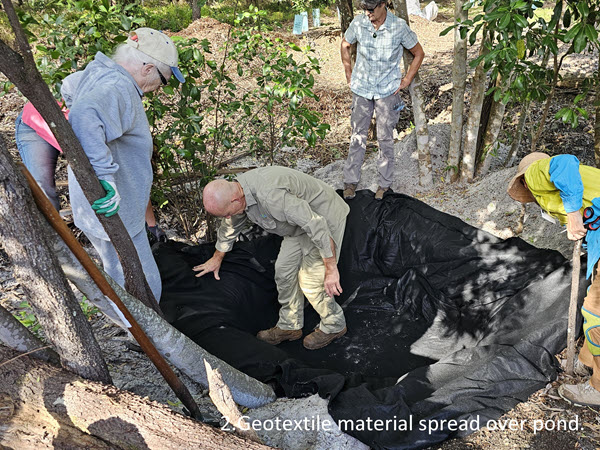
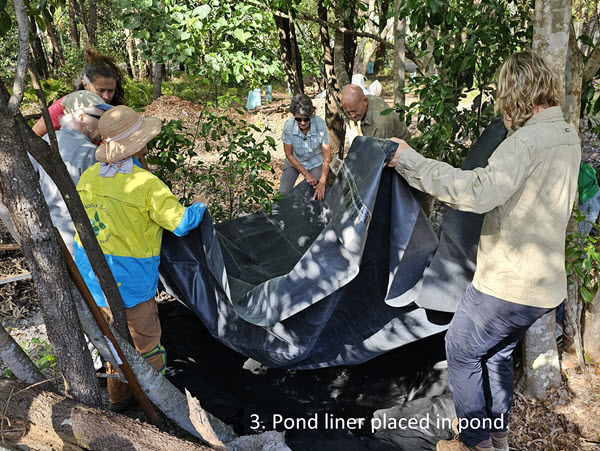
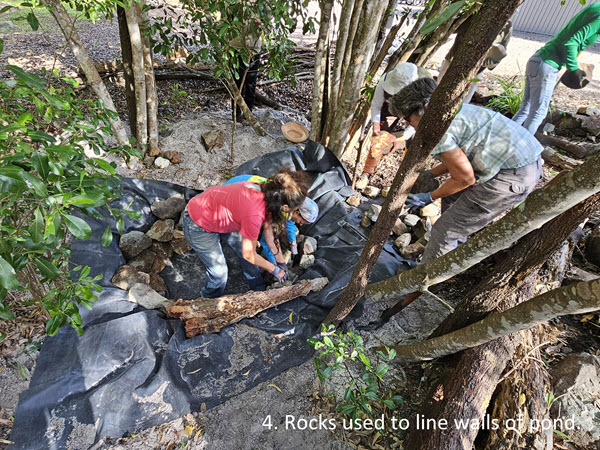
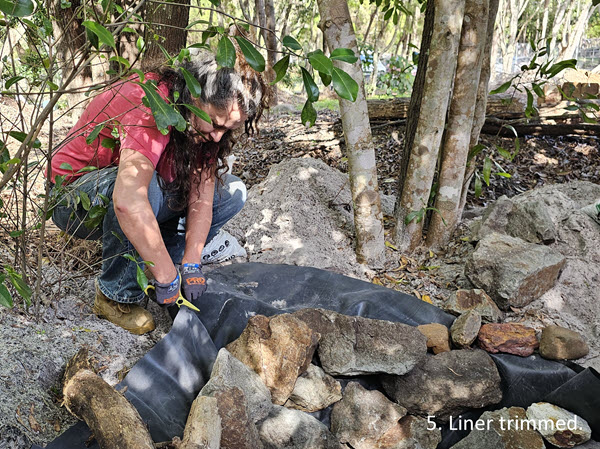
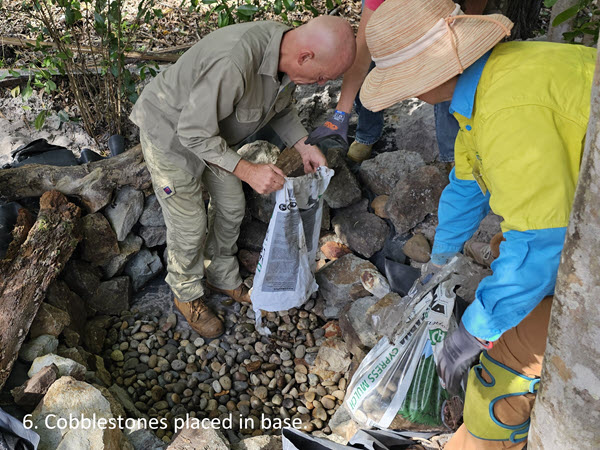
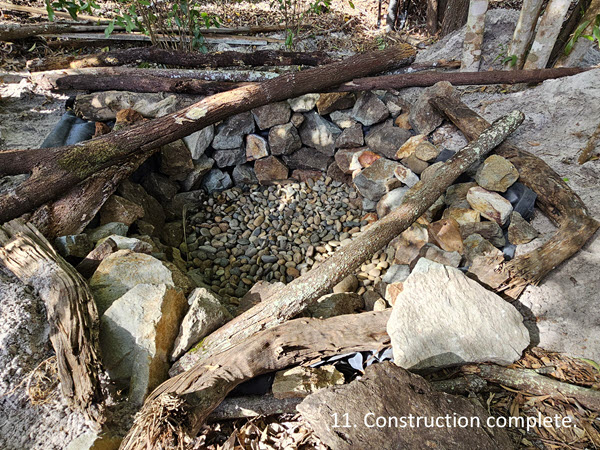
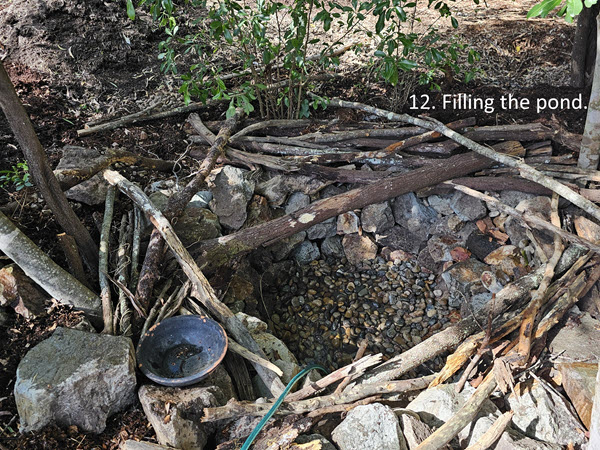
The first step was to lay some geotextile material in the pond to prevent tree roots from penetrating the pond liner in the future. The liner was then laid in the pond overlapping the top edges. Rocks were placed around the walls of the pond to provide habitat for the pond inhabitants and then cobblestones to cover the base. Sean explained that it was important to cover the entire liner to prevent it being degraded over time by exposure to sunlight.
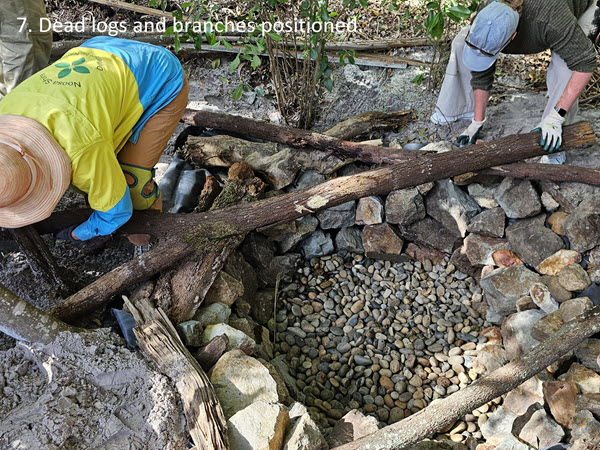
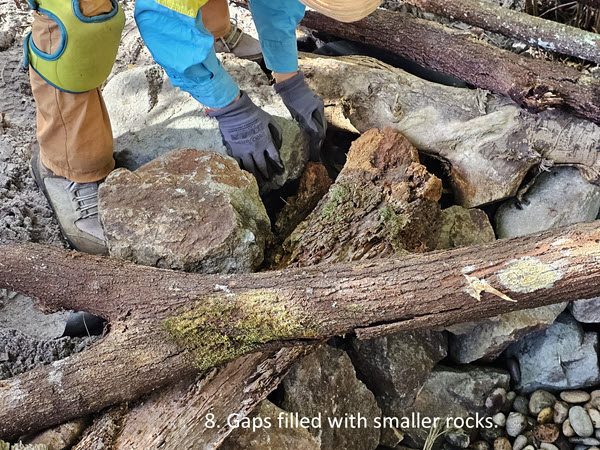
The crevices between the larger rocks were filled with smaller rocks and then small dead tree trunks and branches were laid across and around the edge of the pond. This was to provide perching places for birds and reptiles and to ensure that any wildlife could safely escape from the water. Sean advised not to use fresh living logs and branches as they turn the water brown.
When tadpoles complete their metamorphosis into froglets they are poor swimmers and need resting places around the edge of the pond. Landscaping the edges with the rocks and dead trees provides safe, accessible exit routes for them to use.
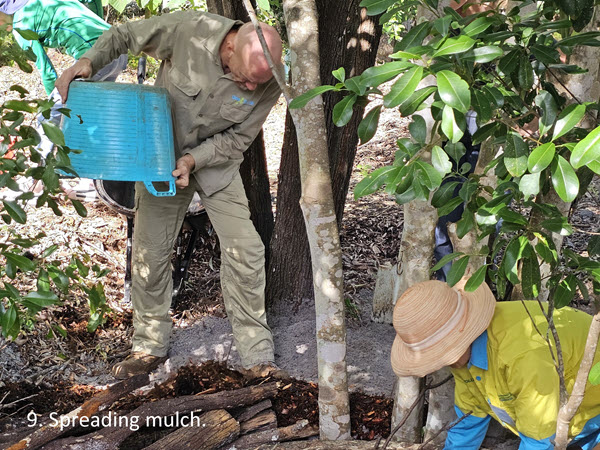
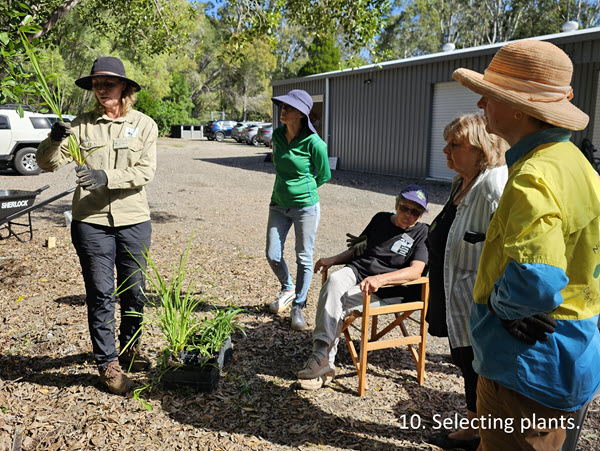
It is important to surround the pond with a two-metre-wide margin of thick vegetation such as native water plants, ferns and grasses. The volunteers made a start by planting some lomandra, dianella and juncus and then mulching the area. Not only does this vegetation buffer deter cane toads but it also provides shelter from predators for the emerging froglets. Layers of taller vegetation, like shrubs and trees, around the pond is also important as once the frogs emerge from the pond they need these new habitats.
Sean assured us that ponds don’t have to be elaborate to attract frogs. They can be any size and can even be made from most non-metallic, water-holding containers such as an old bathtub or bulk water tank. These can be installed in a hole or left above ground and disguised with vegetation. It is important to ensure that the frogs can get out of the containers safely so the design features Sean demonstrated still apply to these ponds.
You can see the different stages of the pond construction in the photos below.
Thanks everyone for an interesting and collaborative morning. Stay tuned for a ‘Frog Habitat Revisited’ article in the future.
Vanessa Presling