Last month we published an article on native shrubs suited to smaller urban gardens in coastal Noosa. This month we focus on hinterland areas of Noosa and shrubs that are suited to smaller gardens, will improve biodiversity and attract wildlife. These recommended plants are naturally found in the clay soils of Noosa’s hinterland suburbs from Tewantin, Cooroy, Pomona, Cooran and Kin Kin and can provide an attractive and sustainable garden. Seek advice from your local native plant nursery about many more species suited to Noosa hinterland areas.
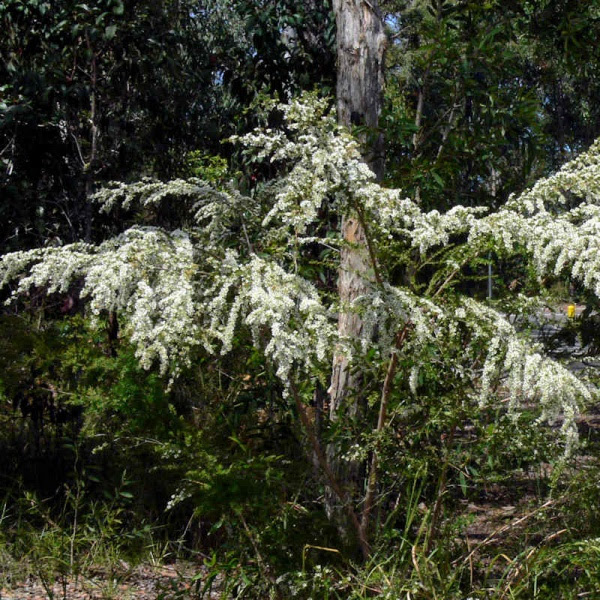
Acacia penninervis (Mountain Hickory)
Small tree or tall shrub in well drained areas. Lovely draping foliage with prominent sprays of cream flowers. Has a lovely shape and habit for a backyard feature tree. Readily prunes to maintain shape and size. Acacias, more commonly called Wattles, are the food pantry for native fauna in Australia. The flowers provide nectar for Honeyeaters, and often flower at a time in autumn and winter when other flora is not in flower. The seeds are attractive to many types of parrots. Spiny Leaf Stick Insects feed on the foliage and the sap exudes are critical feeding for Sugar Gliders and Squirrel Gliders. Last but not least, Acacias are host plants for beautiful butterflies and moths.

Backhousia citriodora – Lemon Scented Myrtle
This shrub is an all-rounder and suited to both the coast and the hinterland. The Lemon Scented Myrtle can grow to a small tree to 10 metres but, with pruning, can be maintained to as a medium shrub to 2 metres ideal for screening. It has tremendous aromatic lemon scented foliage that is now commonly used to flavour foods and drinks and, if foliage is harvested into a bunch for the table, deters insects.

Casuarina glauca – Swamp Oak
This Casuarina grows naturally in heavy soils, often in swampy conditions along our rivers and lakes. This she-oak comes in various cultivars of different sizes including the well-known ‘Cousin It’ and ‘Green Wave’ that grow to small shrubs, but the non-cultivar unmodified species can also be readily pruned to achieve bushiness as a tall shrub. The grey green needle-like foliage is very attractive, and the seed cones are very attractive to lots of birds. Many Casuarinas are also hosts for mistletoes that attract a lot of butterflies.

Citrus australis – Gympie Lime
This shrub is related to the well know native Finger Lime but is native to Noosa and Gympie regions. The fruits are green and globular, but still have the same ‘caviar’ like polyps of the finger lime and same luscious flavour. A tall shrub with prickly foliage, best pruned after fruiting. Grow with good drainage in full sun but good quality soil to maximise flowering and fruiting. Attracts swallowtail butterflies. Can make a great prickly boundary hedge!

Croton insularis – Silver Croton
A native croton that deserves to be in common horticulture, that has remnants of the colourful exotic crotons you find in tropical nurseries. Distinctive sliver leathery foliage on a densely branched with leafy canopy. Can grown into a small tree, but clips beautifully as a shrub. The leaves also turn orange and red throughout the year as they drop providing good colouring. Full sun or light shade only to bring best results from the silvery foliage.

Dodonea viscosa – Sticky Hop Bush
A distinctive open shrub to 3 metres with distinctive orange red flower and seed capsules. The seeds are great feeding for King Parrots that sit in the shrub all day foraging. Can grow in full sun or filtered light, but perhaps protected from the hot western sun. Prune after seed fall to encourage bushiness.
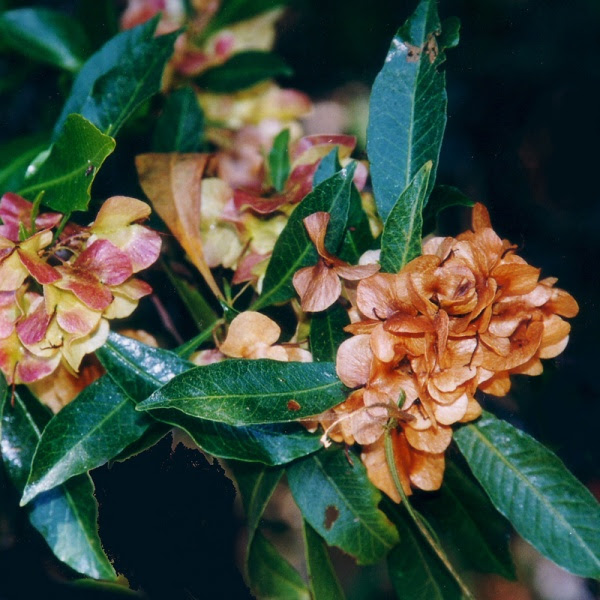
Hibiscus heterophyllus – Native Rosella
Large shrub to 3 metres with distinctive and numerous white and pink flowers that resemble doves fluttering in the bushes! The flowers host small beetles that are good foraging for wildlife, as well as the distinctive glittering Jewel Beetle. The flowers and buds are a renowned bush food for various uses. It is prickly and makes a good boundary screen – prune after flowering to maintain shape and size.
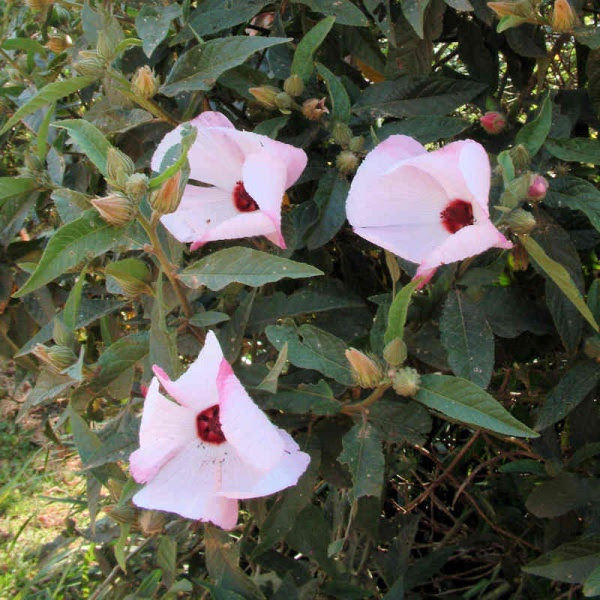
Hovea acutifolia – Purple Bush Pea
Medium shrub to 2 metres with very ornamental purple flowers. Bushy shrub for average soil. Prefers filtered light with protection from afternoon sun and great as an understory in a partly shaded garden. Add to mixed hedge or screen for seasonal colour. Prune to shape. Flowers the same time as Oxylobium (see below) and provides remarkable contrasting floral composition.
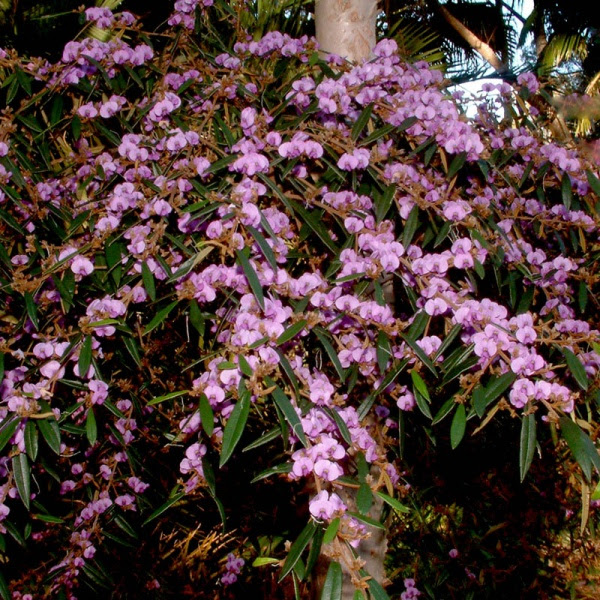
Leptospermum polygalifolium – Wild May
Medium shrub that has spectacular white flowers, aromatic foliage and attractive pendulous habit when mature. Adaptable, requires sun for optimal flowering, and prefers reliable moisture. Prune after flowering to maintain desired shape and size.
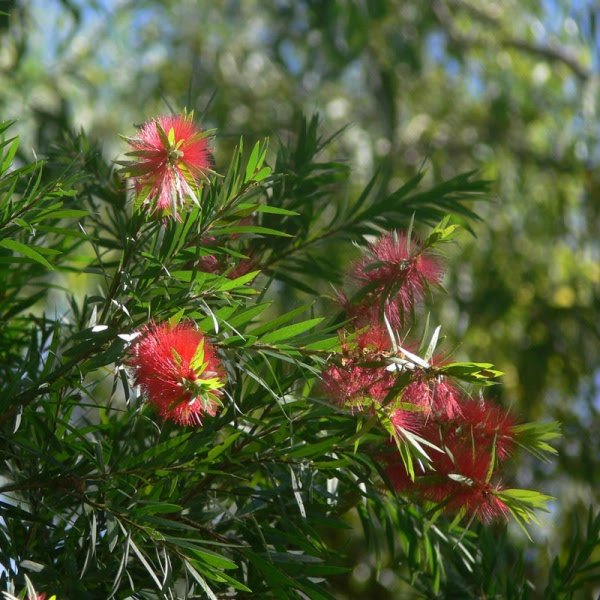
Melaleuca viminalis – Weeping Bottlebrush
Large green shrub with attractive weeping foliage and bright red flowers. Very attractive to birds and marsupials such as possums who are attracted to the nectar. Prefers full sun and prune to shape after flowering to maintain bushiness, size and shape. It also comes in a number of cultivars with a variety of sizes and flower colours to suit any garden.
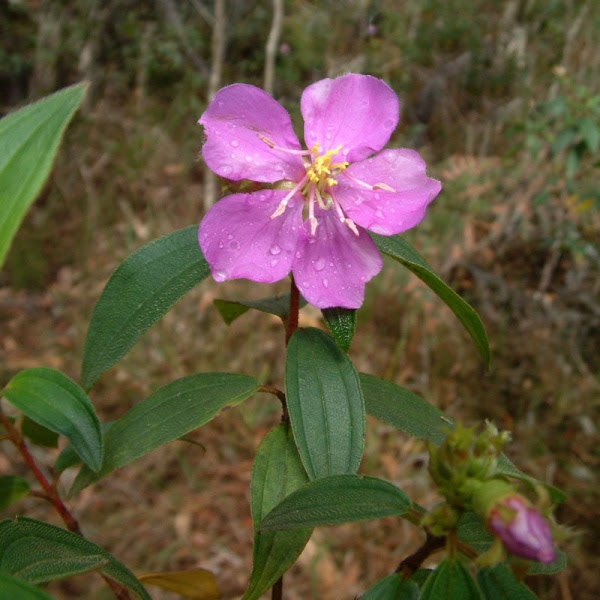
Melastoma malabathricum subsp. malabathricum – Blue Tongue
Attractive medium shrub to 2 metres with ample mauve flowers throughout the year. Suited to heavy clay soils with consistent moisture. Does best in morning sun or dappled light – avoid hot western afternoon sun. The fruits are quite palatable (especially to wildlife) and make a good jam or compote. Eating the fruit raw makes your tongue go bright blue! Prune after flowering to maintain shape and encourage bushiness.
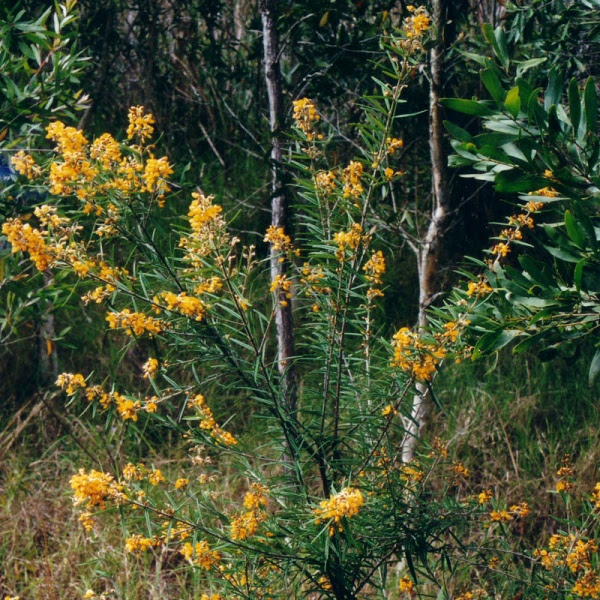
Oxylobium robustum – Golden Shaggy Pea
Medium shrub to 2 metres with very ornamental golden flowers. Bushy shrub for average soil. Prefers filtered light with protection from afternoon sun and great as an understory in a partly shaded garden. Add to mixed hedge or screen for seasonal colour. Prune to shape. Flowers the same time as Hovea (see above) and provides remarkable contrasting floral composition.
All images from https://noosasnativeplants.com.au/