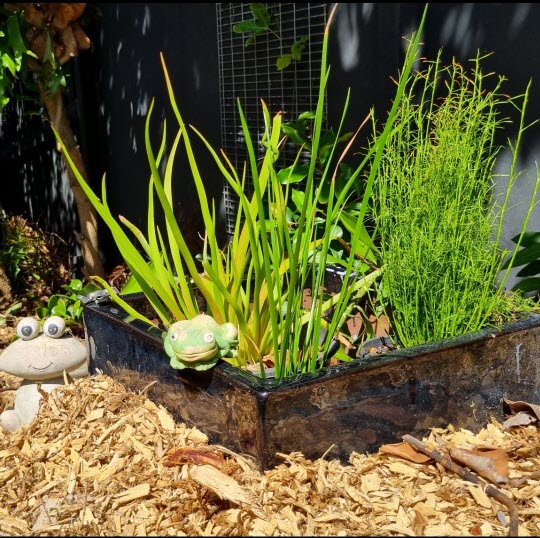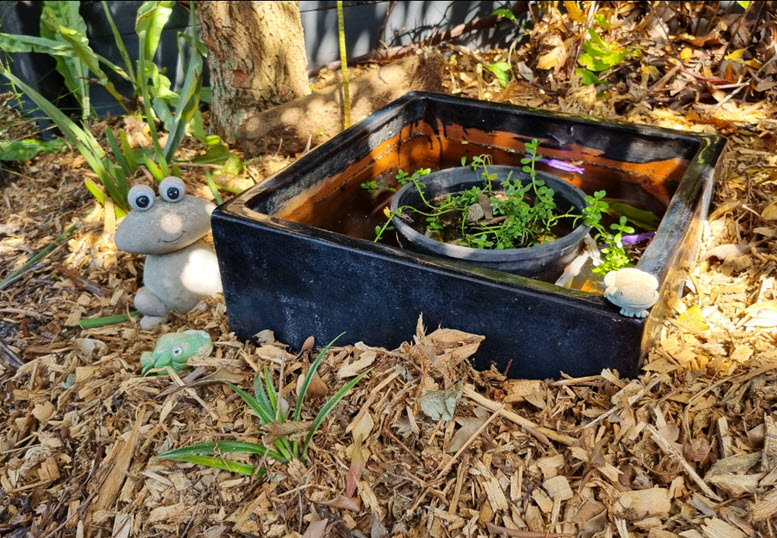
I have no idea of how to go about creating a frog pond but am learning a lot as I give it a go.
There is something therapeutic about playing around in water or at least moving plants and pots around in large ceramic pots of water (I have set up four pots in fact, with one failure due to leakage).
It is all experimental and ever- changing as I continue with my project. My idea of a frog pond is possibly not everybody’s idea of a frog pond, however.
Lots of questions such as what were aquatic plants all about and did you leave them in the pot or take them out to float freely in the water and were we going to have a mosquito problem. How do we repel mosquitoes from laying their eggs and then how do you deal with the larvae? Should we get some goldfish 🐠 and where are the frogs 🐸…do they eat mossies?
Many YouTube videos later watching people using old tin buckets and the like, creating habitat for many creatures including dragon flies and the creation of a thriving ecosystem, I am in.
Dredging up two large ceramic garden pots that had to be plugged to be watertight, and two other miscellaneous pots along with some old pavers and bricks 🧱 to place plants at varying heights, with some plants okay with being sunk and others not.
It is amazing just how quick tube stock plants grow. I have re-potted and then swapped the plants out between the water pots on a number of occasions.
The Bacopa monnieri (Brahmin) is now in one Ceramic pot on its own giving quite a lot of room for any passing or lost frogs to inhabit. We do have frogs about but I haven’t seen any for a while. The Bacopa monnieri (Brahmin) is a creeping herb that makes a beautiful aquatic plant as it floats on top of the water. It has kept the water clear which is another discovery. It makes a beautiful ground cover in damp conditions and you will see it spreading on the ground under the raised plant beds at Coolum Native Nursery.
In the other ceramic pot, the Machaerina rubiginosa (Soft twig rush) is submerged whilst the Philydrum lanuginosum (Frogmouth) is partially submerged and the Baloskion tetraphyllum sits on a brick raised just above the water. Also in the same pot is the Baloskion tetraphyllum (Swamp foxtails or Tassel Cord-rush) which is a Rush to 1 metre according to plant information and again raised above the water.
In the third pot I have placed some Ficinia nodosa (Knobby Club Rush) straight into the water. This was already planted in our garden and seems to like its new position moving from pot to pot.
It would seem so many people do have water features of some sort, and I don’t know why I have never tried this. It has been hours of fun for me.
If you have any stories about your garden creations UWG would love to hear them.
You can reference each of these plants in Noosa’s Native Plants as below.
Baloskion tetraphyllum (Swamp tails/Tassel cord-rush) Page 70
Ficinia nodosa (Knobby Club Rush) Page 130
(Baumea) Machaerina rubiginosa (Soft twig rush) Page 146
Philydrum lanuginosum (Frogs Mouth) Page 151
Kay Southam