Resources
Visit regularly for fresh information on Urban Wildlife Gardens.
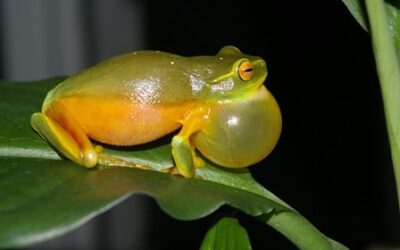
Attracting frogs to your backyard
Attracting frogs into your backyard is not difficult. If you create the right conditions and habitat the frogs will find their way. You may even have resident frogs already. The presence of frogs is a good indicator of the overall health of an ecosystem. By creating suitable habitats and refuges for frogs in our own backyards we can help their survival in challenging urban environments. Click through for more tips and tricks to attract frogs into your garden.
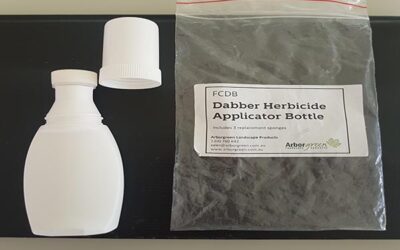
Garden Tip from Michelle
Chemical use is a controversial topic. The method used to apply chemicals can greatly reduce the risks to humans and the environment. A safer way to apply chemicals is with a herbicide dabber rather than a spray bottle. A dabber is used to cut and paint shrubs and trees or scrap and paint vines. In this post Michelle explains how it is done and where it can be purchased.
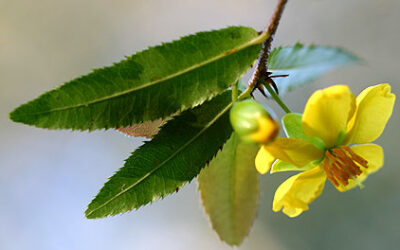
Weed of the month October 2020 Micky mouse plant Ochna serrulata
The weed of the month October is the Micky mouse plant, an attractive shrub/small tree that is common in Noosa gardens. The serrated leaves have a bronze tinge when young but it is the flowers that are the most impressive. The yellow petals don’t last long but the sepals turn bright red and are very eye catching. This South African plant is spread by birds and has found its way into our bushland. It grows well in different ecosystems and so is found from the coast to the hinterland. Once Ochna is established it out-competes the native vegetation and forms dense thickets. It is also hard to kill and so is of great concern to our bushland and should be removed.
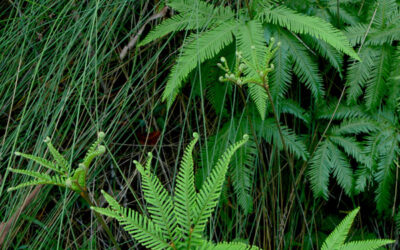
Do you want to learn more about Botany and our local plants?
The Noosa Parks Association has a Botany group that meets at the Environment centre on the 2nd Wednesday of each month at 2pm. There is a discussion about local plants and talks presented by members and guests. The level of knowledge in the group is extremely high and they are happy to share their passion. They also have walks on the last Sunday of the month. Contact Joan Heavey ph. 0412350749 for more information.
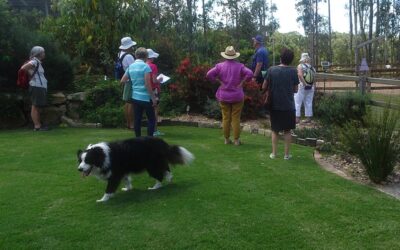
OCTOBER WORKSHOP – Insects and a Garden
Sunshine Butterflies provided a stunning backdrop for our October workshop. CEO Leanne and husband Damien Walsh welcomed us as we road-tested their brand new Information Building with paving finished the day before for our convenience. Guest Presenter Joel Fostin told us about his work with the Pandanus Beetle and its parasitising wasp, touching briefly on insects generally before we were treated to a tour of the Sunshine Butterflies gardens. Click through to see more photos.
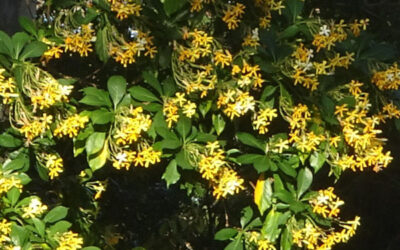
Pruning makes a difference
As we adapt local native plants to our small urban gardens, we sometimes have to get out the secateurs. Stephanie shows the difference between a native Frangipanni that has been pruned compared to one in her garden that sneaked up between the palms to get to the light (never to be seen again unless you stand on the roof). This beauty was spotted in Boreen Point where it has been pruned as a hedge.
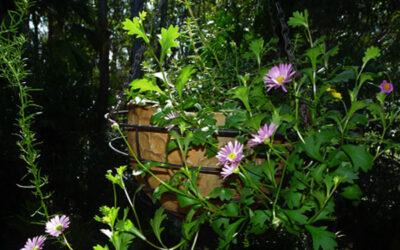
Groundcovers in Hanging Baskets
Stephanie Haslam has been experimenting with groundcovers in hanging baskets. After just a few weeks the plants have filled them, done their thing and are trying to escape. For those with small gardens, town houses and even balcony gardens, it is important to find out the secrets of pot culture. The bees don’t seem to care that they are in pots and are regular visitors.
A Letter to Michelle
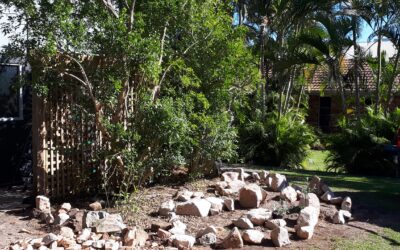
Urban Wildlife Gardens member Wave O’Connor sent in this letter with images of the work they are doing in their garden following the visit by Michelle. Work so far included removing most of the mock orange, leaving some of it to act as a screen from the street and a bit of shade from the western sun, painting the very old lattice red in lieu of expensive laser cut , rusty metal screens (budget being important!) and planting a whole range of native species. Click through to see some of the images of Wave’s hard work to make their garden wildlife friendly.
Weeds of the Sunshine Coast – 2nd Edition
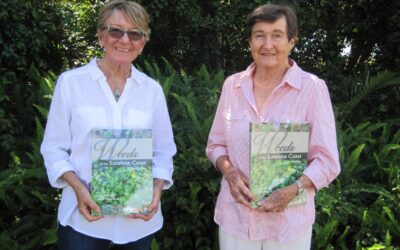
During September NICA released the second edition of “Weeds of the Sunshine Coast”. The 2013 edition became a bible for bush regenerators and anyone interested in plant ID. The book covers herbs, trees, shrubs, vines and climbers along with aquatics, sedges and grasses. Identification features, biosecurity classification, country of origin and control methods are included for all 272 pressed specimens. The feature that makes this book so valuable for ID purposes is that every plant has a full size scanned image along with a photograph of the flower, fruit or habit.
Everything is Flowering
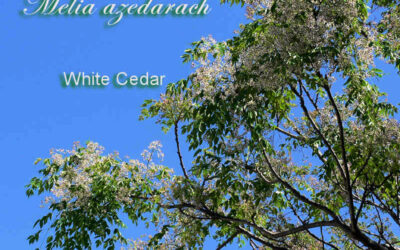
Spring has sprung and so many local native plants are flowering prolifically in Noosa at the moment. For Stephanie, it’s tempting to believe that all the hot air, political nastiness and the horrors of Covid 19 is falling back to earth as a fertilizer. Everything is flowering as if there is no tomorrow, or maybe just trying extra hard to encourage us to look at them and realise how important the natural environment is to the future of our species. Click through to see some of the lovely images of flowers from around the region.
Get In Touch
c/- NICA, PO Box 172, TEWANTIN, QLD 4565
Let's Build Your Dream Garden Together