Aug 26, 2026 | Events & Workshops, Member's Contributions, Noosa's Native Plants
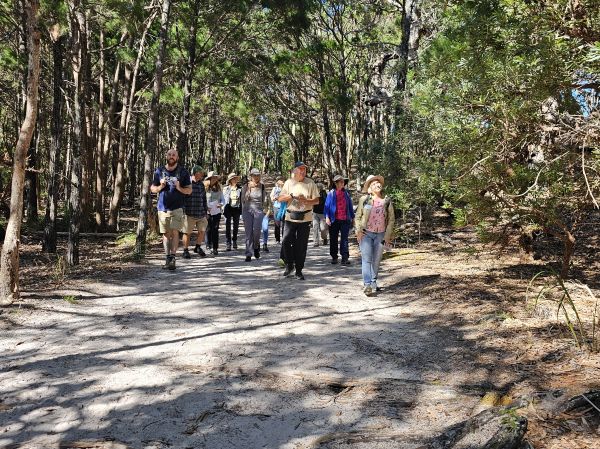
It was a perfect day for a wildflower walk when Sarah led our enthusiastic group along the Alexandria Bay track in Noosa National Park. This coastal trail along the southern edge of the park’s headland section passes through open eucalypt forest and heathland. This dry heath supports a high diversity of flowering species.
Aug 26, 2026 | Gardening Tips, Member's Contributions
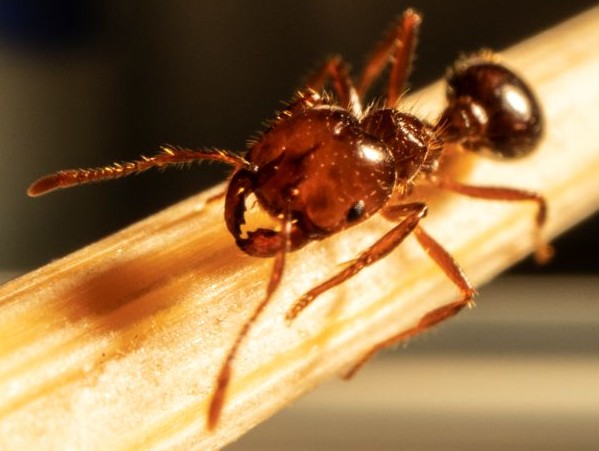
Fire ants are an invasive species of serious concern due to their impact on wildlife and the natural environment. In Noosa Shire there are no reported fire ant infestations but, with nests detected in nearby areas, it does leave us vulnerable.
Aug 26, 2026 | Member's Contributions, Noosa's Native Plants
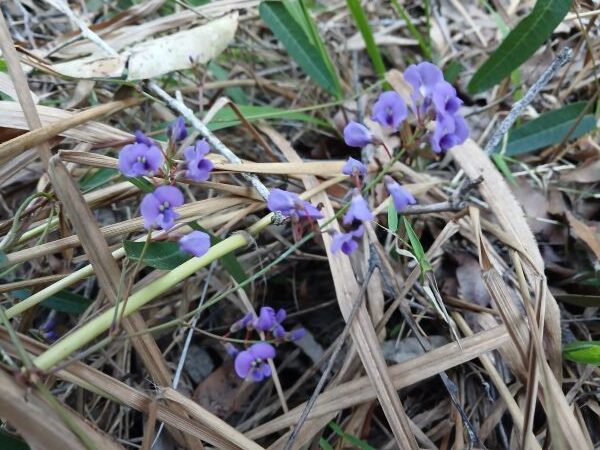
Spring is known as the wildflower season here on the Sunny coast, but there are some local natives that flower in winter. This month we highlight Hardenbergia violacea (common names: Happy Wanderer or Sarsparilla Vine).
Jul 28, 2026 | Events & Workshops, Member's Contributions, Noosa's Native Plants
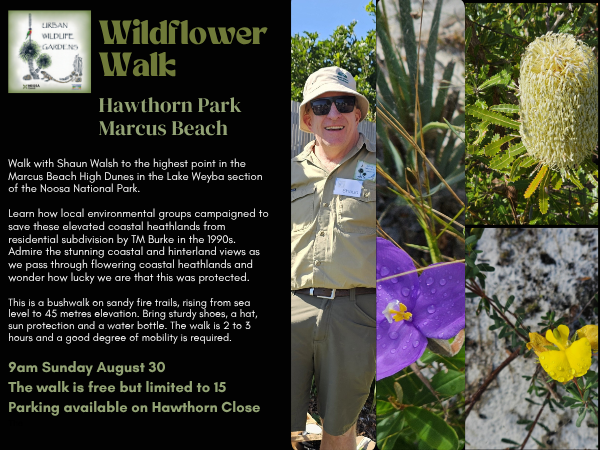
Walk with Shaun Walsh to the highest point in the Marcus Beach High Dunes in the Lake Weyba section of the Noosa National Park.
Jul 28, 2026 | Events & Workshops, Member's Contributions, Noosa's Native Plants
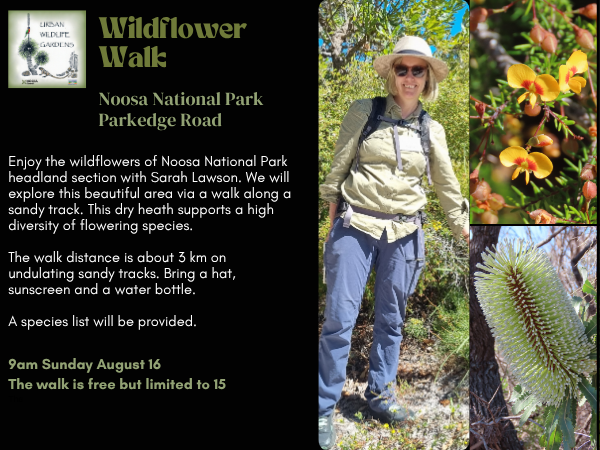
Enjoy the wildflowers of Noosa National Park headland section with Sarah Lawson. We will explore this beautiful area via a walk along a sandy track. This dry heath supports a high diversity of flowering species.
Jul 27, 2026 | Member's Contributions, Noosa's Native Wildlife
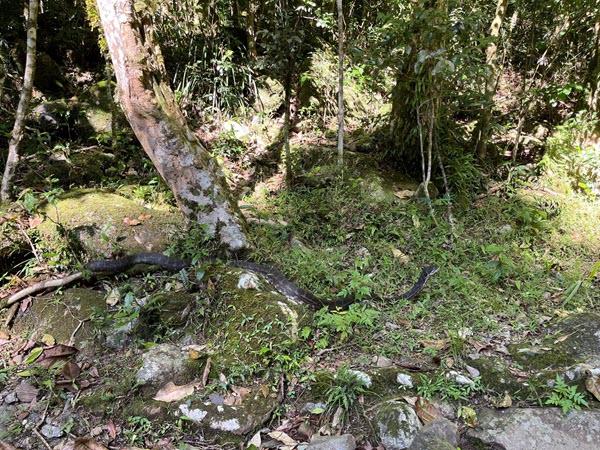
The coastal carpet python (Morelia spilota mcdowelli) is one of Australia’s largest and most recognisable non-venomous snakes. Reaching average lengths of 2–3 metres, with exceptional individuals exceeding 3.5 metres, this impressive reptile occurs throughout coastal and sub-coastal regions of eastern Australia, from south-east Queensland to eastern New South Wales. Its distinctive olive, brown and black patterning, overlaid with cream or golden markings, provides excellent camouflage amongst leaf litter, tree bark and rocky outcrops.